Can Cats Eat Honey?
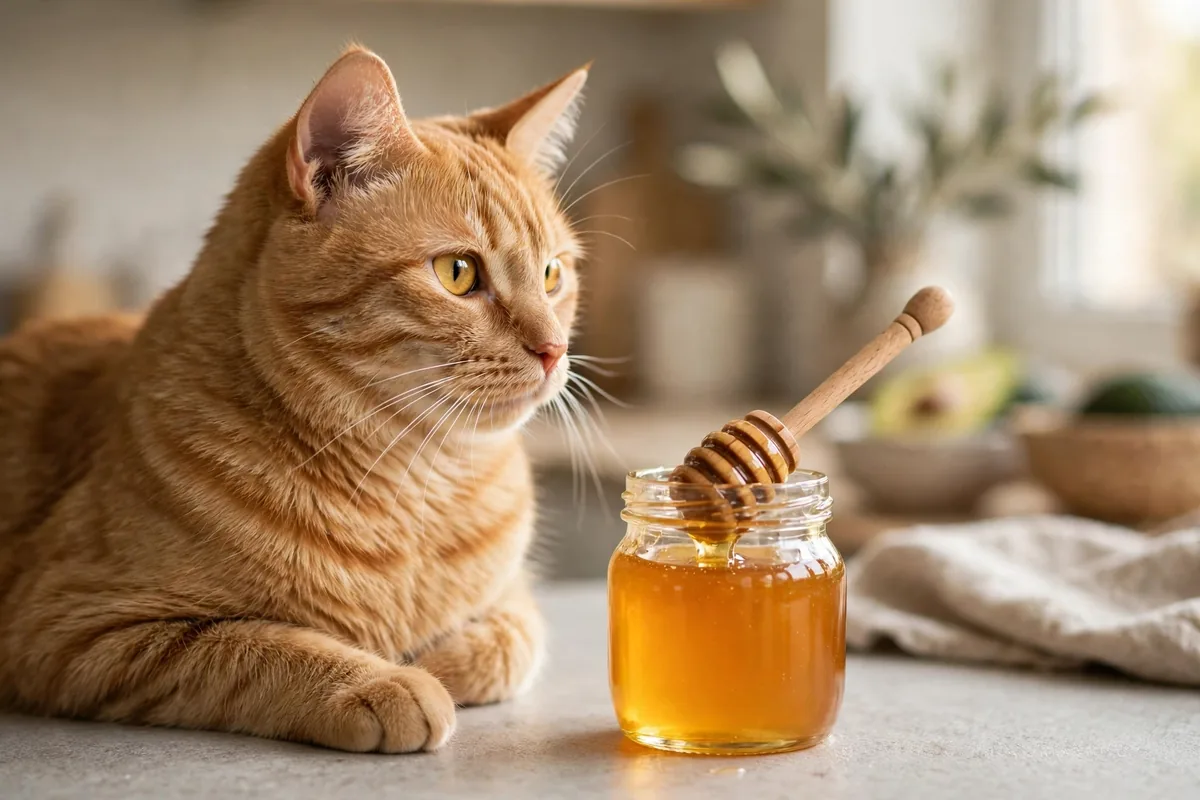
Yes — a cat can taste a tiny bit of honey without harm, but honey is not a food cats need, and it should never become a regular treat. Honey is almost pure sugar, and a cat's body is built to run on animal protein and fat, not sweetness. A single small lick of plain, pasteurized honey is usually harmless for a healthy adult cat — but raw honey, flavored honey, and anything more than a taste can cause problems, from an upset stomach to, in rare cases, a bacterial infection.
This guide explains what honey actually is for a cat, why the "honey for a cough" idea is a myth, which kinds of honey are riskier, and what to do if your cat has already licked up more than a taste.
The Verdict: Can Cats Eat Honey?
Verdict: CAUTION. Honey is not toxic to cats in the way grapes or onions are, and a tiny taste of pure, pasteurized honey is unlikely to hurt a healthy adult cat. But honey is essentially sugar and water, and cats have no nutritional need for sugar at all. It adds empty calories, can upset the stomach, and may feed the bacteria that cause dental problems.
The rule is simple: honey is an occasional taste, never a treat and never a medicine. If you offer it at all, use plain pasteurized honey, keep the amount tiny, and never give it to a kitten, a diabetic cat, or a cat with a weakened immune system.
Why Honey Is Not Really Cat Food
Honey is about 80 percent sugar — a mix of fructose and glucose — with a small amount of water and trace amounts of minerals and plant compounds. It contains no taurine, no animal protein, and no essential fats, which are the nutrients a cat actually depends on. For a cat, honey is pure energy with nothing useful attached to it.
That matters because cats are obligate carnivores: their bodies are designed to get energy from meat, and they handle sugar poorly. A cat that eats sweet foods regularly takes in calories that push out real nutrition, and over time that can contribute to weight gain. Overweight cats face a higher risk of diabetes and joint problems, so sweet extras are a habit worth avoiding.
There is another curiosity worth knowing: cats cannot taste sweetness the way people do. They lack a working sweet-taste receptor, so the flavor that makes honey appealing to us means very little to them.
The Main Risk: Sugar and Raw Honey
The biggest everyday risk of honey is its sugar. Even a small spoonful is a large dose of sugar for a body that weighs only a few kilograms. In a healthy adult cat, a single taste is unlikely to cause more than mild stomach upset, but repeated sugary treats can encourage weight gain and tooth decay, and in a cat that already has diabetes, even a small amount of sugar can disturb blood sugar control.
Raw honey carries a second, separate risk. Unpasteurized honey can contain spores of Clostridium botulinum, the bacterium that causes botulism. Adult cats with a healthy gut usually handle tiny exposures without trouble, but the risk is real enough that raw honey is never the right choice for a kitten, a senior cat, or any cat with a weak immune system. Pasteurized honey has been heated to reduce this risk, which is why it is the only kind to offer if you offer any at all.
Flavored and infused honeys are also a problem. Honey sold with added cinnamon, chili, ginger, or herbal extracts may contain ingredients a cat should not eat, and some honey products are cut with syrups or flavorings that add nothing but risk. If the jar lists anything beyond honey, keep it away from your cat.
Is Honey Safe for Cats?
Plain, pasteurized honey is safe in tiny amounts for a healthy adult cat — a taste, not a serving. It is not safe as a daily food, a meal topper, or a way to sweeten anything your cat eats. Raw honey is riskier because of possible bacterial spores, and flavored or infused honey should not be offered at all.
Cats with diabetes, cats that are overweight, and cats with digestive problems should skip honey entirely. For them, even a small amount of sugar is a needless risk, and there are far better treats — a piece of plain cooked chicken, for example — that actually suit a cat's body.
Can Kittens Eat Honey?
No — kittens should not eat honey. A kitten's immune system is still developing, which makes it less able to deal with the bacteria that raw honey can carry, and a kitten's tiny stomach is far more sensitive to sugar than an adult's. Kittens also need every bite to count toward growth, and honey contributes nothing a growing kitten needs.
Wait until your cat is fully grown before even considering a taste, and even then, keep it rare. If your kitten has licked honey off a spoon or a plate, do not panic over a tiny amount — just watch them for the rest of the day and call your vet if you notice vomiting, diarrhea, or unusual sleepiness.
How Much Honey Can a Cat Eat?
If you offer honey at all, keep it to half a teaspoon of plain, pasteurized honey, once in a while — not daily, and never as a regular part of the diet. Most cats will not finish even that much, and that is fine. A thin smear on your fingertip is a more sensible portion than a spoonful.
Honey should never be mixed into your cat's food to tempt them to eat, and never used as a reward. If you want a treat your cat will genuinely enjoy, a small piece of plain cooked meat is a far better choice. And if your cat shows no interest in honey, take the hint — no cat needs it.
Does Honey Help a Cat's Cough?
This is the most common reason owners search for honey and cats, and the honest answer is no. Honey is sometimes suggested for coughs in people, because it can coat and soothe a human throat, but there is no good evidence that it helps a cat's cough — and a cough in a cat is a different problem entirely.
Cats cough for reasons that honey cannot fix: asthma, respiratory infection, heart disease, or something stuck in the airway. A coughing cat needs a vet to find the cause, not a spoonful of honey. If your cat is coughing, wheezing, breathing with an open mouth, or coughing repeatedly over more than a day, book a vet visit. Trying home remedies first only delays the care that actually helps.
What Happens If My Cat Eats Honey?
A small lick of plain honey usually causes no trouble at all. A larger amount — a spoonful or more — is more likely to cause vomiting, diarrhea, and stomach discomfort over the next few hours, and the extra sugar can make a diabetic cat's blood sugar harder to control.
The rarer but more serious concern is raw honey. Signs of botulism in a cat can include weakness, difficulty swallowing, loss of appetite, and unusual tiredness, and these signs can take hours to appear. They are uncommon, but if your cat ate raw honey and shows any of these signs, call your vet right away. A cat that ate honey with flavorings or other ingredients should also be checked, since the added ingredients may be the real problem.
What to Do If Your Cat Already Ate Honey
Work through these steps:
- Take the honey away so your cat cannot eat more, and check what kind it was — plain and pasteurized, raw, or flavored — and roughly how much your cat ate.
- Offer fresh water and let your cat drink freely. Do not offer milk or food to "dilute" the honey.
- Watch for 24 hours. One vomit or a soft stool usually settles on its own. Note the time your cat ate the honey so you can tell your vet if needed.
- Call your vet right away if your cat ate raw honey, ate a large amount, is a kitten, has diabetes, or shows vomiting that keeps coming back, diarrhea, weakness, loss of appetite, or trouble swallowing.
- Do not try to make your cat vomit unless your vet specifically tells you to. Home remedies for vomiting can do more harm than the honey did.
Most honey accidents end with nothing more than a sticky chin and a cat that has lost interest. The lesson is worth keeping, though: sweet foods are for people, not cats. For safer treats, see our guides to whether cats can eat cheese and whether cats can eat tuna, or browse the full Cat Food section on the Purrfect Paws homepage.
Frequently Asked Questions
Is honey safe for cats?
A tiny taste of pure, pasteurized honey is usually harmless for a healthy adult cat. It is not a safe everyday food, though — honey is almost pure sugar, and raw honey carries a small risk of bacterial contamination.
Can kittens eat honey?
No. Kittens should not eat honey. Their immune systems are still developing, their stomachs are sensitive to sugar, and raw honey may carry bacteria a tiny kitten cannot handle.
What happens if my cat eats honey?
A small lick usually causes no trouble. A larger amount can cause vomiting, diarrhea, and stomach upset. Raw honey may carry Clostridium botulinum spores, and signs like weakness or loss of appetite after eating honey mean a vet visit is needed.
How much honey can a cat eat?
At most, half a teaspoon of pure, pasteurized honey once in a while — never daily and never as a meal. Most cats do not even need that much, and many do not enjoy sweet tastes at all.
Does honey help a cat's cough?
No — there is no good evidence that honey helps a cat's cough, and a cough in a cat always deserves a vet visit. Coughing can be a sign of asthma, infection, or heart disease, and none of those are fixed with honey.