Can Cats Eat Kiwi?
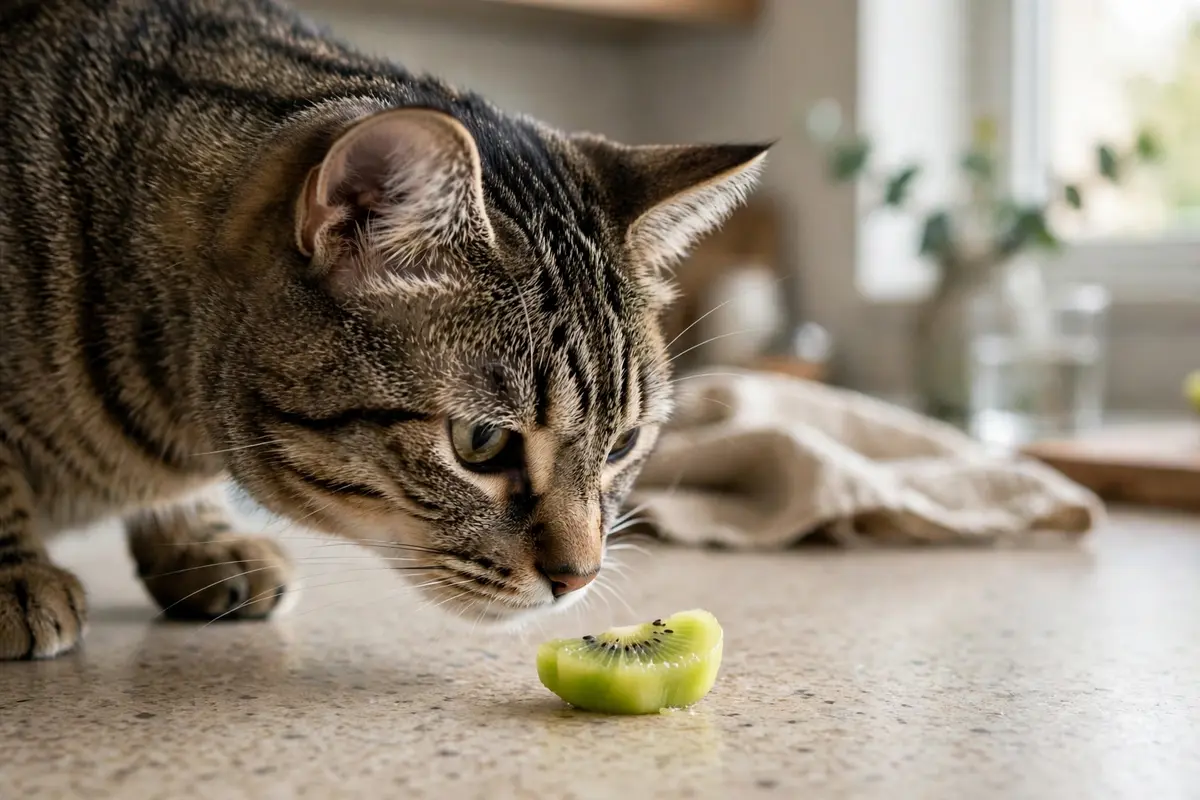
Yes, cats can eat kiwi — a tiny piece of peeled flesh, with the fuzzy skin removed. That small definition is the whole answer: the soft green flesh of a ripe kiwi is non-toxic to cats, but the skin is indigestible and should never be offered, and the portion stays small because kiwi is acidic and relatively high in natural sugars.
A single pea-sized piece, once in a while, is plenty for a healthy adult cat. Kiwi's selling points — vitamin C, fiber, and a sweet-tart flavor — matter far more to humans than to cats, but as a rare novelty treat, a properly peeled piece is perfectly safe.
Is Kiwi Safe for Cats?
Kiwi flesh is not toxic to cats. It is not on any list of dangerous fruits — that list is headed by grapes and raisins — and a small piece of ripe kiwi flesh will not poison a cat. What it can do, in larger amounts, is upset the stomach, because kiwi is acidic and contains a fair amount of natural sugar and fiber for such a small animal.
Kiwi is rich in vitamin C and fiber, and it contains vitamin K, vitamin E, potassium, and an enzyme called actinidin, which helps break down protein. For humans those nutrients are a selling point; for cats they are mostly beside the point, since cats make their own vitamin C and get their protein from meat.
The one part of kiwi that deserves a firm warning is the skin. Kiwi skin is fuzzy, tough, and indigestible, and it can irritate the mouth and gut or, in a greedy cat, pose a choking risk. Always peel kiwi completely before it reaches your cat, and throw the skin away rather than leaving it where a curious cat can find it.
Why the Skin Must Come Off
Kiwi skin looks harmless — just a thin, fuzzy peel — but it is the part most likely to cause trouble. The fuzz can irritate a cat's mouth and throat, the skin itself resists digestion, and pieces of peel can cling to the gut lining or, in a small cat, contribute to a blockage if swallowed in quantity.
Peeling a kiwi for a cat is easy: cut off both ends, slide a spoon between the skin and the flesh, and rotate — the skin comes away in one piece. Then cut a single small cube of flesh for your cat and keep the rest for yourself. Do not offer the peel as a toy or a chew, either: a cat that bats at a peel will often end up biting and swallowing pieces of it.
The same rule applies to golden kiwis. Golden kiwi flesh is sweeter and less acidic than green kiwi, which makes it slightly gentler on the stomach, but the skin is just as indigestible and must still be removed completely.
How Much Kiwi Can a Cat Eat?
One tiny piece — about the size of a pea, or a cube roughly half an inch across — once in a while is plenty. Kiwi is sweet and acidic, so even a modest amount is a meaningful treat for a cat, and there is no benefit to offering more.
Offer that single piece the first time and watch your cat for the rest of the day. Normal appetite, normal litter box, no vomiting or soft stool means the treat agreed with them. If your cat drools, lip-smacks, or vomits, the acidity did not suit them — drop kiwi from the treat list, since individual tolerance varies.
Cats with diabetes should skip kiwi unless their vet approves it. Kiwi is relatively high in natural sugars, and diabetic diets depend on tight sugar control. Overweight cats should also skip it or keep it truly rare: sugary fruit treats work against a weight-loss plan even in small amounts.
How to Serve Kiwi Safely
Choose a ripe kiwi: slightly soft when gently squeezed, fragrant, and yielding rather than rock-hard. Underripe kiwi is very tart and harder to digest, so it is a poor choice for a cat. Peel it completely, cut a single small cube of flesh, and serve it plain and at room temperature.
Do not offer dried kiwi, which is concentrated sugar and often contains added sweeteners or preservatives. Do not offer kiwi juice, smoothies, or kiwi-flavored desserts and yogurts, which concentrate the sugar and acid and may contain ingredients that are harmful to cats. Fresh, peeled flesh only, and only a little.
Throw away uneaten pieces rather than leaving them in the bowl. Cut kiwi spoils quickly at room temperature, and a cat returning to an old piece hours later is asking for stomach trouble. Fresh each time, small each time, and then done.
Can Kittens Eat Kiwi?
Kittens should stick to kitten food. Their growth depends on precisely balanced nutrition, and acidic fruit is a particularly poor addition to a young, sensitive stomach. There is no benefit to giving a kitten kiwi, and the acidity makes it more likely than a berry to cause an upset stomach.
Once a cat is an adult, a single tiny piece as a rare treat is reasonable. The kitten months pass quickly, and there will be plenty of time later for a cautious taste. If a kitten has already eaten a tiny piece with no ill effects, there is no need to panic — just save future pieces for adulthood.
What Happens If My Cat Eats Too Much Kiwi?
Too much kiwi usually means a short bout of stomach upset: vomiting, soft stool, or diarrhea, sometimes with drooling or lip-smacking from the acidity. This generally settles within a day once the fruit has passed, provided the cat keeps drinking water and eating normally otherwise.
The situation is more serious if your cat ate the skin. A small piece of peel will usually pass, but a larger amount can cause persistent vomiting, straining, or a painful belly — signs that should send you to the vet rather than to watchful waiting. The same applies if your cat ate a sweetened kiwi product listing xylitol: that is a genuine emergency, and you should call your vet immediately.
Watch the litter box and the food bowl after any fruit accident. A single soft stool that firms up again is not a crisis, but ongoing diarrhea, repeated vomiting, or a cat that stops eating and drinking needs veterinary attention.
When to Call the Vet
Call your vet if vomiting or diarrhea lasts more than 24 hours, if you see blood in vomit or stool, or if your cat becomes lethargic, hides, or refuses food and water. Call promptly, too, if your cat ate a significant amount of kiwi skin and shows signs of discomfort, or ate any product listing xylitol.
Cats with diabetes, kidney disease, or ongoing stomach problems deserve a quicker call than a healthy cat, because even a small dietary upset can matter more for them. When in doubt, a short phone call to your vet costs nothing and beats guessing.
Do Cats Actually Need Kiwi?
No. Cats are obligate carnivores, and a complete, balanced cat food already gives them everything they need. Kiwi's vitamin C is a human selling point — cats make their own — and its fiber is available in far more suitable forms if a cat actually needs it. Kiwi adds nothing essential to a cat's diet.
If your cat enjoys a tiny peeled piece now and then, that is a lovely extra. If your cat sniffs it and walks away, nothing is lost — offer a piece of plain cooked chicken instead, which your cat's biology actually values. Either way, fruit stays a footnote to a meat-based diet, not a feature of it.
Is kiwi toxic to cats?
No. Peeled kiwi flesh is non-toxic to cats, but it is acidic and sugary, so the portion must stay tiny — one pea-sized piece, once in a while.
Can cats eat kiwi skin?
No. Kiwi skin is fuzzy, tough, and indigestible, and it can irritate the mouth and gut or pose a choking risk. Always peel kiwi completely.
Can cats eat golden kiwi?
Yes, with the same rules: peeled flesh only, tiny piece. Golden kiwi is sweeter and slightly less acidic than green kiwi, but the skin must still be removed.
Can kittens eat kiwi?
Kittens should stick to kitten food. Save fruit treats for adulthood, when a single tiny piece as a rare treat is reasonable.
What if my cat eats kiwi skin?
A small piece usually passes, but watch for vomiting, straining, or a painful belly. If symptoms persist or your cat ate a lot of skin, call your vet.