Can Cats Eat Lettuce?
The Short Answer: Yes, Dark Leafy Lettuce Is Best
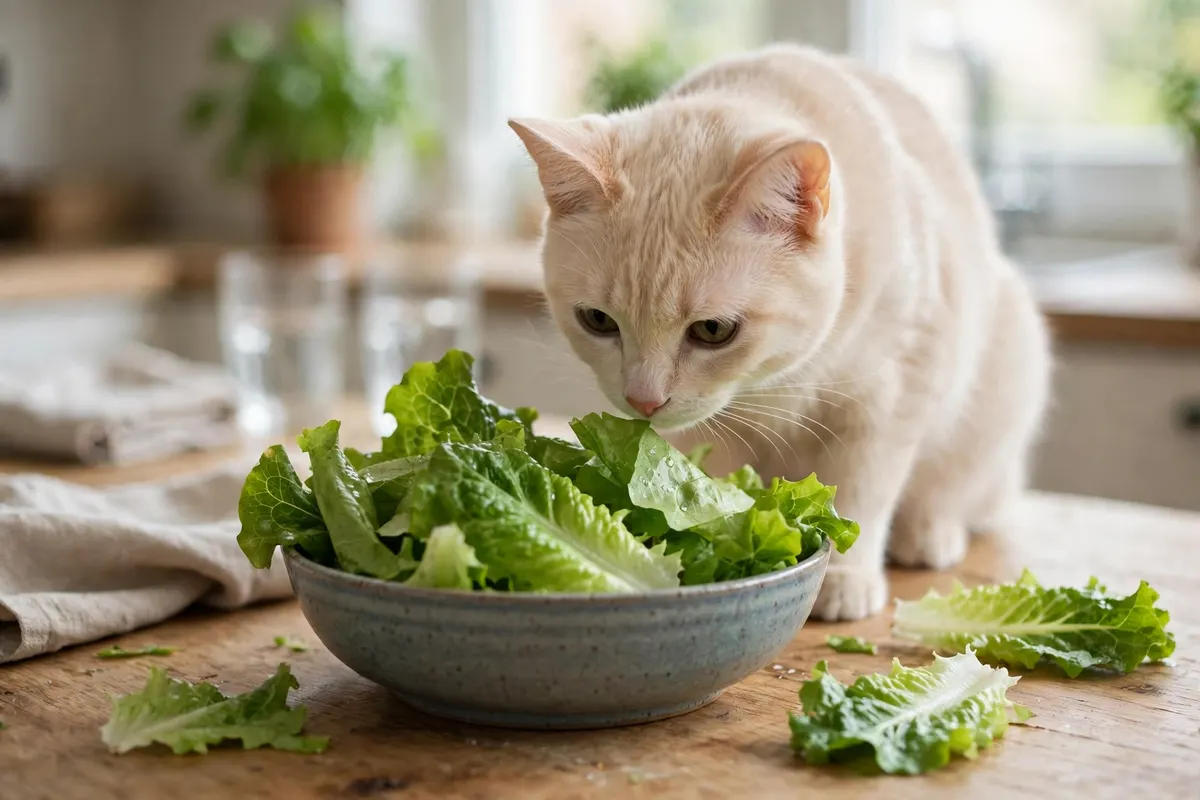
Yes, cats can eat lettuce. Dark leafy lettuce — romaine and red leaf in particular — is safe for cats and is one of the gentlest vegetable treats you can offer. A few shredded leaves, washed and served plain, are a fine occasional snack. Iceberg lettuce is safe too, but it is mostly water and offers very little nutrition, so it is the weakest choice of the bunch.
Lettuce is not toxic to cats, and it is one of the few vegetables that is easy on a cat's stomach. The danger with lettuce is not the leaf itself but what usually comes with it: salad dressing, which often contains garlic, onion, salt, and oil. Keep reading for the romaine-versus-iceberg difference, the hydration benefit, the right portion, and how to serve it safely.
Is Lettuce Safe for Cats?
Lettuce is safe for cats. It contains no compounds that are toxic to them, it is low in calories, and it is easy to digest in small amounts. Romaine, red leaf, green leaf, and butter lettuce are all fine, and they are soft enough for most cats to chew. Lettuce is one of the safest vegetables on the list, alongside cucumber and zucchini.
That safety comes with one firm condition: the lettuce must be plain. A leaf pulled from a dressed salad has already picked up oil, salt, and whatever is in the dressing, and many dressings contain garlic or onion, which are toxic to cats. Always cut a fresh piece for your cat before you dress the salad, and wash it well to remove dirt and residue.
Romaine vs Iceberg: Which Lettuce Is Best for Cats?
Romaine is the best lettuce for cats. Its dark green leaves carry more vitamins and minerals than paler lettuces, and it has a mild, slightly sweet taste that many cats accept. Red leaf lettuce is a close second, with the same dark-leaf advantage and a soft texture. Green leaf and butter lettuce are also good choices.
Iceberg lettuce is safe, but it is mostly water — around ninety-five percent — with very little nutrition behind it. That is not a danger, and a cat that likes iceberg is not doing itself any harm, but it is not getting much from it either. Think of iceberg as a crunchy drink of water: harmless and hydrating, but not very useful. If you have a choice, reach for the romaine.
Lettuce as a Hydration Helper
One of the quiet benefits of lettuce is water. Cats are famously reluctant drinkers, and many do not take in enough water, especially cats that eat mostly dry food. Lettuce is more than ninety percent water, so a few leaves add a little moisture to your cat's day. It will not replace a water bowl or a wet-food diet, but for a cat that does not drink enough, every little bit helps.
This is also why lettuce can be a useful treat for older cats and cats with kidney concerns, with your vet's approval — it is light, hydrating, and easy on the stomach. Just remember that the hydration benefit applies to plain lettuce only: a leaf soaked in dressing adds salt and fat, which work against hydration, so keep the lettuce clean and dry.
How Much Lettuce Can a Cat Eat?
A few shredded leaves — about a tablespoon — is a good serving for an adult cat, offered two or three times a week at most. Lettuce is light, but the ten-percent rule for treats still applies: all treats combined should stay under ten percent of your cat's daily calories.
Start with one small piece the first time. Many cats will sniff lettuce and walk away, which is normal — cats are famously suspicious of new foods. If your cat eats it happily and its digestion stays normal, you can offer a full small serving next time. Do not be surprised if your cat prefers the crunchy rib of a romaine leaf to the soft green part, or the other way around.
How to Serve Lettuce to Your Cat
Wash the leaves well under running water and pat them dry, then shred them into thin strips no wider than a fingernail. Small pieces are easier to chew and swallow, and they remove any choking risk. Serve the lettuce raw and at room temperature, with nothing added — no salt, no oil, no dressing, no dip, and no garlic or onion.
You can offer the shreds on their own in a small bowl, or mix a few into your cat's regular food if your cat is suspicious of a new item. Do not cook lettuce: it wilts into a soggy mess and loses its crunch, which is the part most cats enjoy. Keep the lettuce away from the salad bowl until you have cut your cat's portion, because a leaf that has touched dressing is no longer plain.
The Dressing Is the Danger
The leaf is safe; the dressing is not. Ranch, Caesar, and vinaigrette dressings usually contain garlic or onion powder, and both garlic and onion are toxic to cats. Even a dressing without them adds salt and oil a cat does not need, and a creamy dressing adds dairy most cats cannot digest well. A single lick of dressing is unlikely to cause serious harm, but a leaf soaked in it is a different matter.
This is the most common way cats get into trouble with lettuce: not from the lettuce, but from the salad it came from. If your cat steals a dressed leaf, check the dressing ingredients and watch for vomiting or diarrhea. If it contained garlic or onion, call your vet. The simple rule is to cut your cat's lettuce before the dressing goes on, and to keep the salad bowl out of reach.
Can Kittens Eat Lettuce?
Kittens can have a tiny taste of shredded lettuce once they are eating solid food, usually from around eight weeks old. Offer one or two thin strips of romaine, washed and plain. Kitten food should remain the center of a kitten's diet — lettuce is only a small extra, and a kitten's stomach is small.
Iceberg is the least useful choice for a kitten, since it is almost entirely water, so reach for romaine. For kittens under eight weeks, skip vegetables entirely and stick to nursing or a kitten milk replacer as your vet advises.
What Happens If My Cat Eats Lettuce?
If your cat ate plain lettuce, there is nothing to worry about. Most cats digest a small serving without trouble, and the worst outcome of overdoing it is a slightly softer stool. Offer fresh water and feed the next meal as normal.
If your cat ate lettuce with dressing, check the ingredients. Garlic and onion are toxic to cats, so call your vet if either was in the dressing. If it was a simple oil and vinegar dressing, watch for mild stomach upset — a small amount is usually handled without trouble. And if your cat ate a large amount of lettuce at once, expect a softer stool for a day and skip the next vegetable treat.
Lettuce is a safe, simple treat for cats, and dark leafy varieties like romaine and red leaf are the best choice. A few shredded leaves a couple of times a week add a little hydration and crunch without risk, while iceberg offers little more than water. The only real rule is to keep it plain — the dressing is the danger, not the leaf. Serve it washed, shredded small, and seasoning-free, and lettuce becomes one of the easiest vegetable treats you can share.
Can cats eat lettuce?
Yes. Plain lettuce is safe for cats. Dark leafy types like romaine and red leaf are the best choice, while iceberg is safe but mostly water.
Is lettuce safe for cats?
Yes. Lettuce contains nothing toxic to cats, is low in calories, and is easy to digest in small amounts. The danger is the dressing, not the leaf.
Can cats eat iceberg lettuce?
Yes, iceberg lettuce is safe, but it is almost entirely water with very little nutrition. Romaine or red leaf lettuce is a better choice.
Can cats eat lettuce with dressing?
No. Dressings often contain garlic or onion, which are toxic to cats, plus salt and oil. Always serve lettuce plain.
Can kittens eat lettuce?
Yes, from around eight weeks old — one or two thin strips of plain romaine. Kitten food should remain the main diet.
How much lettuce can a cat eat?
A few shredded leaves, about a tablespoon, two or three times a week at most. Larger amounts can cause a softer stool.