Can Cats Eat Lychee?
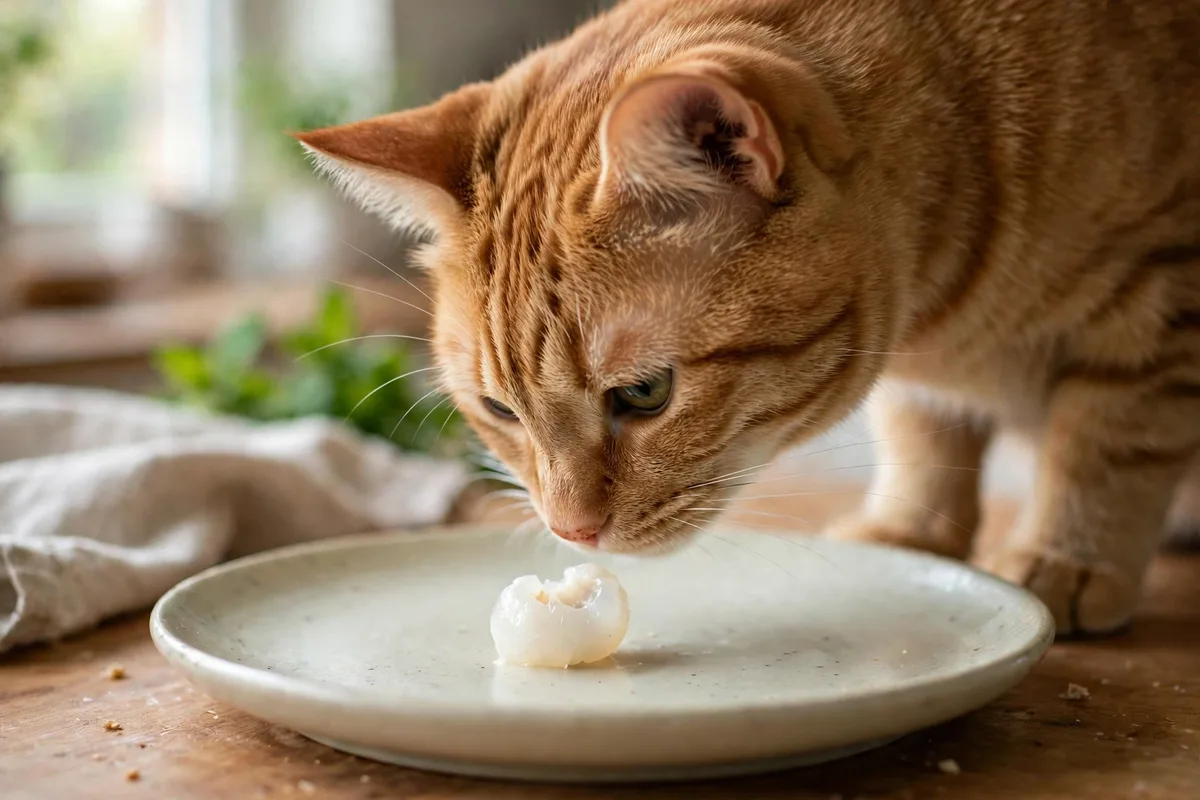
Yes, cats can eat lychee — but only the soft, translucent flesh, and only in a very small amount. A single peeled lychee, with its tough pink-red skin and its hard brown pit completely removed, is a safe occasional treat for a healthy adult cat. The flesh itself is non-toxic, mostly water, and mildly sweet, and most cats that show interest in it are drawn more by the smell and texture than by any real nutritional need.
The danger of lychee is not the flesh but everything around it. The rough outer skin is hard to digest and can be a choking hazard, and the glossy pit in the center is both a choking risk and a blockage risk if swallowed. Lychee is also a sugary fruit, so it belongs firmly in the occasional-treat category, never as a regular part of a cat's diet. Think of lychee as a fun kitchen extra, not a food group.
Is Lychee Safe for Cats?
Lychee flesh is safe for cats in small amounts. It is mostly water with a little vitamin C, potassium, and natural sugars, and it contains no compounds known to be toxic to cats once the skin and pit are gone. That puts lychee in the same broad group as other safe fruits: fine as a rare treat, pointless as a dietary staple. Cats cannot taste sweetness the way humans do, so the sugary appeal of lychee is entirely a human idea — your cat, if interested at all, is likely responding to the juicy texture and the strong floral scent.
What makes lychee different from simpler fruits is the preparation. Unlike a berry you can hand over whole, a lychee arrives in a shell with a pit inside, and both must come off before the fruit is anywhere near your cat. The skin is leathery and rough, and pieces of it can irritate the stomach or, in a cat that gulps, lodge in the throat. The pit is smooth, hard, and just about the size a cat could swallow whole — and a swallowed pit can cause a dangerous intestinal blockage. Peel first, pit second, serve third: that order is the whole safety rule for lychee.
The Skin and Pit: The Two Hazards to Remove
Lychee skin looks decorative and feels tough, and that toughness is exactly the problem. It does not break down easily in a cat's stomach, and sharp-ish fragments can scratch or irritate the digestive tract. Some cats will also chew the skin out of curiosity if a whole lychee is left within reach, so never leave an unpeeled lychee on a counter where a cat can bat it onto the floor and gnaw it. Peel the fruit over a plate, drop the skin straight into the bin, and only then deal with the flesh.
The pit deserves the same caution. Lychee pits are hard, smooth, and roughly the size of a large bean — small enough to swallow, too hard to digest. A pit that gets stuck can cause vomiting, loss of appetite, straining in the litter box, or abdominal pain, and a blockage is a veterinary emergency that sometimes needs surgery. To remove it, slice the flesh away from the pit rather than trying to pop the pit out with your fingers, which can leave fragments behind. If the flesh clings stubbornly to the pit, discard that piece and use another fruit — a clean, pit-free piece is the only kind worth serving.
How Much Lychee Can a Cat Eat?
Keep it to half a lychee — one small piece of flesh, roughly the size of a pea or a kibble piece — once in a while, no more than once or twice a week at most. That sounds stingy, but a cat's stomach is small, and lychee is sugary: a whole lychee is already a generous portion for an animal that weighs four or five kilograms. Start with a single tiny piece the first time and watch for the next 24 hours: normal appetite, normal litter box habits, no vomiting or soft stool. If everything looks fine, that tiny piece can become an occasional treat.
The 10-percent rule is a useful guardrail here. Treats of all kinds — fruit, commercial treats, table scraps — should stay under about 10 percent of your cat's daily calories. Lychee also deserves a special note for cats with diabetes or weight problems: because it is high in natural sugars, it is better skipped for those cats unless their vet specifically approves it. A plain piece of cooked chicken is a far better treat for a cat that needs to watch its weight.
How to Serve Lychee to Your Cat
Choose a fresh, ripe lychee with a pink-red shell that gives slightly when pressed, and wash it well under running water. Peel away the entire skin, then slice the flesh away from the pit and check the piece carefully for any pit fragments or skin remnants. Cut the flesh into one or two tiny pieces, serve plain at room temperature in your cat's regular bowl or as a hand-fed treat, and throw away anything uneaten after a short while so it does not spoil.
Serve lychee fresh only. Canned lychee in syrup is a different food entirely — the syrup is loaded with added sugar, and some cans contain preservatives or flavorings that have no place in a cat's diet. Dried lychee is also out: drying concentrates the sugar and makes the pieces sticky and chewy, which is a choking risk. Fresh, peeled, pitted, plain, and tiny — that is the whole recipe.
Can Kittens Eat Lychee?
Kittens should stick to kitten food. Their growth demands precise nutrition — the right balance of protein, fat, calcium, and calories — and fruit treats only displace that nutrition without adding anything useful. A kitten's stomach is also small and more easily upset by new foods, and a kitten is more likely to gulp a piece whole. Wait until your cat is an adult, around twelve months old, before offering lychee at all, and even then start with a single tiny piece to test tolerance.
What Happens If My Cat Eats Lychee Skin or a Pit?
Do not panic, but do act. If your cat chews a piece of skin, watch for vomiting, drooling, or a refusal to eat over the next day — small amounts of skin often pass without trouble, but irritation is possible. A swallowed pit is more serious: watch for repeated vomiting, straining without producing stool, a swollen or tender belly, lethargy, or a sudden refusal of food and water. Those signs can indicate a blockage, and a blockage needs a vet promptly, not a wait-and-see approach.
If your cat is eating, drinking, and using the litter box normally after nibbling skin, monitoring at home is usually reasonable, but any change in behavior earns a vet call.
Lychee is one of the fruits where preparation is the entire safety story. Peel it, pit it, cut it tiny, and serve it rarely, and it becomes a harmless little novelty for a curious cat. Skip either step and the same fruit becomes a choking or blockage risk. Keep the main diet a complete cat food, keep lychee to a rare pea-sized piece, and your cat gets the fun of a new taste without any of the risk.
Is lychee flesh safe for cats?
Yes, in small amounts. The soft, translucent flesh of a fresh lychee is non-toxic to cats once the skin and pit are completely removed.
Can cats eat lychee skin?
No. The tough outer skin is hard to digest and can irritate the stomach or cause choking. Always peel lychee fully before serving.
Are lychee pits dangerous for cats?
Yes. The hard pit is a choking and intestinal blockage risk if swallowed. Always slice the flesh away from the pit and check for fragments.
How much lychee can a cat eat?
Half a lychee — one pea-sized piece — once or twice a week at most. Start with a single tiny piece and watch for stomach upset.
Can kittens eat lychee?
No. Kittens should stick to kitten food. Wait until your cat is an adult, around twelve months, before offering lychee.
Can cats eat canned lychee?
No. Canned lychee in syrup is loaded with added sugar and may contain preservatives. Serve fresh, peeled, pitted lychee only.