Can Cats Eat Marshmallows?
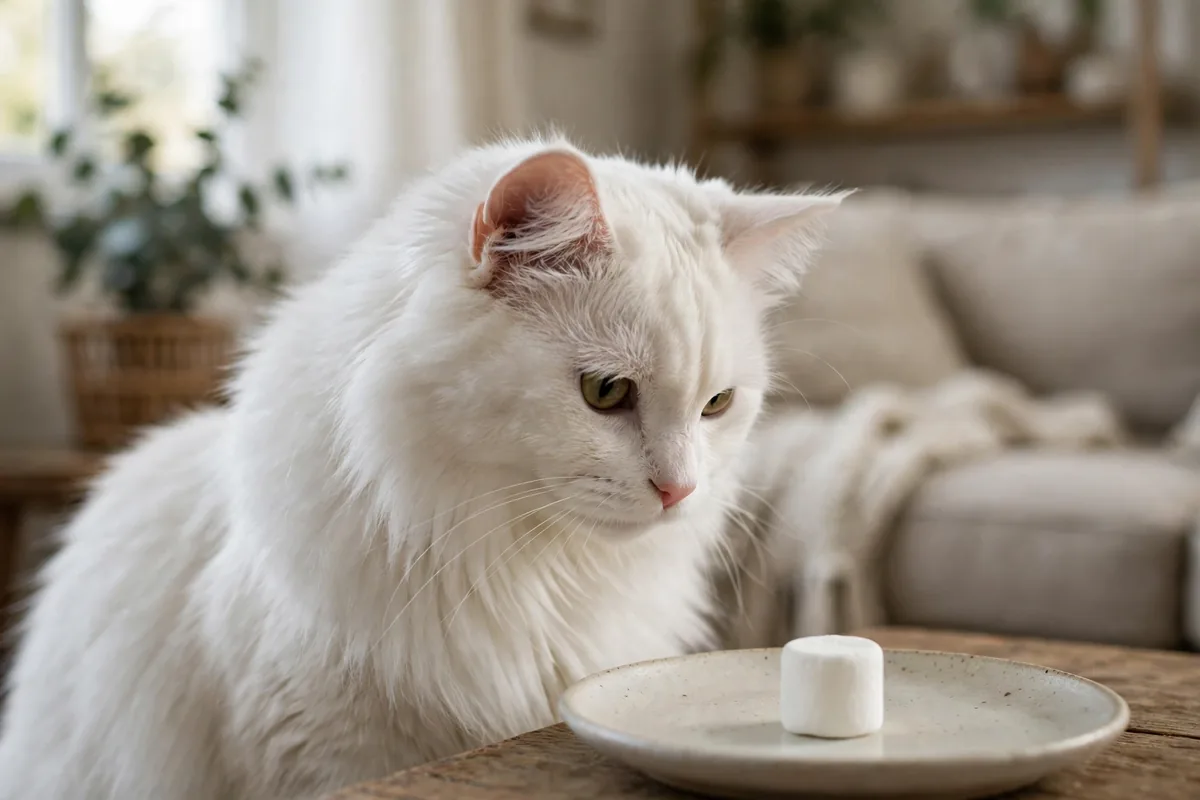
Can cats eat marshmallows? A plain marshmallow is not toxic, but it is still a poor snack for a cat. Marshmallows are almost pure sugar and gelatin, with no protein, no taurine, and nothing a cat needs. Worse, their soft, sticky texture is a choking risk, and sugar-free marshmallows can contain xylitol, a sweetener that is toxic to cats. So while one tiny piece of a plain marshmallow is unlikely to harm a healthy adult cat, there is no good reason to share one.
This guide explains why marshmallows are mostly sugar and air, how the choking risk works, why the xylitol check on the bag is the real safety step, and what to do if your cat has already eaten one.
The Verdict: Can Cats Eat Marshmallows?
Verdict: CAUTION. Marshmallows are not toxic to cats the way chocolate or onions are, but they are not a safe snack either. A plain marshmallow is sugar, corn syrup, gelatin, and air — a combination that gives your cat empty calories and a sticky, swallow-whole texture that can block a small throat. A sugar-free marshmallow is more serious: if it is sweetened with xylitol, even a small amount can be dangerous.
The safest rule is simple: do not make marshmallows a treat for your cat. If you do share, offer only a pea-sized piece of a plain marshmallow, very occasionally, and never share a sugar-free one unless you have read the ingredients and confirmed it contains no xylitol.
What's Actually in a Marshmallow?
A standard marshmallow is made from sugar, corn syrup, water, gelatin, and a little flavoring and cornstarch. That is the whole recipe: no protein, no fat worth mentioning, and no vitamin or mineral a cat needs. The gelatin comes from animal collagen, which is not harmful on its own, but it does not make a marshmallow nutritious — it is just the ingredient that holds the sugar and air together.
Cats are obligate carnivores, built to run on animal protein and fat. They cannot even taste sweetness the way humans do, because they lack the taste receptors for sugar. A marshmallow gives a cat nothing it can use: no taurine for the heart and eyes, no arachidonic acid, no animal protein. It is a sweet, empty snack that fills a small stomach without feeding it — and for a cat prone to weight gain, those empty calories add up faster than most owners expect.
The Xylitol Check: The Real Safety Step
Here is the part that matters most. Regular marshmallows are sweetened with sugar, which is unhealthy but not poisonous. Sugar-free and "low sugar" marshmallows, however, are often sweetened with sugar alcohols — and one of them, xylitol (also listed as birch sugar or birch bark extract), is toxic to cats. Xylitol can trigger a rapid insulin release, causing a dangerous drop in blood sugar, and in larger amounts it can damage the liver.
That is why the xylitol check is the real safety step. Before you share any marshmallow, turn the bag over and read the ingredients list. If you see xylitol, birch sugar, or any sweetener you do not recognize, do not share it. This matters most with sugar-free marshmallows, diet marshmallows, and marshmallow-flavored treats and protein bars — products that look harmless but are sweetened for humans, not for cats. If the bag is gone and you cannot check, assume the worst and call your vet.
Is a Marshmallow Safe for Cats?
A plain marshmallow is safe only in the narrow sense that it will not poison your cat. A tiny piece is unlikely to cause more than a mild stomach upset, if that. But the texture is a genuine problem: marshmallows are soft, sticky, and easy to swallow whole, especially for a cat that gulps food. A whole marshmallow can lodge in a cat's throat, and a toasted marshmallow from a campfire is worse — hot, sticky, and able to burn a cat's mouth as well as block its throat.
Marshmallow fluff and marshmallow creams are no better: the same sugar and corn syrup in spreadable form, sticking to a cat's mouth and fur and inviting more licking and swallowing. Chocolate-covered marshmallows, marshmallow-topped desserts, and s'mores are all off-limits too, because the chocolate and other ingredients add their own risks. The plain marshmallow is the only kind worth discussing — and even then, only as a rare, tiny piece.
The Choking Risk: Soft Does Not Mean Safe
Many owners assume a soft food cannot choke a cat, but marshmallows prove otherwise. A marshmallow compresses when a cat bites it, then springs back and sticks to the roof of the mouth or the back of the throat. A cat that tries to swallow one whole can gag, retch, or choke, and the sticky texture makes it hard to cough back up on its own.
The risk is higher for kittens, small cats, and any cat that eats quickly without chewing. Never offer a whole marshmallow, and never toss one to your cat the way you might toss a treat to a dog. If you do share a piece, cut it to pea size first, offer it by hand, and stay with your cat while they eat it. If your cat paws at its mouth, gags, drools, or seems distressed after eating one, treat it as a possible choking incident and call your vet immediately.
Can Kittens Eat Marshmallows?
No — kittens should not eat marshmallows. The choking risk is higher in small kittens, their stomachs are more sensitive to sugar, and they have no need for a sweet, empty snack. A kitten's growth depends on a complete kitten food, and a marshmallow only takes up room in a tiny stomach that should be filled with proper food.
Wait until your cat is an adult before offering even a single tiny piece, and even then keep it rare. If your kitten is fascinated by the soft, bouncy texture, let them bat at a sealed bag from a safe distance — or offer a kitten-appropriate treat instead.
How Much Marshmallow Can a Cat Eat?
Ideally, none. If you do share, keep it to one tiny piece of a plain marshmallow — no bigger than a pea — offered very occasionally, not daily. Cut the piece yourself so you control the size, and make sure it is plain: no chocolate coating, no sugar-free sweetener, no toasting, and no campfire heat.
Never share sugar-free marshmallows at all, and never let your cat eat from an open bag — a cat that helps itself can eat several before you notice. If your cat shows no interest, that is fine too. Most cats ignore them, which is the right instinct: cats cannot taste sweetness, so a marshmallow holds no flavor appeal for them.
What Happens If My Cat Eats a Marshmallow?
If the marshmallow was plain and your cat ate only a small piece, almost certainly nothing. Your cat may have a soft stool or skip a meal if their stomach did not appreciate the sugar, but those signs usually pass within a day. A whole marshmallow is more likely to cause gagging, retching, or vomiting — and one swallowed whole can cause a blockage that needs veterinary care.
A sugar-free marshmallow is the serious case. Xylitol poisoning can cause vomiting, weakness, trembling, and collapse as blood sugar drops, and the signs can appear quickly — sometimes within half an hour. If your cat ate a sugar-free marshmallow, or one you cannot check the ingredients for, call your vet or an emergency clinic right away and tell them exactly what your cat ate and how much. Do not wait for symptoms.
What to Do If Your Cat Already Ate Marshmallows
Work through these steps:
- Take the bag away so your cat cannot eat more, and check what kind of marshmallow it was — plain, sugar-free, chocolate-covered, or toasted.
- Read the ingredients on the bag. If it lists xylitol, birch sugar, or any sugar-free sweetener, call your vet immediately — this is urgent, even if your cat looks fine.
- Check for choking signs first. Pawing at the mouth, gagging, drooling, or difficulty breathing means a marshmallow may be stuck — call your vet or an emergency clinic immediately.
- Offer fresh water and let your cat drink freely, but do not force water into your cat's mouth.
- Call your vet right away if you see repeated vomiting, weakness, trembling, collapse, refusal to drink, or if your cat ate a sugar-free marshmallow, a large amount, or a chocolate-covered one — or if the eater was a kitten.
Never try to make your cat vomit at home unless your vet specifically tells you to. For more on safe snacks, see our guides to whether cats can eat popcorn and whether cats can eat tuna, or browse the full Cat Food section on the Purrfect Paws homepage.
Frequently Asked Questions
Is a marshmallow safe for cats?
A plain marshmallow is not toxic, but it is not a safe or sensible snack for a cat. The sugar gives them nothing they need, the soft texture is a choking risk, and sugar-free marshmallows may contain xylitol, which is toxic to cats.
Can kittens eat marshmallows?
No. Kittens should not eat marshmallows — the choking risk is higher in small kittens, their stomachs are more sensitive to sugar, and they need every bite to be proper kitten food.
What happens if my cat eats a marshmallow?
A plain marshmallow usually causes no trouble beyond a possible upset stomach. A sugar-free marshmallow is the serious case — check the bag for xylitol and call your vet immediately if it contains xylitol or if your cat shows weakness, vomiting, or trembling.
How much marshmallow can a cat eat?
Ideally none. If you do share, a tiny piece of a plain marshmallow — no bigger than a pea — very occasionally is the most a healthy adult cat should have. Never share sugar-free marshmallows.
Can cats eat sugar-free marshmallows?
No. Sugar-free marshmallows may be sweetened with xylitol, which is toxic to cats and can cause a dangerous drop in blood sugar and liver problems. Always check the ingredients, and never share a sugar-free marshmallow.