Can Cats Eat Popcorn?
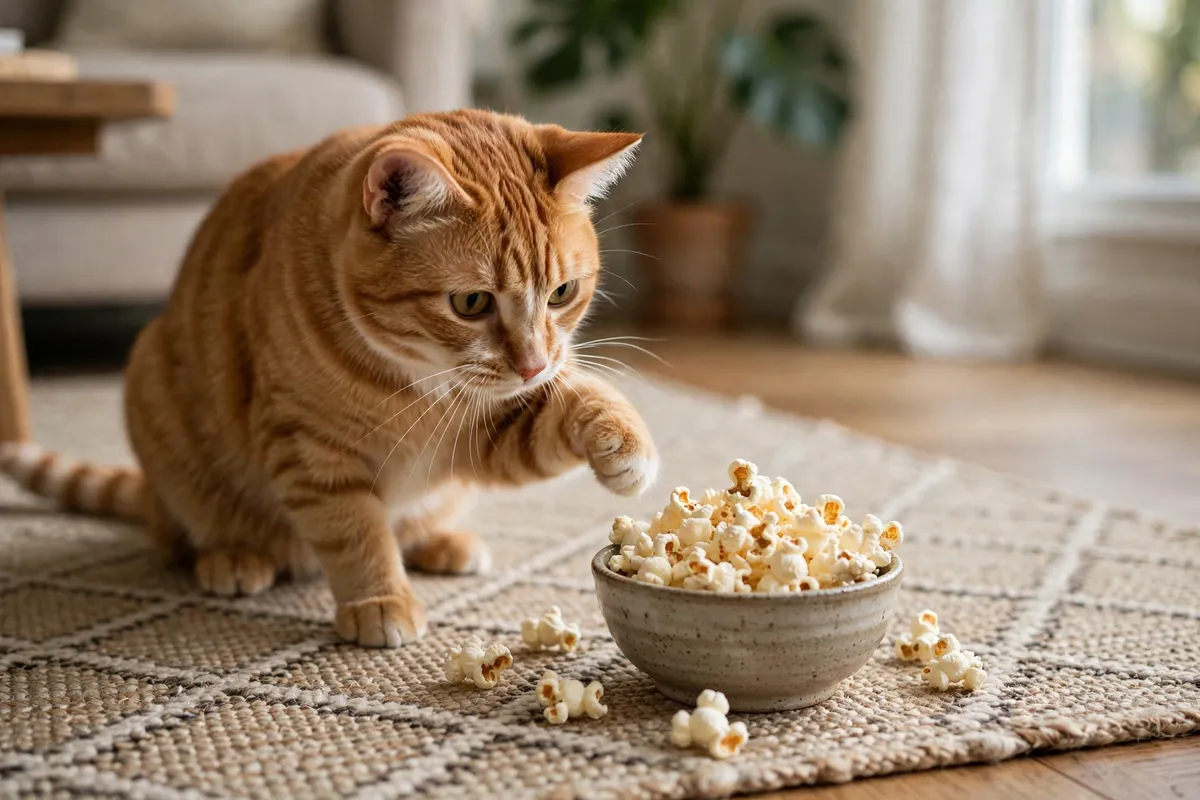
Yes — cats can eat popcorn, but only plain, air-popped popcorn, and only a piece or two. The popcorn itself is not toxic; the danger is in how it is made and served. Unpopped kernels are a choking hazard, and the butter, salt, cheese, and caramel on movie popcorn can all upset a cat's stomach. So the bowl on your lap at movie night is not cat food — but a single plain popped kernel, offered carefully, is usually fine.
This guide explains why plain popcorn is mostly harmless, why kernels are the real physical danger, what makes movie popcorn off-limits, and what to do if your cat has already eaten some.
The Verdict: Can Cats Eat Popcorn?
Verdict: CAUTION. Plain air-popped popcorn is not toxic to cats, and a piece or two offered occasionally is harmless for a healthy adult cat. But popcorn has two built-in risks most human foods do not: hard unpopped kernels that can choke a cat, and toppings that are all wrong for a cat's stomach.
Share popcorn with your cat only when you control every part of it — plain, air-popped, fully popped, no toppings, and only one or two pieces. The moment it comes from a cinema bucket, a microwave bag, or a flavored packet, it stops being shareable.
Why Plain Popcorn Is (Mostly) Fine
Air-popped popcorn is a whole grain, very low in calories and fat when nothing is added to it. It contains a little fiber and protein, and no ingredient that is toxic to cats. For a healthy adult cat, a plain popped piece is about as harmless as a plain cooked grain — not nutritious, but not dangerous either.
That "not nutritious" part matters. Popcorn gives your cat nothing they need: no taurine, no animal protein, no essential fats. It is a filler, and like all fillers it should stay a rare, tiny extra. A cat that fills up on popcorn eats less of the food that actually keeps them healthy — and many cats sniff popcorn once and walk away.
The Kernel Problem: Choking and Teeth
This is the danger most owners do not think about. An unpopped kernel is a small, rock-hard seed, exactly the wrong size and shape for a cat's mouth. A cat that crunches down on one can crack a tooth, and one that tries to swallow it whole can choke. Partially popped kernels — the hard, half-open ones at the bottom of the bowl — are just as risky.
The risk is higher for kittens and small cats, and for any cat that gulps food without chewing. Never let your cat eat from the bottom of a popcorn bag or bowl, where the unpopped kernels collect. If you share popcorn, pick out one or two fully popped, soft pieces yourself, check them for hard bits, and offer them one at a time. If your cat paws at its mouth, gags, or seems distressed after eating popcorn, treat it as a possible choking incident and call your vet immediately.
Movie Popcorn Is the Real Problem
The popcorn served at the cinema, or made in a microwave bag at home, is a completely different food from plain air-popped popcorn. Here is what usually goes on it, and why each topping is a problem:
- Butter. Rich and fatty, with lactose that most adult cats cannot digest well. A buttery handful can trigger vomiting, diarrhea, and stomach pain.
- Salt. Movie popcorn is heavily salted, and a cat's small body handles excess sodium poorly — extra thirst and stomach upset are the usual signs.
- Cheese powder. Salty, fatty, and full of lactose — three problems in one topping.
- Caramel and kettle corn. Sugar-coated popcorn adds empty calories a cat does not need, and sticky caramel can be a choking concern.
- Microwave popcorn flavorings. Microwave bags use oils and artificial butter flavorings that a cat should not eat.
None of these toppings is acutely toxic in a tiny amount, but together they turn a harmless grain into a salty, fatty, sugary snack. If your popcorn has any topping at all, do not share it.
Is Popcorn Safe for Cats?
Plain air-popped popcorn, fully popped, with nothing on it, is safe in tiny amounts for a healthy adult cat. Buttered, salted, cheese, caramel, kettle, and microwave popcorn are not safe to share — the toppings are the problem, not the corn. Unpopped and partially popped kernels are never safe, because of the choking risk.
Popcorn made in a little oil on the stove is a middle ground: if it is truly plain, with no salt and no butter, a piece or two is fine, but air-popped is the cleanest option. Pre-popped bagged popcorn is usually salted or flavored — if the label lists salt, butter, oil, or cheese, keep it away from your cat.
Can Kittens Eat Popcorn?
No — kittens should not eat popcorn. The choking risk from kernels is higher in small kittens, their stomachs are more sensitive to salt and fat, and they have no nutritional need for it. A kitten's growth depends on a complete kitten food, and popcorn only takes up room in a tiny stomach.
Wait until your cat is an adult before offering even a single plain piece, and even then, keep it rare. If your kitten loves the sound of popping corn, let them watch from a safe distance.
How Much Popcorn Can a Cat Eat?
If you share popcorn at all, keep it to one or two plain, air-popped pieces, offered occasionally — not daily, and never a handful. Break each piece into smaller bits, and pick the pieces yourself so you can check they are fully popped and free of hard kernels.
Watch your cat over the next day. If you see vomiting, soft stools, or a skipped meal, their stomach did not appreciate it, and popcorn should stay a one-time experiment. And if your cat shows no interest at all, that is fine too — no cat needs it.
What Happens If My Cat Eats Popcorn?
If the popcorn was plain and air-popped, almost certainly nothing. Buttered or salted popcorn is more likely to cause vomiting, diarrhea, and extra thirst over the next few hours — uncomfortable, but usually passing within a day.
The serious case is a swallowed kernel. Watch for pawing at the mouth, gagging, retching, drooling, or difficulty breathing — signs of choking or a kernel stuck in the throat that need immediate veterinary attention. A kernel swallowed without choking usually passes through, but if your cat seems uncomfortable, stops eating, or vomits repeatedly, call your vet.
What to Do If Your Cat Already Ate Popcorn
Work through these steps:
- Take the bowl or bag away so your cat cannot eat more, and check what kind of popcorn it was — plain, buttered, salted, flavored, or microwave.
- Check for choking signs first. Pawing at the mouth, gagging, or distress means a kernel may be stuck — call your vet or an emergency clinic immediately.
- Offer fresh water and let your cat drink freely, especially if the popcorn was salted or buttered.
- Watch for 24 hours. Mild soft stools or one vomit usually settle on their own.
- Call your vet right away if you see choking signs, repeated vomiting, refusal to drink, weakness, or if your cat ate a large amount of buttered or salted popcorn, or if the eater was a kitten.
Never try to make your cat vomit at home unless your vet specifically tells you to, and never reach into your cat's mouth for a kernel unless you can see it clearly and your cat is calm. For more on safe snacks, see our guides to whether cats can eat cheese and whether cats can eat tuna, or browse the full Cat Food section on the Purrfect Paws homepage.
Frequently Asked Questions
Is popcorn safe for cats?
Plain air-popped popcorn is safe in tiny amounts for a healthy adult cat. Buttered, salted, cheese, caramel, and microwave popcorn are not safe to share, and unpopped kernels are a choking hazard.
Can kittens eat popcorn?
No. Kittens should not eat popcorn — the choking risk from kernels is higher in small kittens, and their stomachs are more sensitive to salt and fat.
What happens if my cat eats popcorn?
Plain popcorn usually causes no trouble. Buttered or salted popcorn can cause vomiting, diarrhea, and extra thirst. A swallowed kernel is the serious case — watch for pawing at the mouth or gagging and call your vet immediately.
How much popcorn can a cat eat?
One or two plain, air-popped pieces, offered occasionally, is plenty. Break each piece into smaller bits, check for hard kernels, and never let your cat eat from the bottom of the bag.
Can cats eat movie popcorn?
No. Movie popcorn is coated in butter, salt, cheese powder, or caramel — all of which can upset a cat's stomach. Only plain, air-popped popcorn with nothing on it is shareable.