Can Cats Eat Olives?
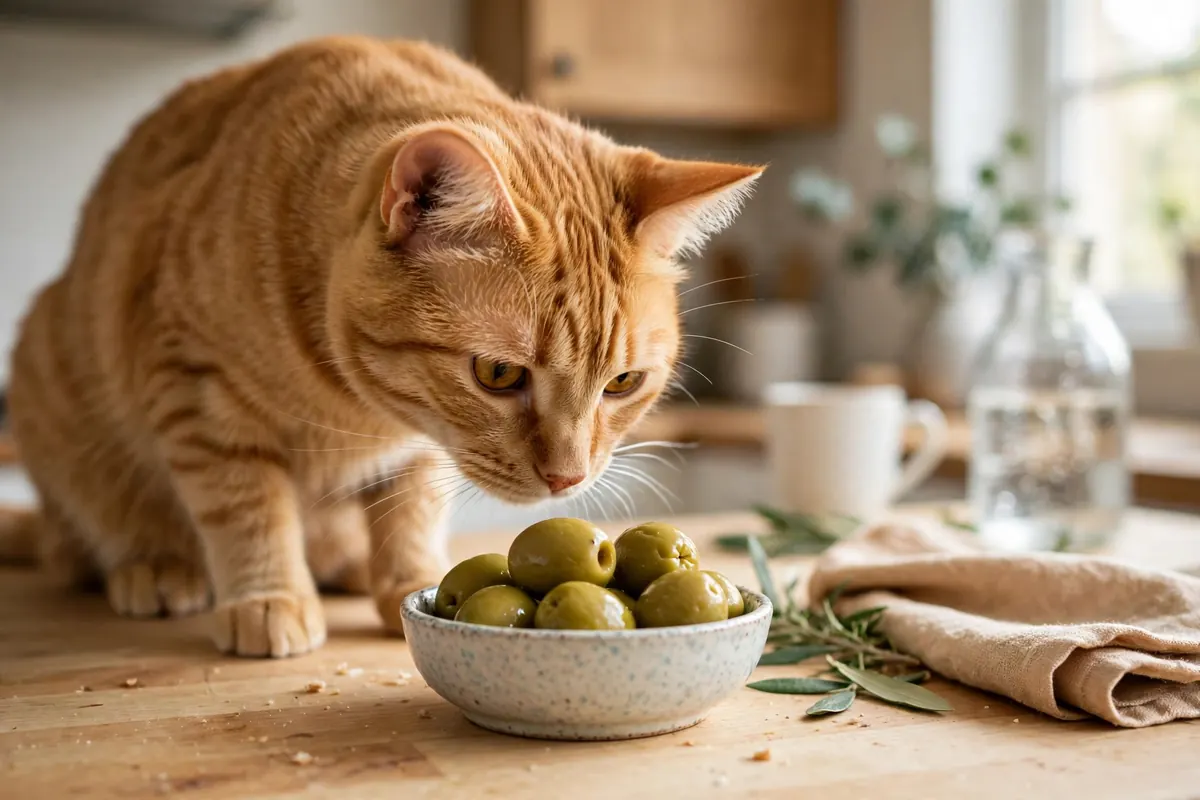
Yes — cats can eat olives, in tiny amounts, and many cats go absolutely wild for them. Plain, rinsed olives are not toxic to cats, and the reason cats love them is a genuine piece of science: olives contain a compound similar to the active ingredient in catnip, and some cats react to olives the way other cats react to a catnip toy — rubbing, rolling, and purring with delight.
The problem is not the olive itself, but the salty brine it comes in. Most olives are stored in salty water, and a cat's small body handles excess salt poorly. This guide explains why cats love olives, how to serve them safely, how much is too much, and what to do if your cat has already eaten a few too many.
The Verdict: Can Cats Eat Olives?
Verdict: CAUTION. Plain olives — green or black, pitted and rinsed — are not toxic to cats, and a tiny piece offered occasionally is harmless for a healthy adult cat. But olives are not a health food for cats: they are usually sold in salty brine, they are high in fat for their size, and they offer a cat nothing it actually needs.
Serve olives only when they are plain, pitted, and rinsed under water to remove the brine, and only one small piece at a time. Never serve olives stuffed with garlic, chilli, or cheese, never serve the brine, and never let your cat eat the pit. If your cat shows no interest at all, that is fine too — no cat needs olives.
Why Cats Go Crazy for Olives
If your cat has ever gone wild over an olive, you have seen a real chemical reaction. Olives contain a compound related to nepetalactone, the same compound that makes catnip so irresistible to cats — it acts on the same receptors. For cats that respond to it, an olive can trigger the full catnip show: sniffing, licking, rubbing their face on it, rolling on the floor, and purring.
Not every cat reacts, and that is normal: the catnip response is inherited, and roughly a third of cats do not respond to catnip at all — and the same cats tend not to respond to olives either. Kittens under about three months old usually do not respond, and the reaction fades as a cat gets older. If your cat loves olives, it is a harmless bit of fun — but the olive itself is still a treat, not a toy, and the portion still matters.
The Brine Problem: Why Salt Is the Real Issue
The brine is the real problem with olives. Olives are stored in salty water to preserve them, and that brine soaks into the olive itself. A cat that eats an olive straight from the jar gets a concentrated dose of salt, and a cat's small body handles excess sodium poorly — extra thirst, stomach upset, and in larger amounts, salt poisoning, which can cause vomiting, tremors, and worse.
Rinsing is the fix, and it is a simple one: hold the olive under running water for a few seconds, pat it dry, and cut it into small pieces. That removes most of the surface salt. But rinsing does not remove all the salt that has soaked into the olive, which is why the portion must stay tiny. And never let your cat drink the brine from the jar, or lick the liquid from an olive bowl — that is salt water, not a treat.
Are Olives Safe for Cats?
Plain, pitted, rinsed olives are safe for cats in tiny amounts. Green olives and black olives are both fine — the difference is ripeness, not safety. What is not safe is everything that usually comes with olives: garlic-stuffed olives, chilli-stuffed olives, cheese-stuffed olives, olives in spicy marinades, and olives served in their brine.
Garlic is toxic to cats, chilli irritates the gut, and cheese adds fat and lactose a cat does not need. Olive oil, in a tiny amount, is not dangerous — a drop on food can even help a cat with a hairball — but it is pure fat, so keep it to a drop, not a spoonful. For more on foods that hide dangers, see our guide to human foods that are poisonous to cats.
How Much Olives Can a Cat Eat?
If you share olives at all, keep it to one olive, pitted, rinsed, and cut into small pieces, offered occasionally — not daily, and never a handful. Offer one small piece at a time so you can watch how your cat handles it, and stop at one olive even if your cat is begging for more.
Watch your cat over the next day. If you see vomiting, soft stools, or extra thirst, their stomach did not appreciate it, and olives should stay a one-time experiment. And if your cat shows no interest at all, that is fine too — no cat needs olives, and a cat that ignores them is making the sensible choice. A complete, balanced cat food already covers everything your cat needs.
Can Kittens Eat Olives?
No — kittens should not eat olives. A kitten's small body is more sensitive to salt, and a kitten has no nutritional need for olives at all. Kittens under three months old also do not respond to the catnip-like compound in olives, so there is no fun in it for them either — just salt and fat they do not need.
Wait until your cat is an adult before offering even a single rinsed piece of plain olive, and even then, keep it rare. If your kitten is fascinated by the olive jar, keep the jar well out of reach — and keep the brine where a kitten cannot drink it.
What to Do If Your Cat Already Ate Olives
If your cat ate one plain, rinsed olive, there is nothing to worry about — just go back to its normal food. If your cat ate several olives, olives straight from the brine, or stuffed olives, work through these steps:
- Take the olives away so your cat cannot eat more, and check what kind they were — plain, stuffed, or in brine — and roughly how many were eaten.
- Offer fresh water and let your cat drink freely, especially if the olives were salty or in brine.
- Watch for 24 hours. Look for vomiting, diarrhea, extra thirst, or a skipped meal — mild stomach upset usually settles on its own.
- Call your vet right away if you see repeated vomiting, tremors, weakness, or refusal to drink, or if your cat ate garlic-stuffed olives, a large amount of brine, or if the eater was a kitten.
- Check for the pit. If your cat swallowed an olive pit, watch for choking signs and call your vet — a pit can block the gut.
Never try to make your cat vomit at home unless your vet specifically tells you to. For more food guidance, browse the full Cat Food section on the Purrfect Paws homepage.
Frequently Asked Questions
Is it safe for cats to eat olives?
Plain, pitted, rinsed olives are safe for cats in tiny amounts. The brine they are stored in is the problem — it is very salty — so always rinse olives under water first, and never serve olives stuffed with garlic, chilli, or cheese.
Can kittens eat olives?
No. Kittens should not eat olives — their small bodies are more sensitive to salt, and they have no nutritional need for olives. Kittens under three months old do not even respond to the catnip-like compound in olives, so wait until your cat is an adult.
Why do cats love olives?
Olives contain a compound similar to nepetalactone, the active ingredient in catnip, so some cats react to olives the way other cats react to catnip — rubbing, rolling, and purring. Not every cat responds, and that is normal.
How much olives can a cat eat?
One olive, pitted, rinsed, and cut into small pieces, offered occasionally, is plenty. Never offer olives daily or as a regular treat, and never let your cat drink the brine from the jar.
What happens if my cat eats olives from the jar?
One plain olive from the jar is usually harmless, but several olives or a drink of the brine can cause vomiting, diarrhea, and extra thirst from the salt. Offer fresh water, watch your cat for 24 hours, and call your vet if you see repeated vomiting or weakness.