Can Cats Eat Pasta?
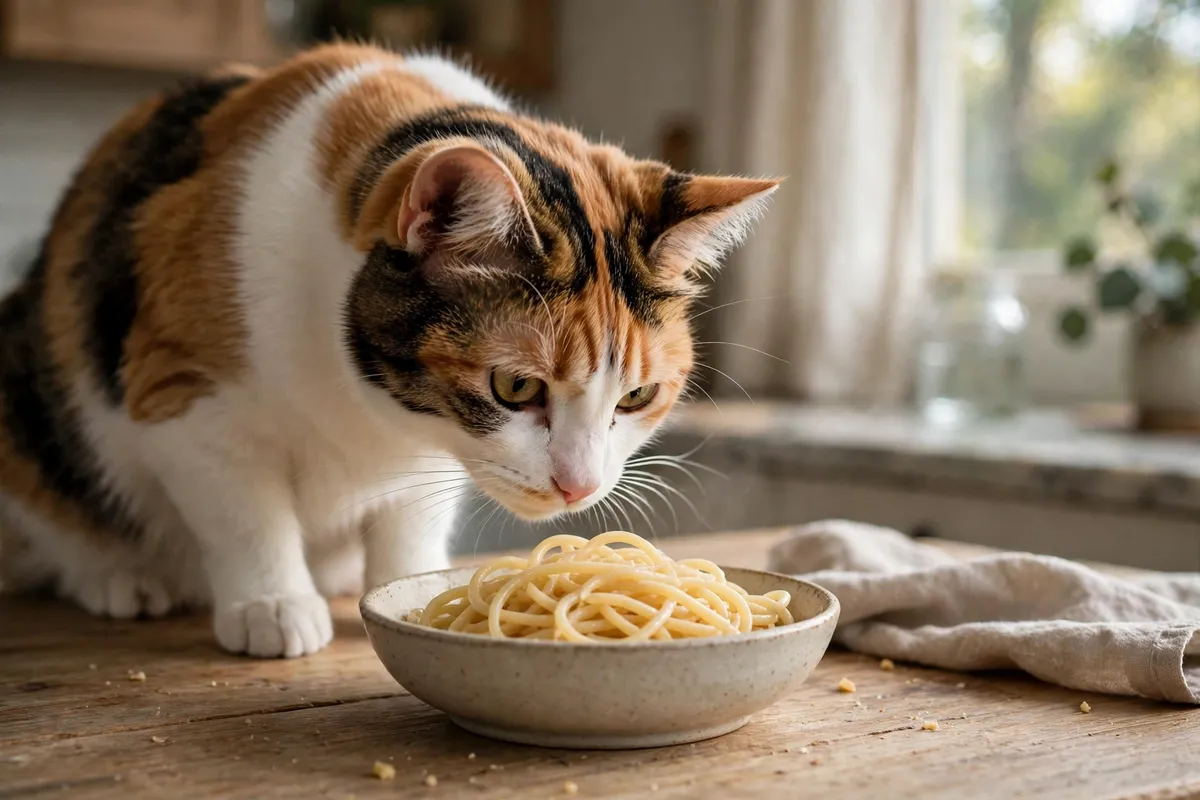
Yes, cats can eat pasta — but only plain, cooked pasta, in small amounts. A plain noodle is not toxic to cats; it is simply a starchy filler with almost no nutrition a cat needs. The real danger is never the noodle itself — it is the sauce: garlic, onion, tomato, cheese, and creamy Alfredo-style sauces can all upset a cat's stomach, or worse. A plain piece of spaghetti is fine, but the bowl of pasta on your dinner table usually is not.
This guide explains why plain pasta is only a filler, which sauces are dangerous, how much pasta is safe, and what to do if your cat has already eaten a sauced portion.
The Verdict: Can Cats Eat Pasta?
Verdict: CAUTION. Plain cooked pasta is safe in tiny amounts, but it offers your cat nothing useful, and most pasta as served to people comes with a sauce that is not safe at all. A piece or two of plain, cooked, unsalted pasta, offered occasionally, is harmless for a healthy adult cat — anything with sauce, butter, oil, cheese, or seasoning stays off the menu.
Think of pasta as the cat equivalent of plain white bread: not poisonous, but not food either. Cats are obligate carnivores, built to run on animal protein and fat, and pasta is refined carbohydrate their bodies simply do not need. A tiny taste now and then is fine; a regular helping crowds out real nutrition and adds weight.
Why Plain Pasta Is Only a Filler
Pasta is made from wheat flour and water, and once cooked it is almost entirely starch. It contains a little plant protein, but it lacks the amino acids cats need most — especially taurine, which cats cannot make themselves and must get from meat. It also contains no meaningful vitamins or minerals for a cat.
That matters because a cat's stomach is small: every mouthful of pasta is a mouthful that is not meat-based cat food, and over time that trade adds up to too many empty calories and a cat that slowly gains weight. An occasional noodle is harmless, but pasta as a regular treat, or mixed into meals to bulk them out, is not a good idea.
The Sauce Is the Danger
Here is where pasta goes from harmless to risky. Almost every pasta sauce contains something a cat should not eat:
- Garlic and onion. The biggest danger. Both belong to the allium family, and they damage a cat's red blood cells. Even the garlic powder in a jar of sauce counts, and signs of trouble can appear a day or two after eating.
- Tomato sauce. Usually made with onion, garlic, salt, and sometimes sugar — the acidity alone can upset a cat's stomach.
- Cheese sauce. Rich, fatty, and full of lactose, which most adult cats cannot digest well.
- Creamy Alfredo-style sauce. Butter, cream, cheese, and garlic — a combination of fat, lactose, and alliums in one spoonful.
- Pesto. Often contains garlic, salt, and sometimes nuts. Basil itself is not the problem; the garlic and salt are.
- Butter and oil. Even "just buttered" pasta adds fat that can trigger stomach upset.
- Chili and spicy sauces. Capsaicin irritates a cat's mouth and stomach, and spicy sauces often contain onion and garlic as well.
Even a small amount of sauce matters, because a cat weighs so little. A spoonful of sauce on a plate is a small taste for a person and a meaningful dose for a cat. If the pasta on your plate has any sauce at all, do not share it — no matter how much your cat begs.
Is Pasta Safe for Cats?
Plain cooked spaghetti, macaroni, penne, or fusilli — with nothing on them — is safe in tiny amounts for a healthy adult cat. Cook it until soft, let it cool, and cut long strands into short pieces before offering.
Dry, uncooked pasta is a different story: it is hard and difficult to digest, and it can cause stomach discomfort or vomiting. Instant ramen is also out — the seasoning packets are very high in salt and usually contain onion and garlic powder. Fresh pasta from a deli counter is only safe if it is genuinely plain; many are flavored with spinach, tomato, or garlic, so check before sharing.
Can Kittens Eat Pasta?
It is better not to give pasta to kittens. A kitten's stomach is tiny, and every mouthful needs to count toward growth — kitten food is carefully balanced with the protein, fat, and minerals a growing cat needs, and pasta provides none of that. A noodle fills a small stomach with empty carbohydrate and leaves less room for the food that actually helps a kitten grow.
Long strands of spaghetti can also be awkward for a small kitten to manage. Wait until your cat is an adult before offering even a tiny piece of plain pasta — kittens do not need it, and they will not miss it.
How Much Pasta Can a Cat Eat?
If you offer pasta at all, keep it to one or two small pieces of plain cooked pasta, occasionally — not daily, and never a bowl. Serve it plain, cooled, and cut into short pieces, with no butter, oil, salt, or cheese.
Watch your cat over the next day. If you see soft stools or a skipped meal, their stomach did not appreciate it, and pasta should stay a one-time experiment. If your cat loves pasta, that is fine — they can love it from a distance.
What Happens If My Cat Eats Pasta?
If the pasta was plain and cooked, almost certainly nothing. Most cats digest a small amount with no sign at all. If the pasta was sauced, the outcome depends on the sauce: tomato or cheese sauce usually means a few hours of stomach upset — vomiting, soft stools, or gas — that passes on its own. Buttered pasta can cause the same, plus extra thirst.
Garlic and onion are the serious case. If your cat ate a meaningful amount of a garlic or onion sauce, watch for lethargy, weakness, pale gums, or dark-colored urine over the next one to three days — signs of red blood cell damage that can appear late. A large amount of pasta can also cause constipation or a bloated stomach. If your cat ate a lot, seems unwell, or is a kitten, call your vet rather than waiting.
What to Do If Your Cat Already Ate Pasta
Work through these steps:
- Take the plate away so your cat cannot eat more, and work out whether the pasta was plain or sauced.
- Check the sauce ingredients. Look for garlic, onion, chili, or cheese on the jar or recipe. Garlic and onion are the ones that matter most.
- Offer fresh water and let your cat rest. Skip the next treat and feed their normal food when they are ready.
- Watch for 24 to 48 hours. Mild soft stools or one vomit usually settle on their own. With garlic or onion, keep watching for up to three days.
- Call your vet right away if the pasta had garlic or onion sauce, if your cat ate a large amount, if your cat is a kitten, or if you see repeated vomiting, weakness, pale gums, or dark urine.
Never try to make your cat vomit at home unless your vet specifically tells you to. For more on safe human foods, see our guides to whether cats can eat rice and whether cats can eat chicken, or browse the full Cat Food section on the Purrfect Paws homepage.
Frequently Asked Questions
Is pasta safe for cats?
Plain cooked pasta is safe in tiny amounts for a healthy adult cat — just a starchy filler with no real nutrition. Pasta with sauce is not safe: most sauces contain garlic, onion, salt, or cheese.
Can kittens eat pasta?
It is better not to. Kittens need calorie-dense, balanced kitten food for growth, and pasta fills a tiny stomach with empty carbohydrate. Wait until your cat is an adult.
Can cats eat spaghetti sauce?
No. Tomato sauce, cheese sauce, Alfredo sauce, and pesto usually contain onion, garlic, salt, and dairy — a combination that can cause stomach upset and, with garlic and onion, damage to red blood cells. Never share sauced pasta.
What happens if my cat eats pasta?
Plain cooked pasta usually causes no trouble. Sauced pasta can cause vomiting, soft stools, or gas for a day. Garlic or onion sauce is more serious — watch for lethargy or pale gums over the next few days and call your vet.
Can cats eat raw or dry pasta?
No. Dry uncooked pasta is hard and difficult to digest, and it can cause stomach discomfort or vomiting. Always cook pasta until soft, serve it plain, and cut long strands into short pieces.