Can Cats Eat Peas?
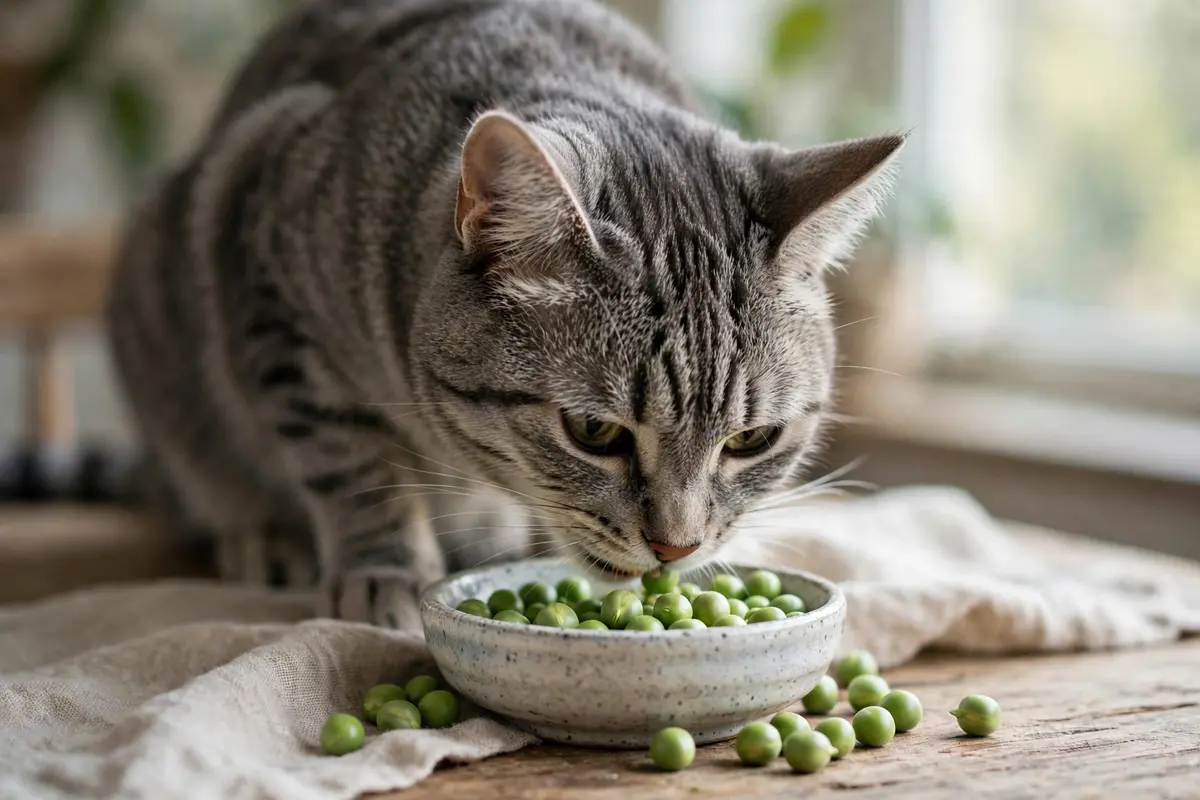
The Short Answer: Yes, Peas Are Safe
Yes, cats can eat peas. Cooked peas are safe for cats, and they are so unremarkable as a food that they already appear in many commercial cat foods as a source of fiber and plant protein. A few soft peas now and then are a perfectly fine treat for a healthy cat.
The key word is cooked. Peas should be served soft — steamed, boiled, or mashed — and plain, with nothing added. Raw peas are hard and difficult to digest, and peas from a seasoned dish carry whatever seasonings were in the pot. Keep the peas plain and the portion small, and there is very little to worry about.
Are Peas Safe for Cats?
Peas are safe for cats when cooked and served plain. They are not toxic, and they do not contain any compound that cats struggle to process. In fact, peas are one of the most common plant ingredients in cat food, where they show up as pea fiber or pea protein in both kibble and wet food. If peas were a problem for cats, they would not be a staple of the pet food industry.
That said, peas are a plant food, and cats are obligate carnivores — they are built to run on animal protein, not vegetables. Peas can be a pleasant extra, but they cannot replace meat, and they should never make up a meaningful share of your cat's diet. Think of them as a small side dish, not a food group.
Cooking matters. Raw peas are firm, round, and hard to chew, which makes them a mild choking risk and harder on the stomach. A quick steam or boil softens them completely. Mashing them removes the risk altogether and is the best option for kittens, senior cats, or any cat that tends to gulp its food.
Why Peas Show Up in Cat Food
If you have ever read a cat food label, you have probably seen peas. Manufacturers use them for two reasons: they add fiber, which helps digestion and stool quality, and they add a little plant protein, which helps balance the recipe. They are cheap, widely available, and well tolerated by most cats.
Peas also bring small amounts of vitamins A, B, C, and K, plus iron, magnesium, and potassium. None of this makes peas a health food for cats — the amounts in a few peas are tiny, and your cat's regular food already covers its nutritional needs. But it does explain why peas are a sensible, low-risk choice when you want to offer a vegetable treat.
There is one group that should be careful: cats with kidney disease or urinary problems. Peas contain purines, which the body breaks down into uric acid. For a healthy cat this is no issue at all, but if your cat has a history of urinary crystals or kidney trouble, ask your vet before making peas a regular treat.
How Much Peas Can a Cat Eat?
A tablespoon of cooked peas — roughly ten to fifteen peas — is a generous serving, and most cats will be happy with less. Offer peas two or three times a week at most, and keep all treats combined under ten percent of your cat's daily calories. Peas are light, but the ten-percent rule still applies.
Start with just three or four peas the first time. Most cats handle them easily, but a few will have softer stools after a new food, and a small first serving keeps any reaction mild. If your cat eats the peas happily and its digestion stays normal, you can offer a full small serving next time.
Watch the total. Peas are easy to over-serve because they are small — a heaped spoonful looks like nothing to us, but it is a real portion for a cat. Measure with a tablespoon rather than pouring from the bag.
How to Prepare Peas for Your Cat
Fresh peas, frozen peas, and peas from a pod all work, as long as they end up cooked and plain. Steam or boil them in plain water for two to three minutes until soft, then let them cool completely. For the safest serving, mash them lightly with a fork — mashed peas cannot roll, cannot be swallowed whole, and are easy for any cat to eat.
Frozen peas are the easiest option. They cook in minutes, they are available year-round, and they are already shelled. Just cook them from frozen and skip the salt. Fresh peas need shelling, which takes a little longer but gives the same result.
Avoid canned peas, which are usually packed in salty water, and avoid any peas from a seasoned dish. Butter, salt, garlic, onion, and seasoning blends all turn a safe vegetable into a bad idea. Pea soup is also off the menu — it is usually seasoned, often contains onion, and is far too salty for a cat.
Can Kittens Eat Peas?
Kittens can eat a few mashed, cooked peas once they are on solid food, usually from around eight weeks old. Mash them well and offer only two or three — a kitten's stomach is tiny, and kitten food should take priority over any vegetable. Peas add nothing a growing kitten needs that its food does not already provide.
For kittens under eight weeks, skip peas entirely. They should be nursing or on a kitten milk replacer, and solid foods of any kind come later. When in doubt, ask your vet before adding anything new to a kitten's diet.
What Happens If My Cat Eats Peas?
If your cat ate plain cooked peas, nothing bad is likely to happen. Most cats digest a small serving without any sign of trouble. The most common result of overdoing it is softer stools or a little extra gas, which usually settles within a day. Offer fresh water and feed the next meal as normal.
If your cat ate raw peas, watch for stomach discomfort or vomiting, and check that nothing is stuck — a whole raw pea can be a choking hazard for a cat that gulps. If your cat ate peas from a seasoned dish, note what seasonings were involved: garlic and onion are toxic to cats, so call your vet if either was in the dish.
If your cat got into a large amount of peas — an open bag, a spilled bowl — and shows vomiting, diarrhea, or lethargy, call your vet. A one-off overindulgence is rarely dangerous, but a vet can tell you whether your cat needs to be seen.
Peas are a safe, simple treat for cats — cooked, plain, and mashed or soft, in a tablespoon-sized serving a few times a week. They are already a familiar ingredient in cat food, which tells you how well tolerated they are. Keep them plain, keep the portion small, and skip them if your cat has kidney or urinary issues.
Can cats eat peas?
Yes. Cooked, plain peas are safe for cats in small amounts. They are already a common ingredient in commercial cat food.
Are raw peas safe for cats?
No. Raw peas are hard, difficult to digest, and a mild choking risk. Always steam or boil peas until soft, and mash them for kittens or cats that gulp food.
Can cats eat canned peas?
Canned peas are not ideal because they are packed in salty water. Fresh or frozen peas, cooked plain, are the better choice.
How much peas can a cat eat?
About a tablespoon of cooked peas — roughly ten to fifteen peas — two or three times a week. Start with three or four peas the first time.
Can kittens eat peas?
Yes, from around eight weeks old, a few well-mashed cooked peas are fine. Kittens under eight weeks should not eat vegetables at all.
What should I do if my cat eats a lot of peas?
Offer fresh water and watch for vomiting, diarrhea, or lethargy. A small overindulgence usually settles on its own, but call your vet if symptoms last more than a day.