Can Cats Eat Seaweed?
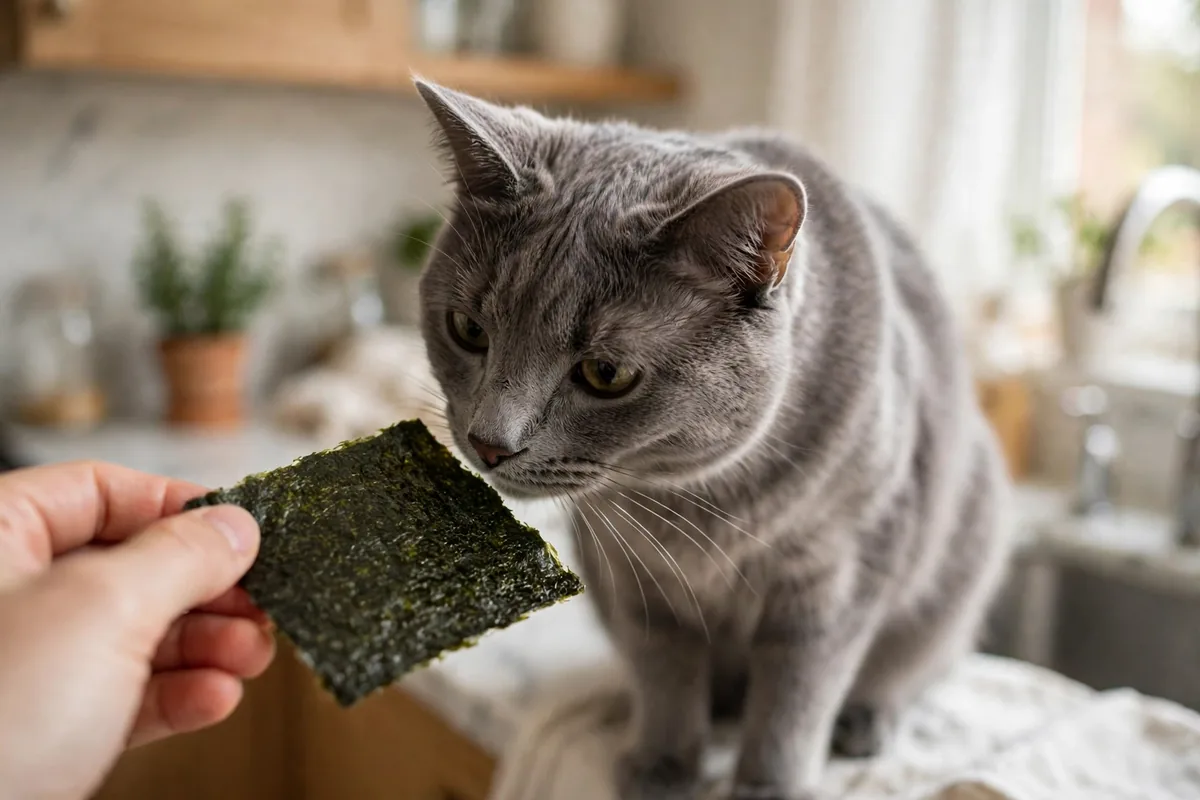
Yes — cats can eat seaweed, but only plain, unseasoned seaweed in tiny amounts. A small piece of plain nori, the dark green sheets used to wrap sushi, is usually harmless for a healthy adult cat. The problem is that most of the seaweed people actually eat is not plain: snack seaweed is coated in salt, oil, and flavorings, and even plain seaweed is very rich in iodine, which adds up fast in a small animal. So the sheet from your sushi roll is a different thing from the flavored packet in your snack drawer.
This guide explains the difference between nori and seasoned snack seaweed, why iodine is the nutrient to watch, how much is safe, and what to do if your cat has already eaten some.
The Verdict: Can Cats Eat Seaweed?
Verdict: CAUTION. Plain, unseasoned seaweed such as nori is not toxic to cats, and a thumbnail-sized piece offered occasionally is harmless for a healthy adult cat. But seaweed is not a food cats need, and it carries two real risks: the salt and flavorings on most snack seaweed, and the high iodine content of seaweed itself.
Share seaweed with your cat only when it is plain nori with nothing added — no salt, no oil, no flavorings — and only a tiny piece at a time. If the seaweed came from a flavored snack packet, a seasoned salad, or a restaurant dish, keep it away from your cat.
Why Plain Seaweed Is (Mostly) Fine
Plain seaweed is a low-calorie food that contains fiber, a small amount of protein, and minerals including iodine, iron, and magnesium. None of those ingredients is toxic to cats, and a small piece of plain nori is about as harmless as a plain cooked vegetable — not nutritious in a way that matters to a cat, but not dangerous either.
That "not nutritious" part matters. Cats are obligate carnivores, and their bodies are built to get what they need from animal protein and fat. Seaweed gives a cat nothing they cannot already get from a complete cat food.
There is one more detail worth knowing: some cat foods and supplements already contain small amounts of seaweed, usually as a source of iodine or as a binder. That is a controlled amount, chosen by a nutritionist. A handful of snack seaweed from your kitchen is not the same thing, and the difference is the dose.
Nori vs Seasoned Snack Seaweed
Not all seaweed is the same, and the difference decides whether a piece is shareable. Here is how the common kinds compare:
- Plain nori sheets. The dark green, papery sheets used for sushi. If the ingredients list says only seaweed, a small piece is the safest option for a cat.
- Seasoned snack seaweed. The crispy little sheets sold in packets, usually brushed with oil and dusted with salt and flavorings. These are the ones to avoid — the toppings are the problem, not the seaweed.
- Seaweed salad (wakame). Usually dressed with sesame oil, soy sauce, sugar, and chili. Too salty and too seasoned for a cat.
- Dried kelp and kombu. Very high in iodine, often used in cooking broths. A cat should not eat these directly, and broth made with them is too salty to share.
- Seaweed snacks with garlic or onion powder. Garlic and onion are toxic to cats, even in powdered form. Any seaweed flavored with them is off-limits.
Before you share any seaweed, read the ingredients. If the list contains anything beyond seaweed — salt, oil, sugar, garlic, onion, chili, or flavorings you do not recognize — do not give it to your cat.
The Iodine Problem: Why Amount Matters
Iodine is the nutrient that makes seaweed different from most other human foods. Cats need iodine — it is essential for normal thyroid function — but they need only a tiny amount, and their complete cat food already provides it. Seaweed is one of the richest natural sources of iodine, so even a small piece can add a large dose on top of what your cat already eats.
A one-off small piece of plain nori is unlikely to cause trouble in a healthy adult cat. The risk grows when a cat eats seaweed often, or eats a lot of it at once. Too much iodine over time can disturb thyroid function, and cats with thyroid problems — especially older cats, who are prone to hyperthyroidism — are the ones most at risk. A cat with a known thyroid condition should not eat seaweed at all unless your vet says otherwise.
Salt is the second concern. Seaweed grows in the sea and naturally contains salt, and snack seaweed adds far more. A cat's small body handles excess sodium poorly, and salty food can cause extra thirst, vomiting, and stomach upset. Between the iodine and the salt, the safest approach is the same: tiny amounts, rarely, and only plain seaweed.
Is Seaweed Safe for Cats?
Plain, unseasoned seaweed such as nori is safe in tiny amounts for a healthy adult cat. Seasoned snack seaweed, seaweed salad, kelp, and kombu are not safe to share, because of the salt, oil, flavorings, and very high iodine levels. Seaweed with garlic or onion powder is never safe.
Cats with thyroid disease, kidney disease, or a history of urinary problems should skip seaweed entirely — the iodine and mineral load is a needless risk for them, and there are far better treats. If your cat has any ongoing health condition, ask your vet before offering any new food, including seaweed.
Can Kittens Eat Seaweed?
No — kittens should not eat seaweed. A kitten's small body is far more sensitive to salt and iodine than an adult's, and a kitten's growth depends on a complete kitten food that already contains the right amount of iodine. Seaweed only adds minerals a kitten does not need, in amounts that are hard to control.
Wait until your cat is an adult before offering even a tiny piece of plain nori, and even then, keep it rare. If your kitten has stolen a piece of snack seaweed, do not panic over a small amount — just watch them for the rest of the day and call your vet if you notice vomiting, diarrhea, or unusual sleepiness.
How Much Seaweed Can a Cat Eat?
If you share seaweed at all, keep it to a piece of plain nori about the size of your thumbnail, offered occasionally — not daily, and never a whole sheet. Break it into small bits so your cat cannot gulp a large piece, and pick the piece yourself so you can be sure it is plain and unseasoned.
Watch your cat over the next day. If you see vomiting, soft stools, extra thirst, or a skipped meal, their stomach did not appreciate it, and seaweed should stay a one-time experiment. And if your cat shows no interest at all, that is fine too — no cat needs it.
What Happens If My Cat Eats Seaweed?
A small piece of plain nori usually causes no trouble at all. Seasoned or salty snack seaweed is more likely to cause vomiting, diarrhea, and extra thirst over the next few hours — uncomfortable, but usually passing within a day.
The more serious case is a cat that ate a lot of seaweed, or seaweed flavored with garlic or onion. Watch for repeated vomiting, weakness, loss of appetite, pale gums, or unusual tiredness — signs that need a vet visit the same day. A cat that ate a large amount of very salty seaweed and then drank a lot of water may also show signs of salt overload, including vomiting and wobbliness, which is an emergency.
What to Do If Your Cat Already Ate Seaweed
Work through these steps:
- Take the seaweed away so your cat cannot eat more, and check what kind it was — plain nori, seasoned snack seaweed, seaweed salad, or kelp — and roughly how much your cat ate.
- Check the ingredients. If the packet lists garlic, onion, chili, or flavorings you do not recognize, tell your vet what they were.
- Offer fresh water and let your cat drink freely, especially if the seaweed was salted.
- Watch for 24 hours. Mild soft stools or one vomit usually settle on their own.
- Call your vet right away if you see repeated vomiting, weakness, loss of appetite, pale gums, wobbliness, or if your cat ate a large amount, ate seaweed with garlic or onion, or if the eater was a kitten or a cat with thyroid or kidney disease.
Never try to make your cat vomit at home unless your vet specifically tells you to, and never offer salt water or any home remedy to "flush out" the seaweed. For more on safe snacks, see our guides to whether cats can eat tuna and whether cats can eat rice, or browse the full Cat Food section on the Purrfect Paws homepage.
Frequently Asked Questions
Is seaweed safe for cats?
Plain, unseasoned seaweed such as nori is safe in tiny amounts for a healthy adult cat. Seasoned snack seaweed, seaweed with added salt, oil, garlic, or onion, and large amounts of any seaweed are not safe.
Can kittens eat seaweed?
No. Kittens should not eat seaweed. Their small bodies are more sensitive to salt and iodine, and they need every bite to come from a complete kitten food.
What happens if my cat eats seaweed?
A small piece of plain nori usually causes no trouble. Seasoned or salty snack seaweed can cause vomiting, diarrhea, and extra thirst. Eating a lot of seaweed can add too much iodine and salt, so watch for vomiting, weakness, or a loss of appetite and call your vet if they appear.
How much seaweed can a cat eat?
A piece of plain nori about the size of your thumbnail, offered occasionally, is plenty. Break it into small bits, and never offer seaweed daily or as a regular part of the diet.
Can cats eat seasoned snack seaweed?
No. Seasoned snack seaweed is usually coated in salt, oil, and flavorings such as garlic or onion powder, and some brands add sugar or chili. Keep snack seaweed away from your cat and share only plain, unseasoned nori.