Can Cats Eat Tomatoes?
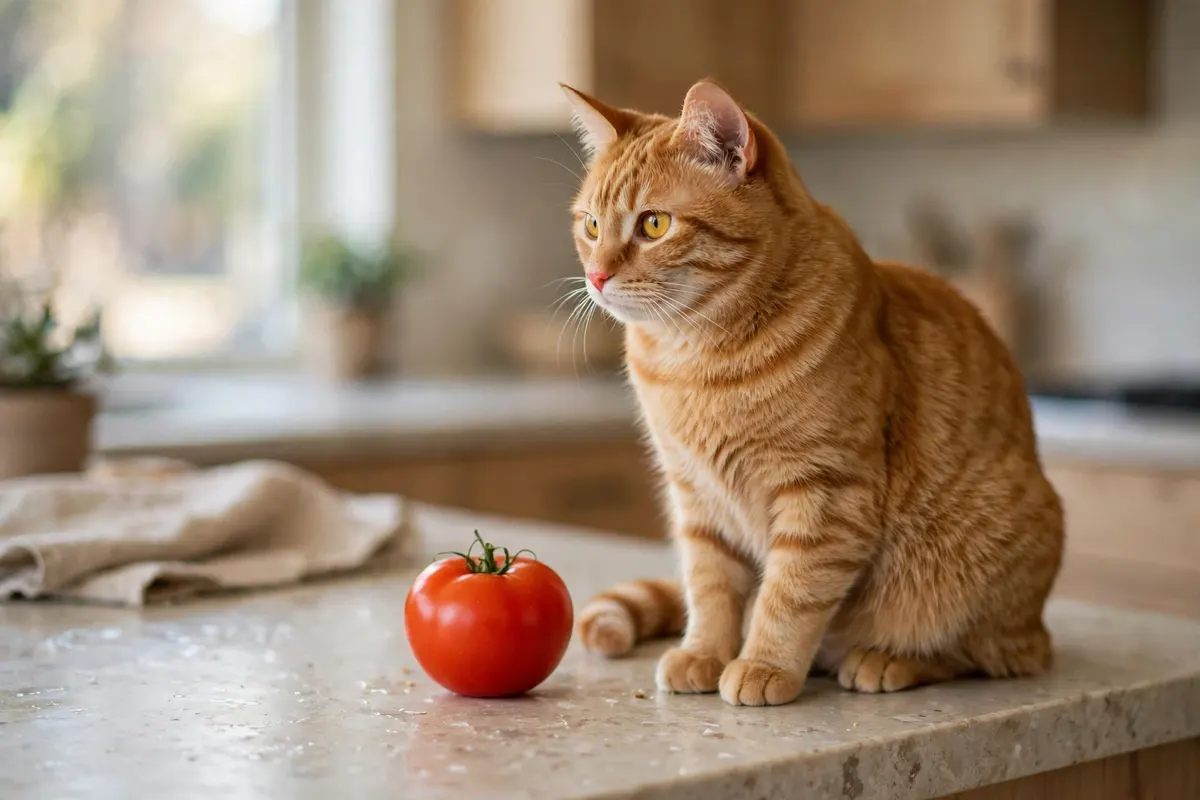
Caution — a tiny nibble of ripe tomato flesh is probably fine for most cats, but green tomatoes, stems, and leaves are toxic, and tomato sauces usually hide onion or garlic. So the simplest, safest advice is this: do not bother giving your cat tomato at all. Your cat gains nothing from it, and the risks sit right next to the safe part.
That may sound over-cautious for a fruit that sits in every kitchen, but tomatoes belong to the nightshade family, and the line between the safe part and the dangerous part is thinner than most people realise. Here is exactly where that line sits, and why skipping tomato entirely is the easiest choice.
Is Tomato Safe for Cats?
A small piece of ripe, red tomato flesh is not toxic to cats. The ripe fruit contains only tiny amounts of the compounds that make other parts of the tomato plant dangerous, and a healthy adult cat that eats a small nibble will usually be fine. That is the safe part — and it is a very small part.
Everything else on the plant is not safe. Green, unripe tomatoes, the stems, and the leaves all contain solanine, the same toxin found in raw potatoes, and solanine can cause vomiting, diarrhea, and lethargy in cats. The problem for a cat owner is that the safe part and the dangerous part grow on the same plant, and a cat that helps itself from a garden or a kitchen counter does not know the difference.
The Nightshade Connection: Solanine in Tomatoes
Tomatoes are nightshades, along with potatoes, eggplant, and peppers. Nightshade plants protect themselves with solanine and related compounds, which are concentrated in the green, unripe fruit and in the leaves and stems. As a tomato ripens and turns red, the solanine level drops sharply — which is why the ripe fruit is the only part that is even close to safe.
That ripening detail is exactly why tomato is a poor choice of treat. A tomato that looks red on the outside can still have green, unripe flesh near the stem, and a cat that eats the stem end is eating the part with the most solanine. There is no easy way to guarantee a tomato is fully ripe all the way through, and no nutritional reason to try.
Tomato Sauce, Soup, and Ketchup: Hidden Dangers
Most of the tomato your cat is likely to meet is not a fresh tomato at all — it is sauce, soup, ketchup, or a pasta dish. These are far more dangerous than the fruit itself, and not because of the tomato. Tomato sauce almost always contains onion or garlic, and both are toxic to cats, damaging their red blood cells even in small amounts.
Sauces also bring salt, sugar, oil, and spices that a cat's stomach does not need. A lick of plain tomato sauce might not cause an emergency, but a sauce made with onion or garlic is a genuine risk, and there is no way to tell from a taste how much onion went into the pot. Keep all tomato sauces, soups, and ketchup away from your cat, and never offer food from a finished dish.
How Much Tomato Can a Cat Eat?
If you do choose to offer tomato, keep it to a pea-sized piece of ripe, red flesh, with the stem and any green parts removed, once in a while at most. That is the cautious upper limit, not a recommended serving — and most vets would tell you there is no need to offer it at all.
Treats of all kinds should stay under ten percent of your cat's daily calories, and tomato counts as a treat. A cat that never eats tomato is missing nothing: cats get their vitamins and hydration from meat and water, not from fruit. If your cat shows no interest in tomato, let it be — that is the sensible outcome.
Can Kittens Eat Tomatoes?
Kittens should not eat tomatoes. Their small bodies and developing digestive systems make them more sensitive to solanine, and there is no nutritional reason to introduce a food that carries a risk. Stick to proper kitten food and leave tomatoes out of it entirely.
Once a kitten is an adult, a tiny nibble of ripe tomato flesh is unlikely to cause harm — but there is still no reason to start. If you are looking for a first vegetable treat for a young cat, there are far safer choices, such as a small piece of cooked carrot or plain cooked pumpkin.
What Happens If My Cat Eats a Tomato?
If your cat ate a small piece of ripe tomato flesh, there is nothing to worry about. Offer fresh water and feed the next meal as normal, and watch for any stomach upset over the next day — the worst outcome is usually a slightly softer stool.
If your cat ate a green tomato, the stem, the leaves, or tomato sauce containing onion or garlic, watch closely and call your vet. Signs to look for include vomiting, diarrhea, drooling, weakness, and lethargy. Do not try to treat it at home and do not offer milk — most cats are lactose intolerant, and milk can make stomach upset worse. Call your vet, describe exactly what your cat ate, and follow their advice.
Tomatoes are a cautious maybe for cats — a tiny nibble of ripe flesh is probably fine, but the green parts are toxic, sauces hide onion and garlic, and your cat gains nothing from eating tomato at all. The simplest safe advice is to skip it entirely. There are plenty of safer treats, and a cat that never eats tomato is missing nothing.
Can cats eat tomatoes?
With caution. A tiny nibble of ripe red tomato flesh is usually fine, but green tomatoes, stems, and leaves are toxic, so the simplest advice is not to offer tomato at all.
Are tomatoes toxic to cats?
The ripe red flesh is not toxic, but green, unripe tomatoes, stems, and leaves contain solanine and are toxic to cats.
Can cats eat cherry tomatoes?
A tiny piece of ripe cherry tomato flesh is usually fine, but the same rules apply — remove the stem, avoid any green parts, and keep the amount very small.
Can cats eat tomato sauce?
No. Tomato sauce usually contains onion or garlic, which are toxic to cats, plus salt, sugar, and spices. Keep all tomato sauces, soups, and ketchup away from your cat.
Can kittens eat tomatoes?
No. Kittens are more sensitive to solanine and have no nutritional need for tomato. Stick to proper kitten food.
What happens if my cat eats a green tomato?
Watch for vomiting, diarrhea, drooling, weakness, or lethargy, and call your vet. Green tomatoes contain solanine, which is toxic to cats.