Can Cats Eat Xylitol?
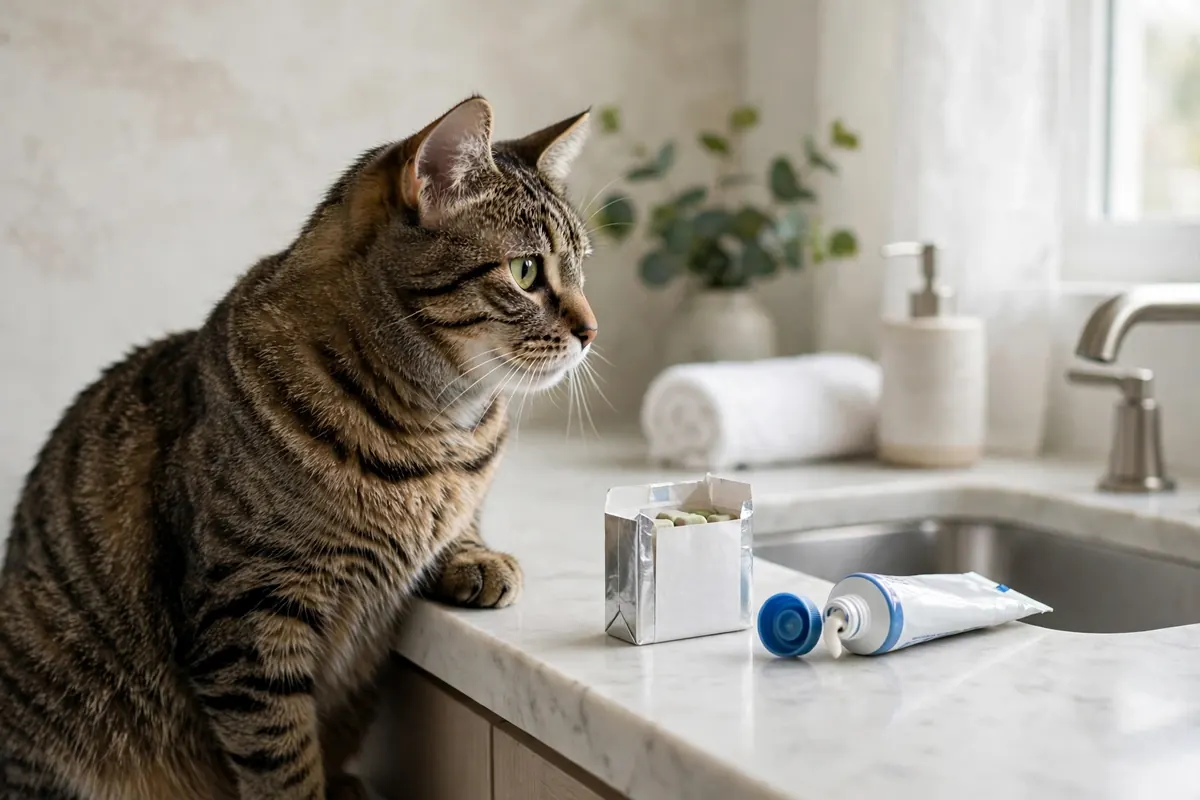
No — cats must never eat xylitol. Xylitol is a sugar substitute found in sugar-free gum, candy, peanut butter, and even some toothpastes, and it is dangerous for pets: in dogs it triggers a sudden release of insulin that sends blood sugar crashing, and it can also cause liver failure. Cats are smaller and less studied than dogs, but veterinary guidance treats xylitol as unsafe for cats too — there is no safe amount and no safe form.
The real danger is how well xylitol hides. It shows up under other names, in products you would never suspect, and in tiny amounts that are easy to miss. This guide explains why xylitol is dangerous, where it hides, the signs to watch for, and exactly what to do if your cat has already eaten it.
The Verdict: Can Cats Eat Xylitol?
Verdict: UNSAFE. Xylitol is a sugar substitute that is dangerous for pets and must never be given to cats. In dogs, xylitol triggers a sudden release of insulin, which sends blood sugar crashing to dangerously low levels, and larger amounts can cause liver failure. Cats have been studied far less than dogs, but veterinary guidance treats xylitol as unsafe for cats on the same basis — a cat's small body has even less room for error.
There is no safe amount of xylitol for a cat, no safe form, and no preparation that makes it harmless. Do not offer sugar-free gum, candy, baked goods, or any food sweetened with xylitol, and keep xylitol products stored where your cat cannot reach them. If your cat has eaten anything containing xylitol, contact your veterinarian or a pet poison helpline immediately — do not wait for symptoms.
Why Xylitol Is Dangerous for Cats
Xylitol looks harmless because it is just a sweetener, but inside the body it acts very differently from sugar. When a dog eats xylitol, the pancreas mistakes it for real sugar and releases a large burst of insulin. Insulin pulls sugar out of the blood, and blood sugar can fall so fast and so far that the animal becomes weak, shaky, and disoriented — a condition called hypoglycemia. In larger amounts, xylitol can also damage the liver, and liver failure can follow within a day or two.
Cats do not have the same body of research behind them, which is itself a reason for caution: no vet can point to a safe dose for cats, because none has been established. What is known is that cats are smaller than most dogs, so a small amount is a bigger dose relative to body weight, and cats with existing liver or blood sugar problems would be at even greater risk. The safest reading of the evidence is simple — xylitol is not a food for cats, in any amount.
The Hidden-Xylitol Label Hunt
Xylitol rarely announces itself clearly, and that is the real danger. It hides in products you would never think to check. Here is where to look, and what else it may be called on a label:
- Sugar-free gum and mints. The most common source. A single stick of gum can contain enough xylitol to be dangerous for a small pet — and gum is small, easy to drop, and easy for a cat to bat under furniture and chew.
- Sugar-free candy, chocolate, and baked goods. Cookies, cakes, and candies sweetened for people watching their sugar often use xylitol instead.
- Peanut butter. Some brands add xylitol as a sweetener. Always check the label before sharing peanut butter — and for the full picture, see our guide to whether cats can eat peanut butter.
- Toothpaste and mouthwash. Many human toothpastes contain xylitol. Never brush a cat's teeth with human toothpaste — use a pet-safe toothpaste from your vet instead.
- Medicines and vitamins. Some chewable medicines, cough syrups, and gummy vitamins use xylitol. Keep all medicines in closed containers, out of reach.
Xylitol may also appear on labels as birch sugar, birch bark extract, or simply E967. If a label lists any of these, treat the product the same way — keep it away from your cat.
Is Xylitol Safe for Cats?
No — xylitol is not safe for cats in any form. Sugar-free does not mean cat-safe, and a product being safe for people says nothing about whether it is safe for a cat. Xylitol-sweetened gum, candy, peanut butter, toothpaste, and baked goods should all be kept away from cats.
Other sugar substitutes are not automatically safe either, but xylitol is the one with the clearest danger. If you use sugar-free products at home, store them in closed cupboards or drawers, never leave gum or mints in a bag or coat pocket on the floor, and check the label of any new product before bringing it into a home with a cat. For a wider list of foods to keep away from your cat, see our guide to human foods that are poisonous to cats.
Can Kittens Eat Xylitol?
No — kittens must never eat xylitol. A kitten's tiny body means even a small amount is a much larger dose relative to its weight, and kittens are more vulnerable to a blood sugar crash because they have less energy stored to fall back on. A kitten that eats xylitol, or a food containing it, needs veterinary advice the same day, even if it seems fine at first.
Kittens are also more likely to get into trouble in the first place: they are curious, they climb, and they will bat a stick of gum off a table and chew it before you notice. Keep gum, mints, and sugar-free sweets in closed containers and well out of reach, and never leave a handbag on the floor where a kitten can nose through it.
What Happens If My Cat Eats Xylitol?
Signs of xylitol poisoning usually appear quickly — often within 30 minutes to a few hours of eating it — because the insulin release happens fast. The most commonly reported signs are vomiting, weakness, shakiness or tremors, wobbliness or difficulty walking, and a cat that seems unusually sleepy, quiet, or unwilling to move. Some animals also develop a racing heartbeat and may collapse.
Liver damage takes longer to show, and that is what makes waiting so dangerous: a cat that seems to recover from the first signs can still develop liver failure over the next day or two. Signs of liver trouble include vomiting that returns, yellowing of the gums, dark urine, and a cat that stops eating entirely. If you know or suspect your cat ate xylitol, call your vet or a pet poison helpline right away — do not wait to see whether symptoms appear.
What to Do If Your Cat Already Ate Xylitol
Act quickly, stay calm, and follow these steps in order:
- Remove the product immediately. Take away any remaining gum, candy, or food so your cat cannot eat more, and keep the packaging — the label tells your vet how much xylitol was in it.
- Call your vet or a pet poison helpline now. Do not wait for symptoms. Give the time of eating, what was eaten, roughly how much, and your cat's age, weight, and any health conditions.
- Do not induce vomiting at home. Never give hydrogen peroxide, salt water, or any home remedy to make your cat vomit. These can cause serious harm, and vomiting should only be induced by a veterinarian when it is safe and appropriate.
- Do not give human medicines or sugar. Painkillers such as paracetamol and ibuprofen are toxic to cats, and trying to treat a blood sugar crash with honey or sugar at home is not a substitute for veterinary care.
- Follow your vet's instructions. They may ask you to come in for blood sugar checks and monitoring, even if your cat looks well, and they may need to repeat checks over several hours.
If your regular clinic is closed, call an emergency veterinary clinic or a poison helpline. For more food guidance, browse the full Cat Food section on the Purrfect Paws homepage.
Frequently Asked Questions
Is xylitol safe for cats?
No. Xylitol is unsafe for cats and can cause a dangerous drop in blood sugar and liver failure. There is no safe amount, so never feed your cat gum, candy, or any food sweetened with xylitol, and call your vet immediately if your cat eats some.
Can kittens eat xylitol?
No. Kittens must never eat xylitol — their tiny bodies make even a small amount a larger dose, and they are more vulnerable to a blood sugar crash. A kitten that eats xylitol needs veterinary advice the same day, even if it seems fine.
What happens if my cat eats xylitol?
Signs usually appear within 30 minutes to a few hours: vomiting, weakness, shakiness, wobbliness, and unusual sleepiness. Liver damage can follow within a day or two, so call your vet or a pet poison helpline right away, even if your cat seems fine at first.
How much xylitol is dangerous for a cat?
There is no known safe amount. Even a single stick of sugar-free gum can contain enough xylitol to be dangerous for a small pet, so any amount your cat eats should be treated seriously and checked with a vet.
What foods contain xylitol?
Sugar-free gum and mints are the most common sources, along with sugar-free candy, baked goods, some peanut butters, human toothpaste, and some chewable medicines and vitamins. Xylitol may also be listed as birch sugar, birch bark extract, or E967.