Cat Dehydration: 7 Signs and How to Rehydrate Your Cat
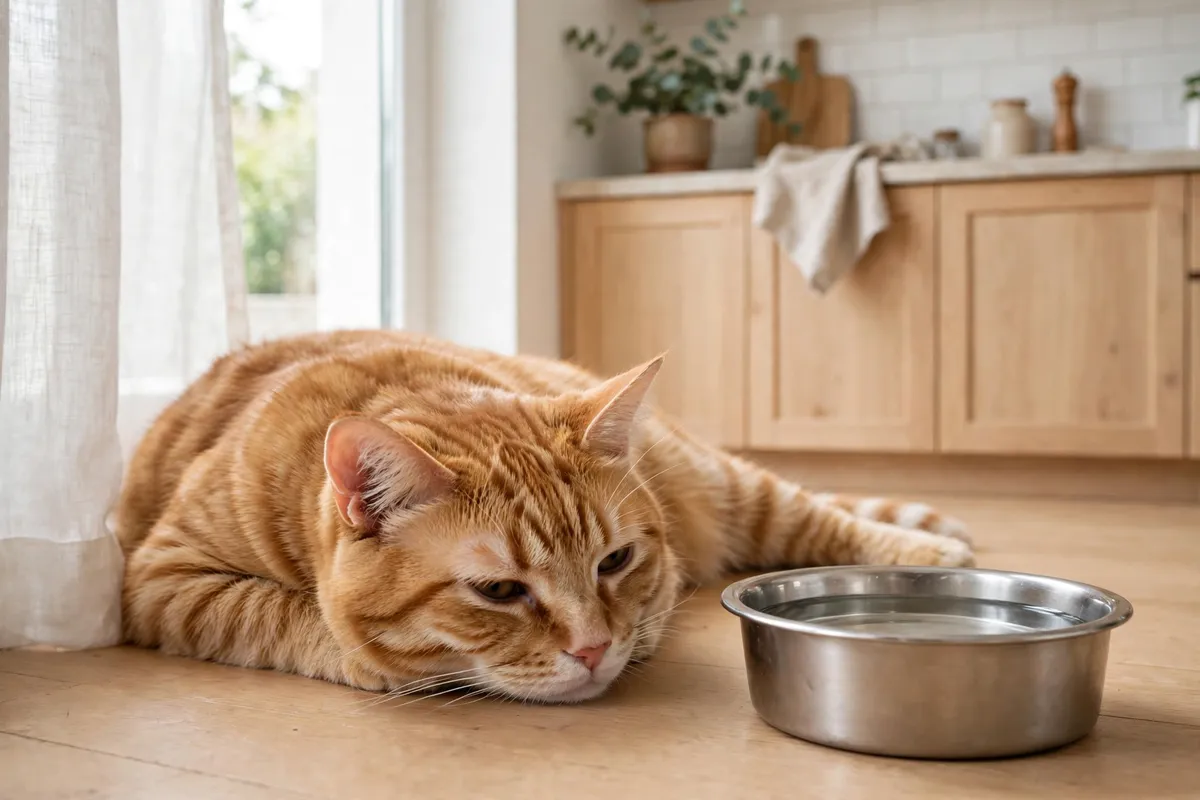
Cats are famously bad drinkers. Descended from desert animals, they get much of their moisture from prey rather than from a water bowl, so many house cats live in a state of mild, chronic under-hydration without their owners ever noticing. When that tips into real dehydration, though, it can become serious fast — affecting the kidneys, circulation, and overall energy in a matter of days.
The good news is that cat dehydration signs are easy to spot once you know what to look for, and two simple at-home checks can tell you in under a minute whether your cat needs more fluids or a vet visit. This guide covers the 7 most reliable signs, the step-by-step skin tent test and gum check, safe ways to rehydrate a cat at home, and the red flags that mean you should stop waiting and call your veterinarian.
Why Cats Get Dehydrated So Easily
Unlike dogs, cats have a low thirst drive. A cat eating only dry food takes in far less water than a cat eating wet food, and many cats simply will not drink enough from a bowl sitting next to their food — in the wild, water near a kill site could be contaminated, so that instinct runs deep. Add in a hot summer, a water bowl that has gone stale, or an illness that causes vomiting or diarrhea, and fluid losses can quickly outpace intake.
Certain cats are at higher risk. Kittens dehydrate faster because they are small, senior cats often drink less and may have kidney disease, and any cat with vomiting, diarrhea, fever, or diabetes can lose fluids rapidly. That is why learning how to tell if your cat is dehydrated matters just as much as knowing how much water cats should drink — the signs show up before the crisis does.
7 Cat Dehydration Signs to Watch For
- Dry, tacky gums. Lift your cat's lip gently and touch the gum above a canine tooth. Healthy gums feel slick and moist, like the inside of your own cheek. Gums that feel dry or sticky are one of the earliest and most reliable cat dehydration signs.
- Loss of skin elasticity. When a cat is dehydrated, the skin loses its spring. Pinch the skin between the shoulder blades and let go — if it returns slowly or stays standing in a little tent shape, your cat is likely dehydrated. We walk through this test in detail below.
- Lethargy and weakness. A dehydrated cat conserves energy. If your normally playful cat is sleeping far more than usual, moving slowly, or seems wobbly on their feet, low fluid levels may be part of the picture — especially combined with other signs on this list.
- Sunken eyes. Eyes that look dull, sunken, or less bright than usual can indicate significant fluid loss. This sign tends to appear with moderate to severe dehydration rather than mild cases, so take it seriously when you see it.
- Loss of appetite. Cats that feel unwell from dehydration often turn away from food, even favorite treats. A cat that skips food for more than 24 hours (or a kitten for more than 12) should be seen by a vet regardless of the cause.
- Reduced urination or very dark urine. A dehydrated cat's body holds on to water, so trips to the litter box become less frequent and the urine looks darker and more concentrated than usual. Very little or no urination is an urgent sign.
- Dry nose and panting. A healthy cat's nose is usually cool and slightly damp. A persistently dry nose combined with lethargy or dry gums supports a dehydration picture, and open-mouth panting in a cat — which is rare — always deserves a prompt vet call.
How to Tell If Cat Is Dehydrated: 2 At-Home Tests
These two checks take less than a minute, cost nothing, and work best together. A single borderline result is not a diagnosis — but two positive results mean it is time to act.
Test 1: The Cat Skin Tent Test
- Wait until your cat is calm and relaxed, ideally lying down.
- With your thumb and forefinger, gently pinch a fold of skin between the shoulder blades and lift it an inch or so.
- Release the skin and watch how fast it flattens back into place.
- What it means: In a well-hydrated cat, the skin snaps back immediately, in under a second. If it takes two seconds or more, or stays tented, that suggests dehydration. Note that very senior cats and overweight cats can have naturally less elastic skin, so compare against your cat's normal and use the gum check alongside it.
Test 2: The Gum Check
- Gently lift your cat's upper lip on one side.
- Press a fingertip lightly against the gum above a canine tooth for a second, then release.
- Look at the color and feel the moisture. Healthy gums are pink and moist, and the pale spot from your press should pink up again within about two seconds.
- What it means: Dry, tacky gums point to dehydration. Pale or white gums, or a refill time longer than two seconds, can indicate poor circulation and should be checked by a vet promptly.
How to Rehydrate a Cat Safely at Home
For mild dehydration — a cat that is still alert, drinking a little, and has no vomiting or diarrhea — home steps often help within a day:
- Place fresh water in several spots around the house, away from the food bowl, and refresh it at least twice a day.
- Switch part or all of the diet to wet food, and stir a tablespoon or two of extra water into each serving.
- Try a cat water fountain. Many cats drink far more from moving water than from a still bowl.
- Offer low-sodium, onion-free broth over food as a tempting extra source of fluid.
- Keep the home cool in hot weather and make sure outdoor cats always have shade and water.
Never force water. Do not syringe large amounts of water into a reluctant cat's mouth or hold their mouth shut to make them swallow. Forcing water risks aspiration — fluid entering the lungs — which can cause pneumonia, and it stresses a sick cat badly. If your cat will not drink voluntarily, that itself is a reason to call the vet rather than to force the issue. Veterinary clinics can give fluids safely under the skin or intravenously, which is the correct treatment for moderate or severe dehydration.
Common Causes of Dehydration in Cats
Dehydration is usually a symptom, not a disease on its own, so finding the cause matters. Vomiting and diarrhea are the fastest routes to fluid loss, and both deserve attention if they last more than a day. Kidney disease, common in older cats, makes the kidneys lose more water in urine. Diabetes causes increased urination and thirst. Fever, heatstroke, and simply not drinking enough — a stale bowl, a stressful house move, or a new pet disrupting routines — can all tip the balance. If dehydration keeps coming back despite your best efforts at home, your vet should investigate the underlying cause rather than just treating the fluids.
When to See the Vet
Call your veterinarian promptly if you notice any of the following:
- Your cat refuses water entirely, or vomits after drinking.
- Skin that stays tented, sunken eyes, or very dry, pale gums.
- Vomiting or diarrhea lasting more than 24 hours.
- Extreme weakness, collapse, or difficulty breathing.
- Little or no urination over a full day.
- The patient is a kitten, a senior cat, or has kidney disease or diabetes.
When in doubt, call. Dehydration can worsen quickly in small animals, and vets would far rather rehydrate a cat early than treat a crisis that waited too long.
Frequently Asked Questions
How can I tell if my cat is dehydrated at home?
Try the skin tent test: gently pinch the skin between your cat's shoulder blades and release it. In a well-hydrated cat it snaps back immediately; in a dehydrated cat it returns slowly or stays tented. Also check the gums: they should be moist and pink, not dry, tacky, or pale.
What is the fastest way to rehydrate a cat?
Offer fresh water in several spots, add water or low-sodium broth to wet food, and try a cat water fountain if your cat prefers running water. For mild cases this is often enough. Moderate or severe dehydration needs veterinary fluids — do not try to force water into a reluctant cat.
Can a dehydrated cat drink milk?
No — most adult cats are lactose intolerant, and milk can cause diarrhea, which makes dehydration worse. Stick to fresh water and wet food with added water instead.
When is cat dehydration an emergency?
Call your vet urgently if your cat refuses water entirely, vomits repeatedly, has diarrhea, is very weak or collapsed, has sunken eyes, or if the skin tent test shows skin that stays tented. Kittens, senior cats, and cats with kidney disease deteriorate faster and should be seen sooner.
How much water should a cat drink each day?
As a rough guide, a cat needs about 3.5 to 4.5 ounces (roughly half a cup) of water per 5 pounds of body weight per day, including the moisture in their food. Cats eating mostly wet food get much of this from food, while cats on dry food need to drink more from a bowl.