Cat Ear Mites: 5 Signs and How to Treat Them
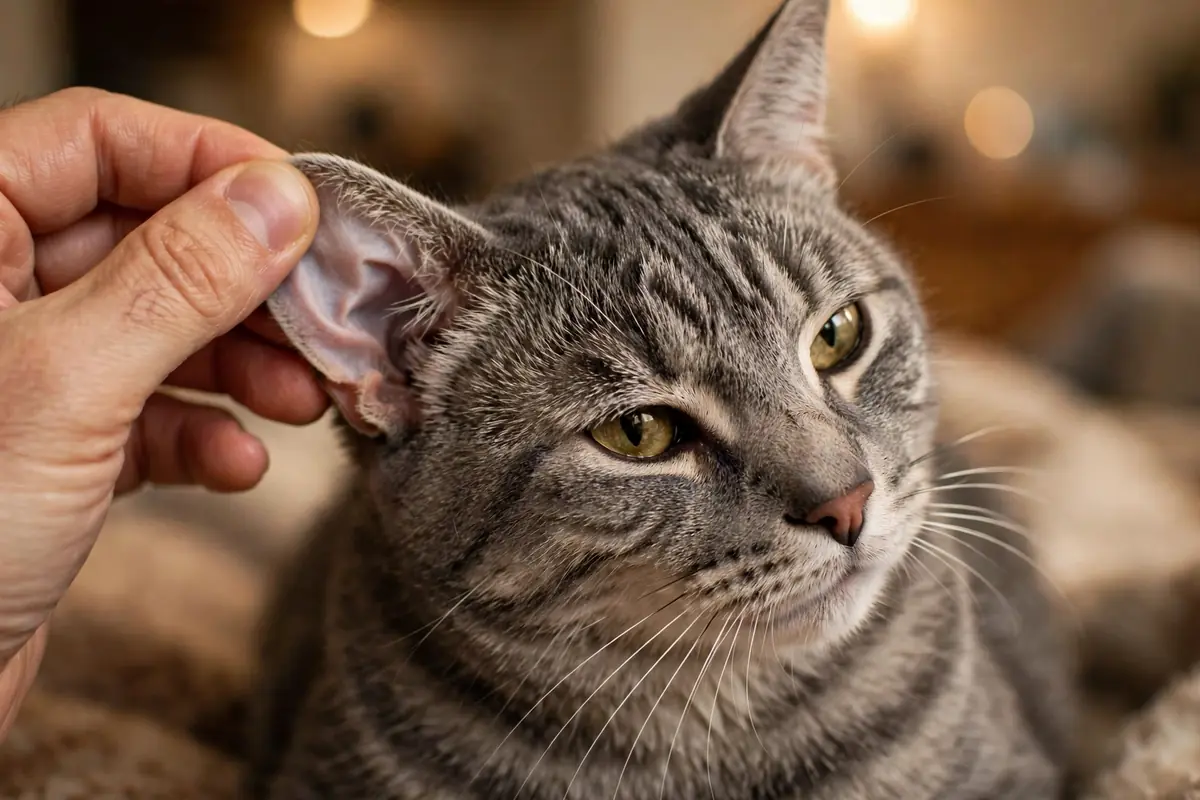
The signs of ear mites in cats are hard to miss once you know them: repeated head shaking, vigorous scratching at one or both ears, and dark reddish-brown debris in the ear canal that looks like coffee grounds. If your cat is doing all three, ear mites are the most likely culprit — they are one of the most common ear problems in cats, especially in kittens and outdoor cats.
The good news is that ear mites are very treatable when caught early. This guide covers what ear mites actually are, the five signs to watch for, how cats catch them, and how your veterinarian will treat them safely — plus how to stop the mites from coming back after treatment.
What Are Ear Mites?
Ear mites (Otodectes cynotis) are tiny, crab-like parasites that are barely visible to the naked eye — if you look very closely, they appear as tiny white specks moving on dark debris. They live on the surface of the ear canal, feeding on skin oils and earwax, and they can also turn up on the skin around the ears and head.
A female mite lays her eggs inside the ear canal, and the full life cycle — egg, larva, nymph, adult — takes roughly three weeks, so a handful of mites can become hundreds in a matter of weeks.
Ear mites are most common in kittens, shelter cats, and cats that spend time outdoors. Indoor-only adult cats can still catch them from another pet in the household. The mites do not burrow under the skin, which is why treatment is usually straightforward — but they cause intense irritation, and the relentless scratching they trigger can lead to secondary bacterial or yeast infections if left untreated.
5 Signs Your Cat Has Ear Mites
- Dark, crumbly ear debris. This is the classic sign — and the most reliable one. Ear mite debris looks like ground coffee or dark reddish-brown crumbs coating the inside of the ear flap and the canal. It is made up of dried blood, earwax, and mite waste. Normal cat earwax is usually pale yellow and minimal, so a sudden buildup of dark, crusty debris is a strong signal.
- Repeated head shaking and ear scratching. A cat with ear mites shakes its head over and over and scratches at the affected ear with a back paw. Occasional ear scratching is normal, but frantic, repeated scratching — especially if it is focused on one or both ears — is not.
- Red, inflamed ears. The constant irritation leaves the inner ear looking red and swollen, and the skin around the ear base may be sore or scabby from scratching. In heavy infestations, cats can scratch hard enough to break the skin, which opens the door to infection.
- An unpleasant odor from the ears. A distinctly bad or yeasty odor from the ears often means a secondary infection has moved in on top of the mites. Either way, it is a sign your cat's ears need veterinary attention soon.
- Pain, sensitivity, or behavior changes. Some cats become head-shy and flinch when you touch their ears. Others get cranky or withdrawn because their ears simply hurt. If a normally affectionate cat starts avoiding petting around the head, check those ears.
How Do Cats Get Ear Mites?
Ear mites spread through direct contact with an infested animal — cat to cat, or cat to dog. Kittens pick them up most often, frequently from their mother or from littermates in a shelter or rescue environment. Outdoor cats can catch them from stray or feral cats they tussle or cuddle with.
Indoor-only cats are not fully safe either: a new kitten or a visiting dog can introduce mites into the home. Ear mites can survive for a short time in the environment — in bedding or on grooming tools — but direct contact is by far the main route, which is why whole-household treatment is usually recommended.
How to Treat Ear Mites Safely
The first step is a proper diagnosis. Your vet will look inside the ear with an otoscope and may take a small sample of the debris to check under a microscope — this confirms mites and rules out bacterial or yeast infections, which need different treatment. Because the signs overlap, guessing at home often leads to the wrong treatment.
Once mites are confirmed, vets typically prescribe a topical treatment — either drops applied directly into the ear canal or a spot-on product applied between the shoulder blades. Both are designed to kill mites through their full life cycle, which is why treatment usually continues for about three weeks even after the scratching stops. Your vet may also clean the ears professionally and prescribe something extra if a secondary infection has developed.
What not to do:
- Do not push cotton swabs deep into the ear canal. It is easy to pack debris tighter against the eardrum or injure it — clean only the parts of the ear you can see.
- Do not pour home remedies like olive oil, mineral oil, or essential oils into the ears without veterinary guidance. Oils can trap debris against an inflamed or damaged eardrum and make things worse, and some essential oils are toxic to cats.
- Do not stop treatment early just because the scratching stops. Mite eggs are not affected by most treatments, so stopping early lets the next generation hatch and restart the infestation.
Finally, ask your vet about your other pets. Since mites spread so easily, every cat and dog in the home usually needs treating at the same time, and bedding should be washed — otherwise the mites just bounce from pet to pet.
Can Humans or Dogs Catch Ear Mites?
Dogs can absolutely catch ear mites from cats — they are one of the same parasite's favorite hosts, which is why vets treat all the pets in a household together. If your dog is scratching its ears too, mention it at the vet visit.
Humans are a different story. Ear mites can occasionally crawl onto people and cause temporary itching or a mild rash, but they cannot establish a real infestation on humans — our ears are simply not a suitable habitat for them. You do not need to treat yourself, though washing your hands after handling an infested cat's ears is sensible.
Preventing Ear Mites From Coming Back
Once the mites are gone, a few simple habits keep them from returning. Make ear checks part of your routine — a quick peek inside the ears during cuddle time lets you spot dark debris weeks before the scratching starts. If you bring a new cat or kitten home, have a vet check their ears before the newcomer mixes with your resident pets, and keep up any year-round parasite prevention your vet recommends.
Also remember to finish the full course your vet prescribed, treat every pet in the home on the same schedule, and wash bedding the cats sleep on. With the life cycle fully broken, most cats stay mite-free — and you will know what to look for if the signs ever reappear. For more on keeping your cat in top shape, browse our Cat Health guides or start from the Purrfect Paws homepage.
Frequently Asked Questions
Can ear mites in cats go away on their own?
Almost never. Ear mites reproduce inside the ear canal, so an infestation only grows worse without treatment. A vet-prescribed ear treatment is needed to break the mite life cycle completely.
How long does it take to get rid of ear mites?
Most cats start improving within a week of proper treatment, but vets usually recommend continuing for about three weeks — roughly the length of the mite life cycle — so newly hatched mites are caught too.
Is olive oil a safe home remedy for ear mites?
No remedy, oil included, should go into your cat's ears without your vet's guidance. Oils can trap debris against an inflamed or damaged eardrum and make things worse. Ask your vet which cleaner or treatment is safe instead.
Are ear mites contagious to other cats?
Yes — very. Ear mites spread through direct contact, so if one cat in your home has them, your vet will likely advise treating every cat (and dog) in the household at the same time.
How do I tell ear mites from an ear infection?
You often cannot without a vet's microscope. Mites usually produce dry, dark, coffee-ground-like debris in both ears, while bacterial or yeast infections tend to smell stronger and may affect one ear. A quick ear swab at the vet settles it.