Cat Pink Eye (Conjunctivitis): 6 Symptoms and Treatment
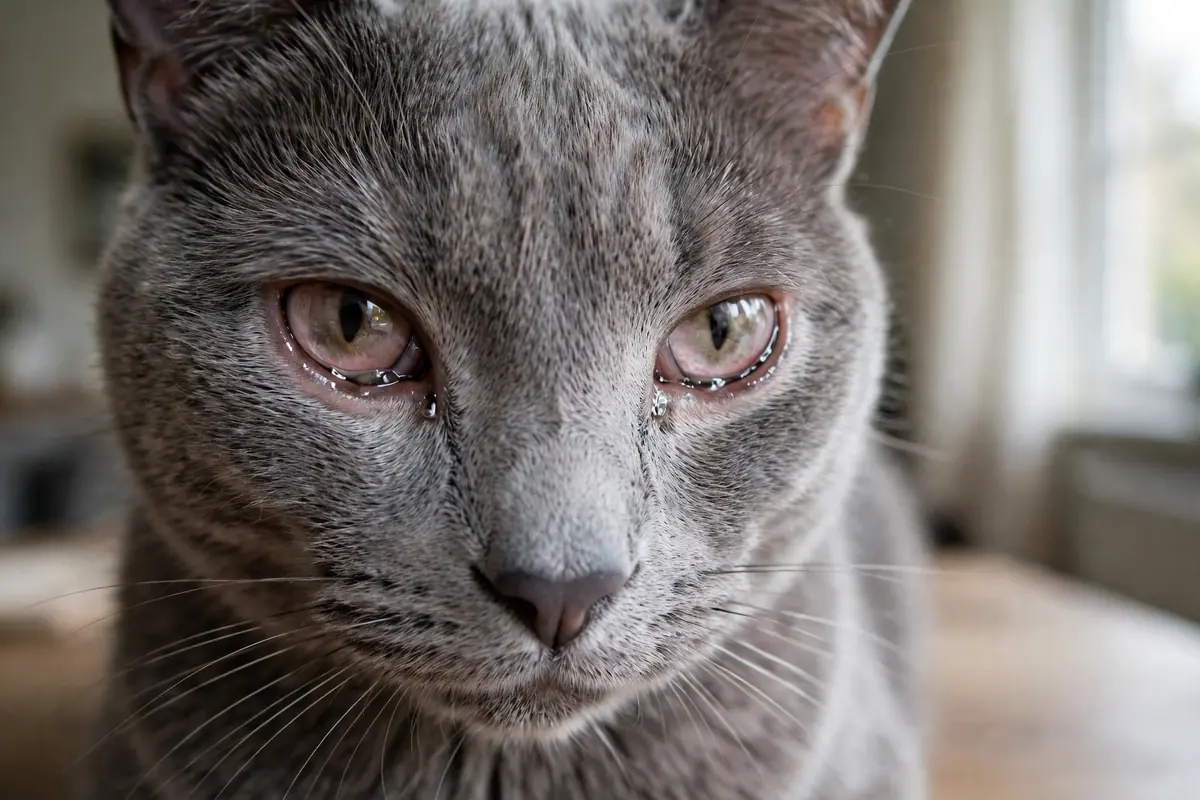
If your cat wakes up with a red, watery eye and crusty discharge, there is a good chance they have conjunctivitis — the condition most people call pink eye. It is an inflammation of the thin membrane covering the front of the eye and lining the eyelids. In cats it is very common, ranging from a mild irritation that clears in days to an infection that needs veterinary treatment, and the signs can look almost identical regardless of the cause. This guide covers the six key symptoms, the common causes, and the line between safe home care and a vet visit — including the one mistake owners must avoid: reaching for human eye drops.
What Is Cat Pink Eye?
The conjunctiva is the delicate pink tissue that protects the eye and keeps it moist. When it becomes inflamed, it swells, reddens, and produces discharge — that is conjunctivitis, affecting one eye or both. In cats, the most common triggers are viral infections (especially feline herpesvirus, which many cats carry for life and which flares up during stress), bacterial infections (often secondary to a viral infection), allergies to pollen, dust, or household fragrances, and irritants such as smoke, a scratch from another cat, or a foreign object like a grass seed. In kittens it is especially common and can develop quickly.
Pink eye is usually a symptom, not a standalone diagnosis. Two cats can look identical — red eye, watery discharge, squinting — and need completely different treatment: a viral case may need only supportive care, a bacterial case may need prescribed antibiotic drops, and an eye ulcer hiding behind the redness needs urgent treatment of a different kind. The cause cannot be reliably guessed from appearance alone, which is why anything beyond the mildest cases belongs at the vet.
6 Symptoms of Cat Pink Eye
- Redness in the white of the eye or the inner eyelid. The classic pink-eye look: the normally white sclera turns pink or red, and the inner eyelid may look swollen. Redness in one eye points to a local problem; redness in both often suggests a viral or allergic cause.
- Watery or mucus discharge. Clear, watery tearing is typical of viral conjunctivitis or allergies. Thick, yellow, or green discharge usually signals a bacterial infection and should be checked by a vet rather than watched at home.
- Swelling around the eye. Puffy eyelids, sometimes so swollen that the eye looks half-closed, are a hallmark of conjunctivitis. If the eye swells shut entirely, that is a same-day vet visit.
- Squinting, blinking, or holding the eye shut. A cat that keeps one eye half-closed is telling you the eye hurts or is sensitive to light. Squinting is one of the most reliable pain signals in cats — it can also indicate a scratch or ulcer on the cornea.
- Pawing or rubbing at the eye. Cats with sore eyes rub their face on furniture or paw at the affected eye. Repeated rubbing can turn a mild irritation into a scratched cornea, so a cone may be needed while the eye heals.
- Crusty buildup around the eye. Discharge that dries overnight can glue the eyelids together by morning, especially in kittens. If your cat wakes up unable to open an eye, gently soften the crust with a warm damp cloth — never force the eyelids apart.
Other signs that sometimes accompany pink eye include sneezing or a runny nose, a visible third eyelid, and lethargy or reduced appetite. If your cat shows eye symptoms plus breathing difficulty or a refusal to eat, call your vet promptly — the eye may be one part of a wider illness.
What You Can Safely Do at Home
For a mild case — one eye slightly red, clear discharge, your cat eating and playing normally — gentle home care can help:
- Clean the discharge gently. Use a clean, soft cloth dampened with lukewarm water or vet-approved sterile saline. Wipe from the inner corner outward, use a fresh cloth for each eye, and never touch the eyeball itself.
- Keep the environment clean. Reduce dust, avoid air fresheners, scented candles, and cigarette smoke near your cat, and keep bedding freshly laundered.
- Prevent rubbing. If your cat keeps pawing at the eye, a soft cone can protect it while it heals.
- Separate from other cats if needed. Conjunctivitis can spread through shared bowls, bedding, and close contact. Use separate bowls and wash your hands after handling an affected cat.
- Watch closely for 24 to 48 hours. Note whether the redness and discharge improve, stay the same, or worsen, and whether the second eye becomes affected. That record helps your vet if a visit becomes necessary.
Home care is supportive, not curative: it keeps your cat comfortable while their body — or their vet's treatment — does the real work. If nothing improves within a couple of days, or the eye looks worse at any point, book a vet visit.
Why You Must Never Use Human Eye Drops
It is tempting to reach for the allergy drops or red-eye drops in your own medicine cabinet, but human eye drops are not safe for cats. Many contain ingredients that irritate feline eyes or are toxic to them, and some — including steroid drops — can make a corneal ulcer dramatically worse, potentially threatening your cat's vision. Drops meant for one person can also be contaminated. The same rule applies to leftover drops prescribed for another pet: never use another animal's medication or a previous prescription without your vet's say-so. Only eye medication prescribed by your veterinarian, for your cat, for this episode, belongs in your cat's eye. If cost is a concern, tell your vet — they can usually work with your budget.
How Vets Treat Cat Pink Eye
At the clinic, your vet will examine the eye closely, often with a special dye that reveals scratches or ulcers on the cornea, and may take a swab to identify the cause. Treatment depends on what they find: bacterial conjunctivitis is usually treated with prescribed antibiotic eye drops or ointment; viral flare-ups may need supportive care and sometimes antiviral medication; allergic conjunctivitis improves once the trigger is removed. Your vet will also show you how to apply drops correctly — typically into the lower lid pocket, without touching the eye with the dropper tip. Most treatment failures come from missed doses, not the medicine itself. For more guidance, browse our Cat Health guides or return to the Purrfect Paws homepage.
Preventing Pink Eye and Protecting Other Cats
Good hygiene goes a long way. Wash your hands after handling an affected cat, launder bedding regularly, keep bowls clean, and avoid sharing towels between cats. Keep your cat's vaccinations up to date — vaccines against feline herpesvirus and calicivirus do not guarantee prevention, but they reduce the severity of the infections most often behind conjunctivitis. Reduce stress where you can, since stress is a well-known trigger for herpesvirus flare-ups: keep routines predictable and provide hiding spots and vertical space. In multi-cat homes, a new cat should be kept separate and vet-checked before joining the group.
When to Seek Same-Day Veterinary Care
Seek same-day care if you notice any of the following:
- Your cat holds the eye shut, paws at it constantly, or seems to be in clear pain.
- The discharge is thick, yellow, or green, or there is blood in or around the eye.
- The eye looks cloudy, the pupil differs from the other eye, or the eye appears swollen shut.
- The problem affects a kitten, a senior cat, or a cat with a weakened immune system.
- Your cat has stopped eating, is lethargic, or has breathing difficulty as well.
- The eye has not improved after a few days of gentle home care, or it keeps coming back.
Eyes deteriorate faster than most owners expect, and a delay of a day or two can be the difference between simple drops and a serious problem. When in doubt, call your vet and describe what you see.
Frequently Asked Questions
Is cat pink eye contagious to humans or other cats?
Most forms of feline conjunctivitis are not contagious to people, but they can spread easily between cats, especially in multi-cat homes and shelters. Keep an affected cat's bedding, bowls, and towels separate, and wash your hands after handling them.
Can I use human eye drops on my cat?
No. Human eye drops, including allergy drops and red-eye drops, can contain ingredients that are harmful or irritating to cats, and the wrong drop can make an eye ulcer worse. Only use eye medication prescribed by your veterinarian for your cat.
How long does cat pink eye usually last?
Mild conjunctivitis often improves within a few days to two weeks with proper treatment. Viral flare-ups can come and go. If there is no improvement within a few days, or if the eye gets worse, your cat needs to be rechecked by a vet.
Can I clean my cat's eye at home?
Yes, for mild discharge you can gently wipe the outer corner of the eye with a clean, soft cloth dampened with lukewarm water or vet-approved saline. Use a fresh cloth for each eye, wipe outward, and never touch the eyeball itself.
When should I take my cat to the vet for pink eye?
Seek same-day veterinary care if your cat holds the eye shut, paws at it constantly, has thick yellow or green discharge, the eye looks cloudy or swollen shut, or if the problem affects a kitten, a senior cat, or a cat with other health problems.