Cat Skin Allergies: 9 Signs Your Cat Is Itchy
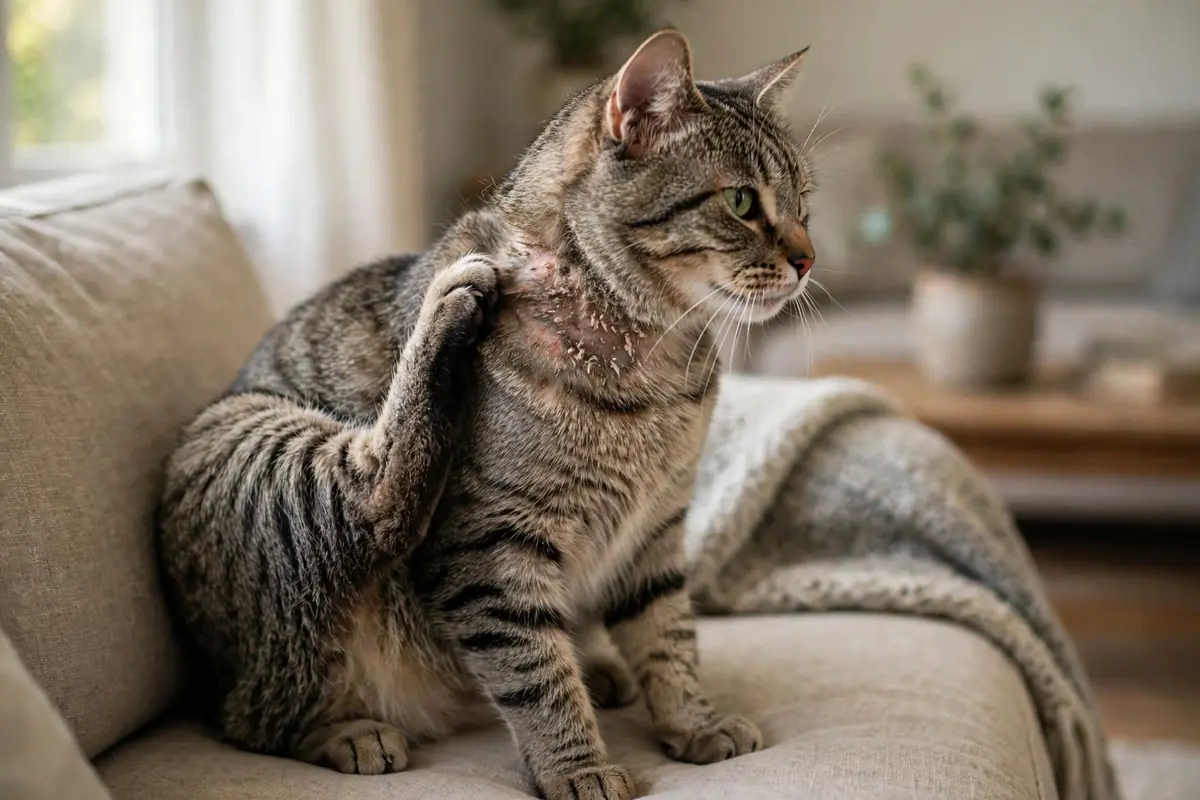
If your cat is scratching, licking, or biting at its skin more than usual, a skin allergy could be the reason. Cats with allergies itch relentlessly — sometimes so much that they damage their own skin — yet owners often miss the early signs because cats groom in private and hide discomfort well. The most common triggers are flea bites, food ingredients, and environmental allergens like pollen and dust mites, and the good news is that most allergies can be managed once the trigger is found.
Skin allergies in cats rarely look like a human rash. Instead, they show up as patterns: overgrooming, scabs, bald patches, or inflamed ears. Learning these patterns helps you catch the problem early, before constant scratching leads to open sores and secondary infections. This guide covers the nine signs that matter most, the three main types of cat skin allergy, and what to do next.
What Causes Skin Allergies in Cats?
A skin allergy happens when a cat's immune system overreacts to something harmless. There are three main types. Flea allergy dermatitis is by far the most common: allergic cats react to proteins in flea saliva, so even one or two bites can set off intense itching that lasts for weeks. Food allergies usually involve a protein the cat has eaten for a long time — chicken, beef, fish, or dairy are frequent culprits — and they can appear at any age, even if the cat has eaten the same food for years. Environmental allergies, also called atopic dermatitis, involve airborne triggers such as pollen, mold spores, and house dust mites, and they often flare seasonally.
These types often overlap. A cat with a food allergy may also react to fleas, and an outdoor cat may face all three at once. That is why vets usually start by ruling out fleas first, then work through food and environmental causes one at a time. Patience matters here: finding an allergy trigger is a process of elimination, not a single test.
9 Signs of Skin Allergies in Cats
- Constant scratching. Every cat scratches sometimes, but an allergic cat scratches often, intensely, and in the same spots — typically the head, neck, and ears. If scratching interrupts play, eating, or sleep, it has crossed from normal grooming into a problem worth investigating.
- Overgrooming and licking. Cats with itchy skin lick themselves raw, especially on the belly, inner thighs, and forelegs. You may notice wet, spiky fur in those areas, or a cat that seems unable to stop grooming even when you distract it. Overgrooming is one of the most common allergy signs, and it is easy to mistake for stress — but stress rarely causes the skin changes described below.
- Hair loss (alopecia). Bald patches, thinning fur on the belly, or symmetrical hair loss on both sides of the body often follow weeks of licking and scratching. Unlike shedding, allergy-related hair loss leaves smooth, sometimes slightly pink skin underneath, with short broken hairs at the edges where the cat has been chewing.
- Scabs and crusty sores (miliary dermatitis). This classic allergy pattern feels like tiny scabs scattered across the skin, especially along the back, neck, and head. Vets sometimes call it "miliary dermatitis" because the bumps feel like millet seeds under your fingers. It is strongly linked to flea allergy, but food and environmental allergies can cause it too.
- Red, inflamed skin. Look for pink or red patches on the belly, armpits, groin, or inside the ears — areas where the fur is thin and the skin is easy to see. Redness that comes and goes with the seasons points toward an environmental trigger, while year-round redness may suggest food or flea allergy.
- Inflamed, itchy ears. Allergies often inflame the ear canals, causing head shaking, ear scratching, and dark, waxy buildup. Recurring ear problems that keep returning after treatment are a strong hint that an underlying allergy is driving them. If your cat's ears bother it often, our guide on cat ear mites signs can help you tell mites apart from allergy-related ear inflammation.
- Sores around the head and neck. Some allergic cats develop raw, weepy sores or ulcers on the face, lips, or neck — a pattern vets call eosinophilic granuloma complex. These sores look alarming but are usually a sign of the immune system overreacting, not an infection on its own. They need veterinary assessment, because they can become infected if left alone.
- Chewing or biting at the paws. Cats with environmental allergies often chew their paws, much like dogs do. Red, swollen paw pads, stained fur between the toes from saliva, or limping after a chewing session all point to itchy feet. Wiping paws after outdoor time can reduce pollen exposure, but persistent paw-chewing still needs a vet's look.
- Behavior changes. An itchy cat is an unhappy cat. You may notice irritability when touched, hiding more than usual, sleeping less, or a sudden drop in appetite. Some cats become clingy; others withdraw. If your cat's personality has changed alongside skin or grooming changes, treat the two as connected, not separate problems.
How Vets Diagnose a Skin Allergy
Diagnosis usually starts with a full skin exam and a flea check, including a fine-toothed comb test for flea dirt. Even indoor cats can carry fleas, so vets rarely skip this step. If fleas are ruled out, the next step is often a food elimination trial: the cat eats a single novel protein or a hydrolyzed diet for several weeks, with no treats or table scraps, to see whether symptoms improve. It is strict, but it is the most reliable way to confirm a food allergy.
For environmental allergies, vets may use blood tests or intradermal skin testing to identify triggers, though these tests are less definitive in cats than in dogs. Sometimes the diagnosis is made by pattern and response to treatment rather than a single test result. Skin scrapings or cultures may also be done to rule out mites, ringworm, or bacterial infection, which can look similar to allergies.
Home Care and Prevention
While your vet works out the trigger, there are practical steps you can take at home:
Do:
- Keep flea prevention up to date all year round, for every pet in the home — this is the single most effective step for itchy cats.
- Vacuum and wash bedding regularly to reduce dust mites, and wipe your cat's paws after outdoor time in pollen season.
- Feed a consistent diet and avoid random treats during a food trial — even a small snack can ruin the results.
- Use gentle, fragrance-free grooming products, and brush regularly to spot skin changes early.
- Take photos of skin changes over time so your vet can see how symptoms evolve.
Don't:
- Never give human allergy medicines, steroid creams, or anti-itch sprays without veterinary advice — some ingredients are toxic to cats, and creams get licked off and swallowed.
- Do not bathe your cat excessively; over-bathing strips natural oils and can worsen dry, irritated skin.
- Do not switch foods every few days hoping for a quick fix — food trials need weeks, not days, to show results.
- Do not ignore sores or assume they will heal on their own — scratched skin easily becomes infected.
If your cat's itching is paired with sneezing or breathing trouble, the trigger may be broader than skin alone — see our guide on cat sneezing causes for the respiratory side. For more health topics, browse our cat health guides and the Purrfect Paws homepage.
When to See the Vet
Book a vet visit promptly if scratching is constant, if you see open sores, swelling, or pus, if hair loss is spreading, or if your cat has stopped eating or seems in pain. Skin infections can develop quickly once the skin barrier is broken, and they need treatment beyond allergy management. Kittens, senior cats, and cats with other illnesses should be seen sooner rather than later. Managing allergies is usually a long-term effort, but most cats improve greatly once the main trigger is controlled — and a comfortable, itch-free cat is a much happier companion.
Frequently Asked Questions
What is the most common cause of skin allergies in cats?
Flea allergy dermatitis is the most common. Cats with this allergy react strongly to flea saliva, so even a single flea bite can trigger intense itching, scabs, and hair loss. Year-round flea prevention is the first step for any itchy cat.
Can cats be allergic to their food?
Yes. Food allergies in cats usually involve a protein such as chicken, beef, or fish. Signs include itchy skin, ear inflammation, and sometimes vomiting or soft stools. Diagnosis usually involves a strict elimination diet trial guided by your veterinarian.
How do I know if my cat's itching is an allergy or just fleas?
Fleas themselves cause itching, but a flea allergy causes a much stronger reaction — widespread scabs, hair loss, and intense scratching from very few bites. Your vet can check for fleas and flea dirt and rule out other causes with skin tests or a diet trial.
Can I give my cat antihistamines for skin allergies?
Some antihistamines are used in cats, but only under veterinary direction — dosing and suitability vary, and some human products contain ingredients that are unsafe for cats. Never give your cat a human allergy medicine without asking your vet first.
Will my cat's skin allergies go away on their own?
Usually not. Allergies tend to be long-term conditions that need ongoing management, such as flea control, trigger avoidance, or a special diet. Without treatment, scratching often leads to sores and secondary skin infections that make things worse.