Cat Urinary Blockage: 7 Warning Signs That Need Urgent Vet Care
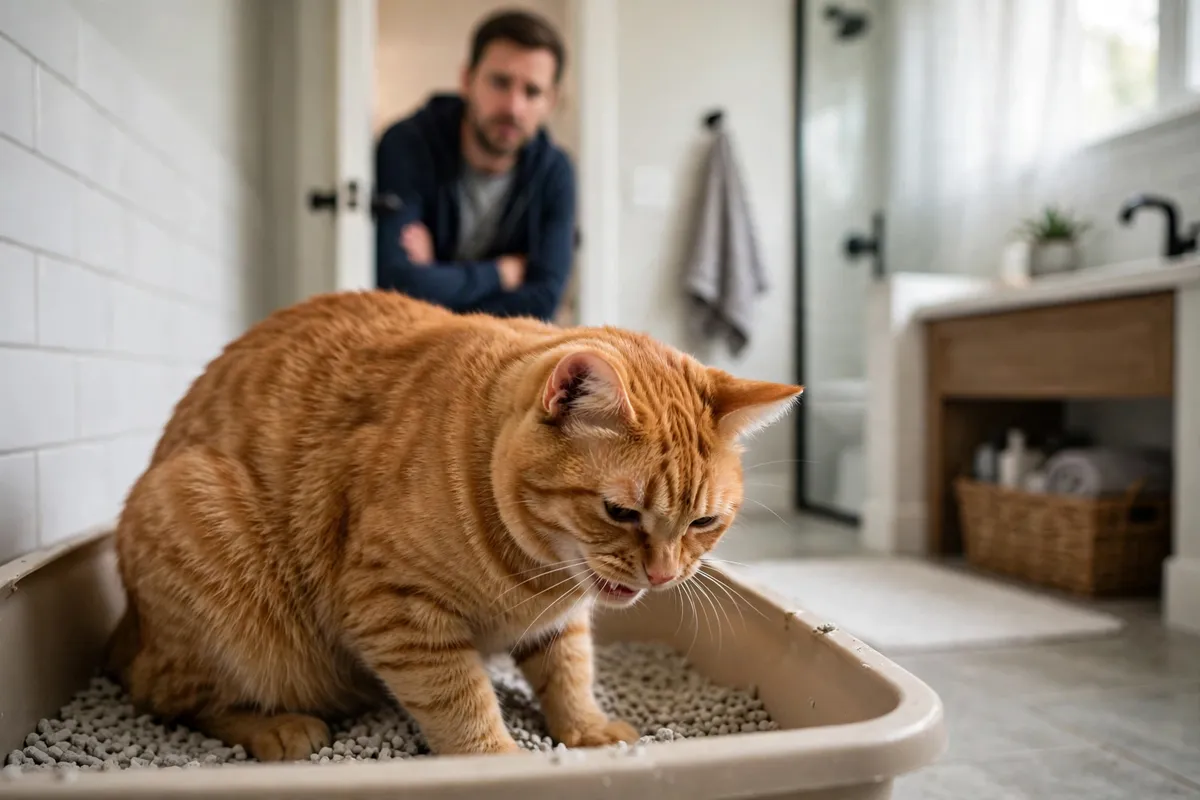
This is an emergency. If your cat is straining in the litter box but producing little or no urine, do not wait to see if it gets better — get to a veterinarian or emergency clinic right away. A urinary blockage means urine cannot leave the bladder, and that trapped urine quickly becomes life-threatening. Toxins build up in the bloodstream, the bladder can stretch and be damaged, and potassium levels can rise to a point that affects the heart. A completely blocked cat can die within 24 to 48 hours without treatment. This article explains the warning signs so you can act in minutes, not hours.
Urinary blockage is especially dangerous for male cats. A male cat's urethra — the tube that carries urine out of the body — is much narrower than a female's, so even a small plug of crystals, mucus, or swelling can seal it shut. Female cats can develop painful urinary problems too, but a complete blockage is far less common in females. Whatever your cat's sex, repeated straining with no urine is a reason to leave for the vet now, not tomorrow morning.
What Is a Urinary Blockage in Cats?
A urinary blockage, also called a urethral obstruction, happens when something physically blocks the urethra so urine cannot pass. The bladder keeps filling, but nothing comes out. As pressure builds, the cat becomes increasingly uncomfortable, and waste products that would normally leave in urine instead accumulate in the blood.
The most common causes are urethral plugs — a mix of crystals, mucus, and inflammatory cells that form in the bladder — and urinary stones that lodge in the narrow urethra. Swelling of the urethra itself, often linked to stress-related bladder inflammation, can also narrow the passage enough to block it. Overweight, indoor, middle-aged male cats are at the highest risk, and stress, a recent move, a new pet, or a change in routine can trigger an episode.
It is important to distinguish a blockage from a simple urinary tract infection. An infection is painful and needs treatment, but a blockage is a different level of urgency: the bladder cannot empty at all. That is why the single most important question is always, "Is urine actually coming out?" If the answer is no, or almost none, treat it as an emergency.
7 Warning Signs of Cat Urinary Blockage
- Straining in the litter box with little or no urine. This is the hallmark sign. Your cat visits the litter box again and again, crouches and pushes hard, but produces only a few drops — or nothing at all. Do not mistake this for constipation: a blocked cat is trying to urinate, not defecate. If you see repeated unproductive straining, go to the vet immediately.
- Frequent, frantic litter box visits. A blocked cat may run to the litter box every few minutes, scratch, squat, and leave, only to return moments later. This urgency comes from a bladder that feels painfully full and a body desperate to empty it. Multiple fruitless visits in a short period are a major red flag.
- Crying, howling, or yowling while trying to urinate. Cats are normally quiet in the litter box. Vocalizing during straining — a loud cry, a long howl, or a distressed yowl — usually means real pain. Never ignore a cat that cries while using the litter box.
- Licking the genital area excessively. A blocked cat often licks its back end obsessively, trying to relieve the pressure and discomfort. Persistent licking combined with litter box straining should raise immediate concern, especially in male cats.
- Blood in the urine, or pink-tinged drops. You may notice tiny spots of pink or red urine in the litter box, on bedding, or on the floor. Blood in the urine signals inflammation or irritation in the urinary tract. On its own it needs a vet visit; together with straining, it makes the case for emergency care even stronger.
- A hard, swollen, painful belly. As the bladder fills and cannot empty, it becomes large, firm, and tender. You may notice your cat's abdomen looks bloated, or your cat may flinch, cry, or become aggressive if you touch their belly. Never press hard on a swollen bladder — it can rupture. Get to the vet at once.
- Hiding, lethargy, vomiting, or collapse. As toxins build up, a blocked cat becomes weak, stops eating, hides, and may vomit. In advanced cases, the cat may be unable to stand, breathe oddly, or collapse. These are signs of a critical emergency. Do not wait for an appointment — go to the nearest emergency veterinary clinic immediately.
What NOT to Do at Home
When a cat is blocked, well-meaning home remedies waste the time your cat does not have — and some can make things worse:
- Do not wait overnight to see if it improves. A blockage does not resolve on its own, and every hour increases the risk of bladder damage and dangerous toxin buildup.
- Do not try to massage, squeeze, or press the bladder. A full, stretched bladder can rupture under pressure, which is a surgical emergency of its own.
- Do not give human medicines, cranberry supplements, or home remedies and hope they unblock the urethra. Nothing you can give at home clears a physical obstruction.
- Do not force water or food if your cat is vomiting or lethargic — it will not help and may cause choking or further distress.
The only safe action is transport: place your cat gently in a carrier, keep them calm, and drive to the vet or emergency clinic as quickly as you safely can. Call ahead if possible so the clinic can prepare, but do not delay leaving to make the call.
What the Vet Will Do
At the clinic, the vet will first confirm the blockage and stabilize your cat. Treatment usually involves passing a thin urinary catheter under sedation or anesthesia to drain the bladder and relieve the pressure. The catheter often stays in place for a day or two while swelling settles and the bladder recovers. Your cat will typically stay in hospital for monitoring, intravenous fluids, and treatment of any complications such as high potassium or kidney strain.
Once the immediate crisis is over, the vet will look for the underlying cause — crystals, stones, or stress-related inflammation — and discuss prevention. This often includes a prescription urinary diet, more water intake, weight management, and stress reduction. Some cats block again, especially in the weeks after the first episode, so follow-up care and close litter box monitoring matter a great deal.
Preventing Urinary Blockage
You cannot eliminate the risk entirely, but you can lower it significantly:
- Encourage water intake. Offer fresh water in multiple spots, try a cat water fountain, and feed wet food so your cat takes in more moisture with every meal.
- Keep litter boxes clean and plentiful. One box per cat plus one extra, scooped daily, in quiet, accessible locations. A cat that avoids a dirty box holds urine longer, which raises risk.
- Reduce stress. Keep routines steady, provide hiding spots and vertical space, and introduce changes gradually. Stress is a major trigger for bladder inflammation in cats.
- Maintain a healthy weight. Overweight, inactive indoor cats are overrepresented among blocked cats, so play and portion control help.
- Follow your vet's diet advice. If your cat has had urinary crystals or a blockage before, a prescription urinary diet is often a long-term part of prevention — do not stop it without veterinary guidance.
Most importantly, know your cat's normal litter box habits. The owner who notices "he went in five times and nothing came out" is the owner who gets their cat to the vet in time. That observation can save a life.
Frequently Asked Questions
Is a urinary blockage in cats an emergency?
Yes, absolutely. A complete urinary blockage is a life-threatening emergency. Toxins build up in the bloodstream, the bladder can be damaged, and potassium levels can rise to dangerous levels. A blocked cat can die within 24 to 48 hours without treatment, so go to the vet or an emergency clinic immediately.
Why are male cats more likely to get blocked?
Male cats have a much narrower urethra than females, so even a small plug of crystals, mucus, or swelling can block it completely. Female cats can develop urinary problems too, but a complete blockage is far less common in females.
Can a urinary blockage come back after treatment?
Yes, unfortunately. Some cats block again, especially in the weeks after the first episode. That is why vets often recommend a prescription urinary diet, stress reduction, and increased water intake after a blockage, and why owners should keep watching litter box habits closely.
What does the vet do for a blocked cat?
The vet will relieve the blockage, usually by passing a urinary catheter under sedation or anesthesia to drain the bladder. The cat typically stays in hospital for monitoring, fluids, and treatment of any complications, and the vet will look for the underlying cause.
How can I prevent urinary blockage in my cat?
Encourage water intake with fresh water and wet food, keep the litter box clean and stress-free, maintain a healthy weight, and feed a vet-recommended urinary diet if your cat has had urinary problems before. Never ignore straining in the litter box.