Chausie: Complete Breed Guide
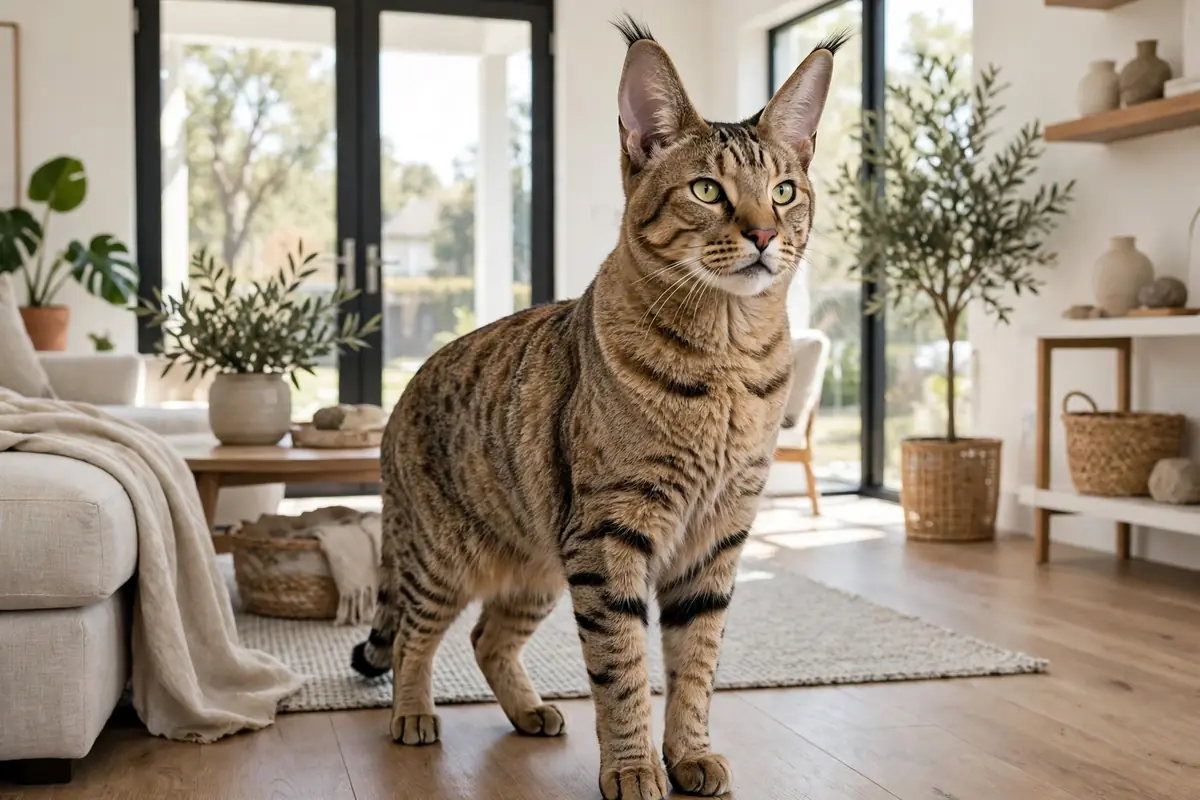
The Chausie is not your average housecat. It is a hybrid breed, descended in part from the jungle cat, a wild feline of Asia and North Africa, and it shows in everything about the cat: the tall ears, the long legs, the athletic build, and an energy level that can wear out even experienced cat owners. If you want a cat that acts more like a small wild animal than a sofa companion, the Chausie delivers.
This is a breed for experienced owners with space, time, and a sense of adventure. This guide covers the Chausie's origins, appearance, personality, care needs, health, and whether it is the right cat for your home.
Chausie at a Glance
The Chausie is a large, athletic cat with a long body, long legs, tall upright ears, and a short, dense coat that comes in solid black, black grizzled tabby, and brown ticked tabby. The wild look is unmistakable: this cat resembles its jungle cat ancestor more than it resembles a typical housecat. The eyes are large, almond-shaped, and usually gold or green.
Adult Chausies usually weigh between 6 and 11 kilograms, making them one of the largest domestic cat breeds, and males are noticeably bigger than females. They are powerfully built and exceptionally athletic, able to jump to remarkable heights. Most Chausies live around 12 to 14 years with good care, and they stay active and playful well into adulthood.
Origin and History: A Jungle Cat Hybrid
The Chausie takes its name from the Latin name of the jungle cat, Felis chaus, and it was developed by crossing jungle cats with domestic cats, particularly Abyssinians and other shorthaired breeds. Breeders in the United States began the programme in the 1990s, and the breed was recognised by The International Cat Association in the early 2000s.
The goal was a cat with the wild appearance and athleticism of the jungle cat, but with a temperament suited to life as a pet. Early generations were closer to wild, and modern Chausies are several generations removed from their wild ancestors, which makes them more predictable as companions. Even so, the Chausie retains more of its wild heritage than most breeds, and owners should understand that before bringing one home.
Appearance: Tall, Wild, and Athletic
The Chausie looks wild because, in part, it is. The ears are tall and upright with tufts at the tips, the legs are long and powerful, and the body is deep-chested and muscular. The coat is short and dense, and in the black grizzled tabby variety, the individual hairs are banded with lighter tips, which gives the coat a shimmering, wild appearance. Solid black Chausies are sleek and striking.
The head is a long wedge with a broad nose and high cheekbones, and the eyes are set at a slight angle, which adds to the wild expression. The tail is medium in length and often has a dark tip. Everything about the Chausie is built for movement: this is a cat designed by nature and by breeders to run, jump, and climb.
Personality and Temperament: Smart, Bold, and Demanding
Chausies are intelligent, bold, and intensely active. They are not lap cats and they are not content to sit quietly for hours. They want to explore, climb, play, and be involved in everything you do. They enjoy learning, they can be trained to walk on a leash, and they often play fetch. They are also famously good jumpers and can reach the top of a tall bookcase in a single leap.
They bond closely with their families and are usually affectionate on their own terms, but they can be demanding, and they do not cope well with being ignored or left alone for long hours. A bored Chausie can become destructive, opening cupboards, knocking things over, and finding its own entertainment. This breed needs an owner who enjoys an active, challenging companion and has the time to provide it.
Grooming and Everyday Care
Grooming a Chausie is simple: a weekly brush removes loose hair and keeps the short coat in good condition. Shedding is moderate, and baths are rarely needed. The real care demands are space and stimulation. A Chausie needs a large home with tall cat trees, climbing shelves, and plenty of room to run, plus interactive play every day.
Play for at least twenty to thirty minutes a day, split across several sessions, and rotate puzzle feeders and toys to keep things interesting. Feed a good-quality complete food in measured portions, since these large cats eat a lot and can gain weight if their exercise drops. Keep the cat indoors or in a large secure enclosure, and cat-proof the home by securing cupboards and removing fragile items from high shelves.
Chausie Health and Lifespan
Chausies are generally healthy cats with a lifespan of around 12 to 14 years. Because the breed is a hybrid with a wide genetic base, there is no single inherited disease that defines it, but responsible breeders still screen for common feline health issues. Some Chausies can be sensitive to certain foods, and a few owners report digestive sensitivities, so a good diet and a vet's advice are important.
The most common everyday risks are injuries from jumping and climbing, so provide sturdy structures and check them regularly. Regular vet check-ups, dental care, and parasite control are essential, and keeping the cat indoors protects it from traffic, other animals, and disease. Any sudden change in appetite, energy, or litter box habits deserves a prompt vet visit.
Is the Chausie Right for You?
The Chausie suits experienced cat owners with a large home, plenty of time, and a genuine love of high-energy, intelligent animals. It is a great choice for someone who wants a dog-like, interactive companion in a cat's body, and who enjoys training, playing, and providing enrichment every day.
It is not suited to first-time owners, to small apartments, to very quiet households, or to anyone who wants a calm lap cat. It is also a rare and expensive breed, and you will need to find a reputable breeder who can explain the hybrid generations honestly. If you are ready for a bold, athletic, wild-looking companion, the Chausie is one of the most rewarding breeds you can choose.
Frequently Asked Questions
Is the Chausie good for first-time cat owners?
No, the Chausie is not recommended for first-time cat owners. It needs a lot of space, exercise, and mental stimulation, and it can be demanding and destructive if its needs are not met. Experienced owners who understand high-energy breeds will enjoy it far more.
Do Chausie cats shed a lot?
Shedding is moderate. The short, dense coat loses some hair year-round, and a weekly brush keeps it under control. Grooming is the easy part of Chausie care: the real work is exercise, enrichment, and keeping this athletic cat entertained.
Are Chausie cats affectionate?
Yes, Chausies are usually loyal and affectionate with their families, and they often bond closely with one or two people. They are not typically clingy lap cats, but they enjoy being near their people, joining in activities, and playing interactive games.
Are Chausie cats good with children?
Chausies can be good with older children who are confident and respectful, but their size, strength, and high energy make them less ideal for very young children. They play rough by cat standards, so supervise play and teach children to let the cat walk away when it wants to.
How long do Chausie cats live?
With good care, Chausies typically live around 12 to 14 years. Regular vet check-ups, a measured diet, plenty of exercise, and an indoor or securely enclosed lifestyle all help them stay healthy.