Savannah Cat: Complete Breed Guide
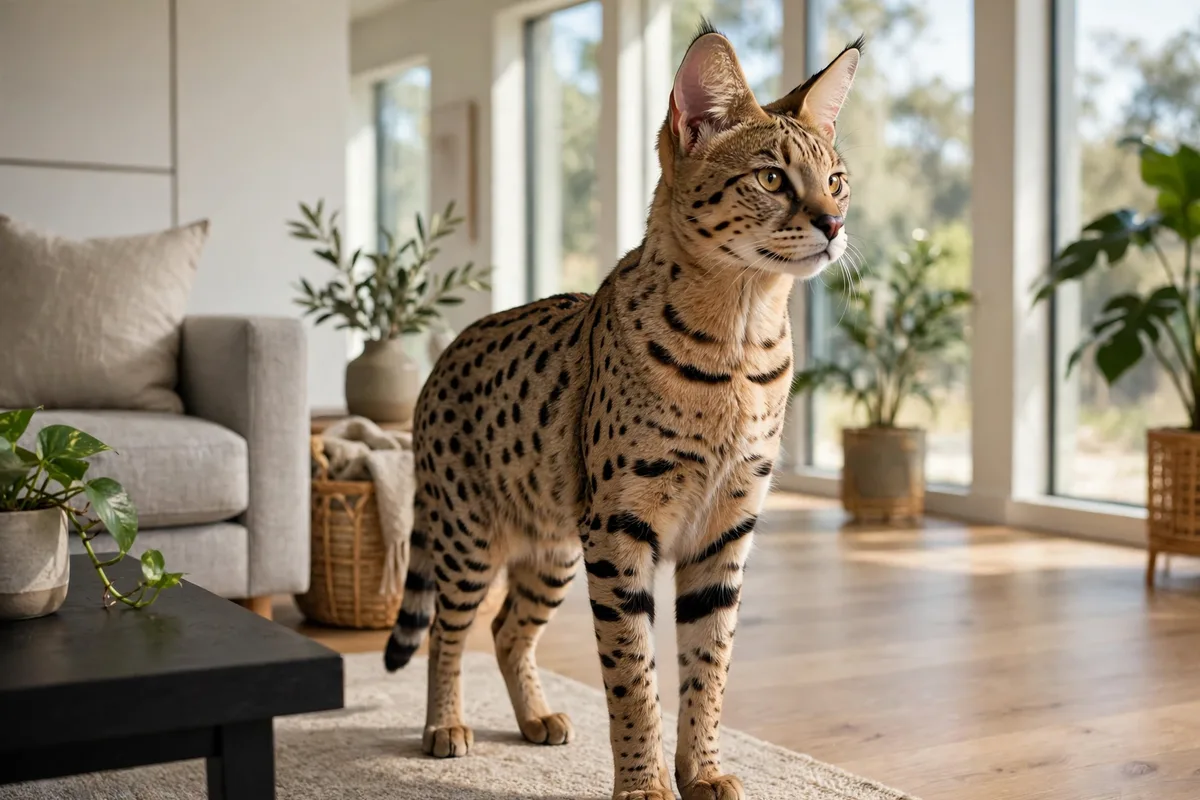
What is a Savannah cat? In short, it is a striking, tall, spotted cat created by crossing a wild African serval with a domestic cat. The result is one of the most eye-catching and energetic breeds you can bring home — a cat that looks like a miniature wildcat but lives as a companion animal. Savannah cats are known for their long legs, huge ears, bold spots, and a dog-like habit of following their people from room to room. But they are not the right fit for every household. Before you fall for those spots, it helps to understand what daily life with a Savannah really looks like, from their exercise needs to the legal rules that apply in some places.
This complete Savannah cat breed guide covers appearance, temperament, grooming, health, and the honest question every future owner should ask: is this breed right for you? Read on before you contact a breeder, because a Savannah is a long-term commitment that can last well over a decade.
Savannah Cat Appearance: Size, Coat, and Spotted Markings
The first thing anyone notices about a Savannah cat is its height. These are among the tallest domestic cat breeds, with long legs and a lean, athletic build inherited from the serval. Most Savannahs stand noticeably taller than an average house cat, and some males can weigh 12 to 20 pounds or more, although size varies a lot from one cat to the next. Females are usually smaller.
The coat is short to medium in length, with a slightly coarse feel, and it is covered in bold spots. The classic Savannah pattern is a golden or tawny base with dark brown or black spots, but silver, smoke, and black (melanistic) Savannahs also exist. Many have the distinctive spotted "ocelot-like" look, with bars on the legs and rings on the tail. Their ears are very large, wide at the base, and set high on the head — another serval trait. Their eyes are usually gold, green, or amber, with a slightly hooded, watchful expression.
One term you will meet when researching Savannahs is "generation," written as F1, F2, F3, and so on. An F1 Savannah has a serval as a direct parent, while later generations are further removed from the wild ancestor. Earlier generations tend to be larger, pricier, and more restricted, while later generations are generally smaller and more domestic in temperament. Always ask a breeder which generation a kitten is, because it affects size, behavior, and legality.
Savannah Cat Temperament and Personality
Savannah cats are famously active, curious, and confident. They are not the kind of cat that sleeps on the sofa all day. Most Savannahs love to climb to the highest point in the room, leap onto shelves and tall furniture, and investigate anything new in the house. They often enjoy playing in water, which surprises many first-time owners. Many also learn to walk on a harness and leash, and some will happily play fetch like a dog.
Socially, Savannahs tend to bond strongly with their people. They often follow a favorite person around the house, greet them at the door, and "talk" with chirps, trills, and meows. They are usually affectionate on their own terms: they may headbutt you and sleep near you, but many do not enjoy being picked up and held for long. Early socialization matters a great deal: a kitten that meets many different people, sounds, and situations usually grows into a more confident adult.
That energy is also the biggest challenge of the breed. A bored Savannah can become destructive, opening cabinets, knocking things off counters, and shredding paper out of sheer curiosity. They need daily interactive play, climbing furniture, puzzle feeders, and new challenges to stay happy. If your home is quiet and empty for most of the day, a Savannah may not thrive — they do best in homes where someone is around and engaged with them.
Savannah Cat Care and Grooming
Despite their exotic looks, Savannah cats are relatively easy to groom. Their short coat needs a weekly brush to remove loose hair and keep it shiny, and most enjoy the routine if it is started young. They shed moderately, so a quick brush also helps keep fur off your furniture. Check ears weekly, since their large ears can collect wax and debris, and trim nails every couple of weeks. Dental care matters too: regular tooth brushing or vet-approved dental treats help prevent gum disease.
Their living space needs more thought than their coat does. Savannahs need vertical territory — tall cat trees, wall shelves, and sturdy scratching posts — because climbing is a core part of how they play and relax. Secure your home like you would for a clever toddler: childproof latches on cabinets, no dangling cords within reach, and breakables moved off high shelves.
Feeding a Savannah is straightforward in most cases: a high-quality, meat-based cat food suited to their age and activity level, fed in measured portions. Because they are so active, some Savannahs burn more calories than a typical house cat, but free-feeding can still lead to weight gain, so follow your veterinarian's guidance on portions. Fresh water should always be available, and many Savannahs prefer a running water fountain. If you are considering a raw diet, discuss it with your vet first — raw feeding carries food-safety risks that need careful handling.
Savannah Cat Health Notes
Savannah cats are generally healthy and hardy, and they can live into their late teens with good care. Like all breeds, though, they have a few health topics worth knowing about. Some lines can be prone to hypertrophic cardiomyopathy (HCM), a heart condition seen in many cat breeds, so responsible breeders screen their breeding cats and buyers should ask about heart screening. Savannahs may also be more sensitive to some vaccines than other cats, so it is worth discussing a vaccination plan with a vet who knows the breed.
Because Savannahs are so active and curious, keep windows screened, balconies secured, and play sessions supervised to prevent falls and injuries. Regular vet checkups, parasite prevention, and vaccinations matter even more for a breed that loves to explore. If you notice changes in appetite, energy, litter habits, or weight, book a vet visit rather than waiting it out.
Is a Savannah Cat Right for You?
A Savannah cat may be a great match if you want an active, intelligent, social companion and you have the time and space to keep up with one. They suit experienced cat owners, active households, and people who enjoy interactive play, harness walks, and a cat with a big personality. Homes with tall cat furniture, safe climbing space, and someone around for much of the day tend to suit them best.
A Savannah is probably not the best choice if you want a calm lap cat, if you are away from home for long hours, or if you live in a small apartment with no room for climbing and play. First-time cat owners may also find the energy and curiosity overwhelming. Perhaps most importantly, check the law before you buy: some US states, counties, and cities restrict or ban ownership of early-generation Savannahs, and housing rules or landlord policies may apply too. Laws vary widely, so verify the rules for your exact location and for the generation you are considering.
The bottom line: a Savannah cat is a beautiful, bold, and endlessly entertaining companion — but it is a commitment that rewards preparation. If you can offer space, stimulation, and time, you may find no more loyal and lively feline friend.
Frequently Asked Questions
Are Savannah cats legal to own in the US?
It depends on where you live and the cat's generation. Some states, counties, and cities restrict or ban early-generation Savannahs, while later generations are widely allowed. Always check your state and local laws — and any landlord or housing rules — before buying a Savannah kitten.
How big do Savannah cats get?
Savannahs are among the tallest domestic breeds. Many adults weigh 12 pounds or more, and some large males reach 18 to 20 pounds, although size varies a lot by generation and individual cat. Females are usually smaller than males.
Are Savannah cats good with children and other pets?
Well-socialized Savannahs can do well with older children and other pets, especially if they grow up together. Their high energy and size mean supervision is important around small children, and introductions to other animals should be gradual.
Do Savannah cats like water?
Many Savannahs enjoy water more than most cats — splashing in bowls, playing under a tap, or even joining a shallow bath. Not every individual likes it, but a love of water is one of the breed's well-known traits.
How much exercise does a Savannah cat need?
A lot. Plan on at least two daily interactive play sessions, plus climbing furniture, puzzle feeders, and enrichment to keep them busy. A bored Savannah will find its own entertainment, usually at your furniture's expense.