Christmas Cat Safety: 12 Holiday Dangers Every Cat Owner Must Avoid
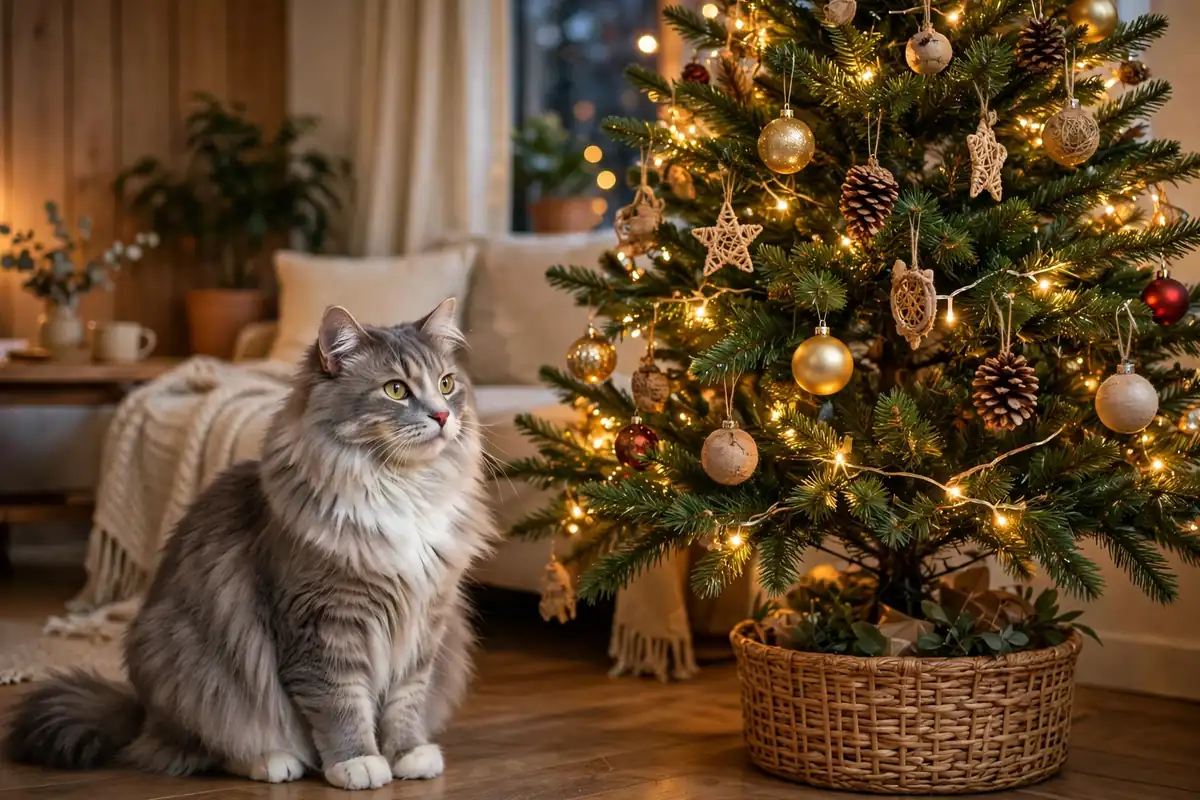
Christmas is magical for people and full of temptations for cats. Christmas falls on December 25, and the twelve dangers in this guide — a climbable tree, dangling tinsel, chewable light cords, toxic plants, candles, gift wrap, rich foods, alcohol, open doors, New Year's fireworks, cold drafts, and a missing safe retreat — cover everything your cat is likely to investigate. With a few simple precautions, your cat can enjoy the season safely while you enjoy the celebrations. For more seasonal advice, explore our cat care guides or visit the Purrfect Paws homepage.
The key idea is to think like a cat: anything shiny, dangling, or new will be batted or climbed, and anything that smells like food will be investigated.
1. The Christmas Tree: Tipping, Water, and Needles
To a cat, a Christmas tree is the world's greatest climbing frame, complete with dangling toys. The biggest risk is the tree itself tipping over onto your cat when climbed, so anchor it firmly: use a heavy, wide stand, consider securing the top of the tree to the wall or ceiling with discreet fishing line. Real trees bring two more hazards. The water in the tree stand is also a problem — it can contain tree sap, preservatives, or fertilizer, and it is an inviting drinking bowl for a thirsty cat — so cover the reservoir with a tree skirt, foil, or a fitted cover.
2. Ornaments, Tinsel, and String
Glass ornaments shatter into sharp pieces when batted off a branch, and small ornaments can be a choking hazard. Tinsel deserves a special warning: cats love shiny, dangling strands, and swallowed tinsel or string can tangle inside the intestines and require emergency surgery. The safest choice with a cat in the house is to skip tinsel entirely. If you see tinsel or string hanging from your cat's mouth, do not pull it — it may be anchored inside — and call your veterinarian right away.
3. Lights and Electrical Cords
String lights turn your home into a wonderland, but their thin cords are tempting chew toys for cats, especially kittens. A chewed cord can give a painful shock, cause mouth burns, or start a fire. Run cords along walls and behind furniture where they are hard to reach, use cord covers on exposed sections, and unplug the tree lights whenever you leave the house or go to bed.
4. Poinsettias, Lilies, Mistletoe, and Holly
Holiday plants are one of the most underestimated Christmas dangers. Lilies are the most serious: every part of a lily is highly toxic to cats, and even pollen or vase water can cause severe kidney damage, so never bring lilies into a home with a cat, and be cautious with bouquets from guests that may contain them. Mistletoe and holly berries can also cause stomach upset and more serious symptoms if eaten in quantity. If your cat chews any plant and you are unsure what it was, call your veterinarian or a poison helpline promptly.
5. Candles and Open Flames
Candles on the dinner table, the mantelpiece, and the Advent wreath create a warm glow — and a real fire risk around cats. A cat brushing past a candle can singe its fur or whiskers, and a cat jumping onto a table can knock a candle into curtains, paper decorations, or a dry tree. Never leave a burning candle in a room your cat can enter unsupervised. If you do use real candles, place them in sturdy, enclosed holders, away from table edges, curtains, and cat routes, and blow them out before you leave the room.
6. Gift Wrap, Ribbons, and Packaging
Christmas morning is a cat's paradise of crinkly paper, ribbons, and boxes — and most of it should be supervised. Ribbons and string are the main danger, since swallowed ribbon can cause the same intestinal problems as tinsel. Cellophane and metallic wrapping can also irritate the stomach if eaten, and small packaging pieces can be choking hazards. A quick tidy after opening presents takes minutes and removes the most dangerous leftovers before your cat finds them.
7. Chocolate and Rich Holiday Foods
Chocolate is toxic to cats, and Christmas is full of it: advent calendars, chocolate ornaments, selection boxes, and desserts left on coffee tables. Dark chocolate and baking chocolate are the most dangerous, but no chocolate is safe for cats. Rich foods are another problem — seasoned meat, gravy, stuffing, creamy sauces, and fatty leftovers can cause vomiting, diarrhea, and stomach pain. Clear plates and dessert trays promptly, and store leftovers in sealed containers in the fridge. If your cat eats chocolate, call your veterinarian or a poison helpline right away with details of the type and amount if you know them.
8. Alcohol
Mulled wine, eggnog, cocktails, and champagne are everywhere at Christmas, and cats are far more sensitive to alcohol than people. Even a few laps from an unattended glass can cause wobbliness, vomiting, breathing problems, or worse. If you suspect your cat has drunk alcohol, call your veterinarian or a poison helpline immediately — do not wait to see if symptoms develop, and never give home remedies or human medicines.
9. Guests and Open Doors
Christmas gatherings mean the front door opening again and again, coats piled in hallways, and visitors who may not know your cat is indoor-only. A frightened or curious cat can slip out in a second, and a busy street full of holiday traffic is a dangerous place for an escaped cat. Brief guests on arrival: the cat stays inside, doors should be closed promptly, and the cat should be allowed to approach people rather than being chased. On the busiest party days, keeping your cat in its safe room during arrivals removes the risk entirely.
10. Fireworks and Noise on New Year's Eve
The Christmas season ends with its loudest night. Fireworks on New Year's Eve terrify many cats: the bangs are sudden, unpredictable, and impossible for a cat to locate or escape. A frightened cat may hide for hours, refuse food, pant, or try to bolt through an open door. Keep your cat indoors well before dark on New Year's Eve, close curtains to block flashes, and leave a television or radio on at normal volume to soften the contrast of each bang.
11. Cold Drafts and Winter Chills
Winter cold is easy to overlook indoors, but cats feel drafts too — especially kittens, seniors, and short-haired breeds. A bed placed against a cold window, a cat flap letting in icy air, or a room that drops cold overnight can leave a cat uncomfortable and, for very young or elderly cats, genuinely chilled. Move your cat's bed away from windows and exterior doors, and add a blanket or a covered bed for extra warmth.
12. Set Up a Safe Room for the Holidays
The best Christmas gift you can give your cat is a room of its own. Before the festivities begin, prepare a quiet room with your cat's bed or a covered hiding spot, fresh water, food, a clean litter tray, a scratching post, and a few familiar toys. Check in quietly once or twice, and tell guests the room is off-limits so nobody opens it by accident.
With these twelve dangers handled, Christmas can be a joyful season for the whole household — cats included.
Frequently Asked Questions
Is a real Christmas tree safe for cats?
A real tree can be risky: it can tip over, its needles can irritate the stomach if eaten, and the water in the stand may contain sap, preservatives, or fertilizer. Anchor the tree securely, cover the water reservoir, and sweep up fallen needles daily.
Are poinsettias poisonous to cats?
Poinsettias are mildly toxic to cats and usually cause drooling, vomiting, or diarrhea if chewed. They are far less dangerous than lilies, which are extremely toxic, but it is still safest to keep all holiday plants out of your cat's reach.
Why is tinsel so dangerous for cats?
Cats are attracted to shiny, dangling tinsel, and swallowed tinsel or string can tangle inside the intestines and require emergency surgery. Skip tinsel entirely if you have a cat, and keep ribbons, garlands, and gift wrap out of reach.
Can cats eat Christmas dinner leftovers?
Most Christmas dishes are not suitable for cats. Seasoned meat, gravy, stuffing, onion, garlic, chocolate, and rich desserts can all cause stomach upset or worse. A small piece of plain, cooked meat is the safest treat, and everything else should stay off your cat's menu.
Should my cat have a safe room over Christmas?
Yes, especially on party days and New Year's Eve. A quiet room with food, water, a litter tray, a hiding spot, and low background noise protects your cat from guests, open doors, fireworks noise, and decorations, and gives it a calm place to retreat.