Freeze-Dried Cat Food: Is It Worth It in 2026?
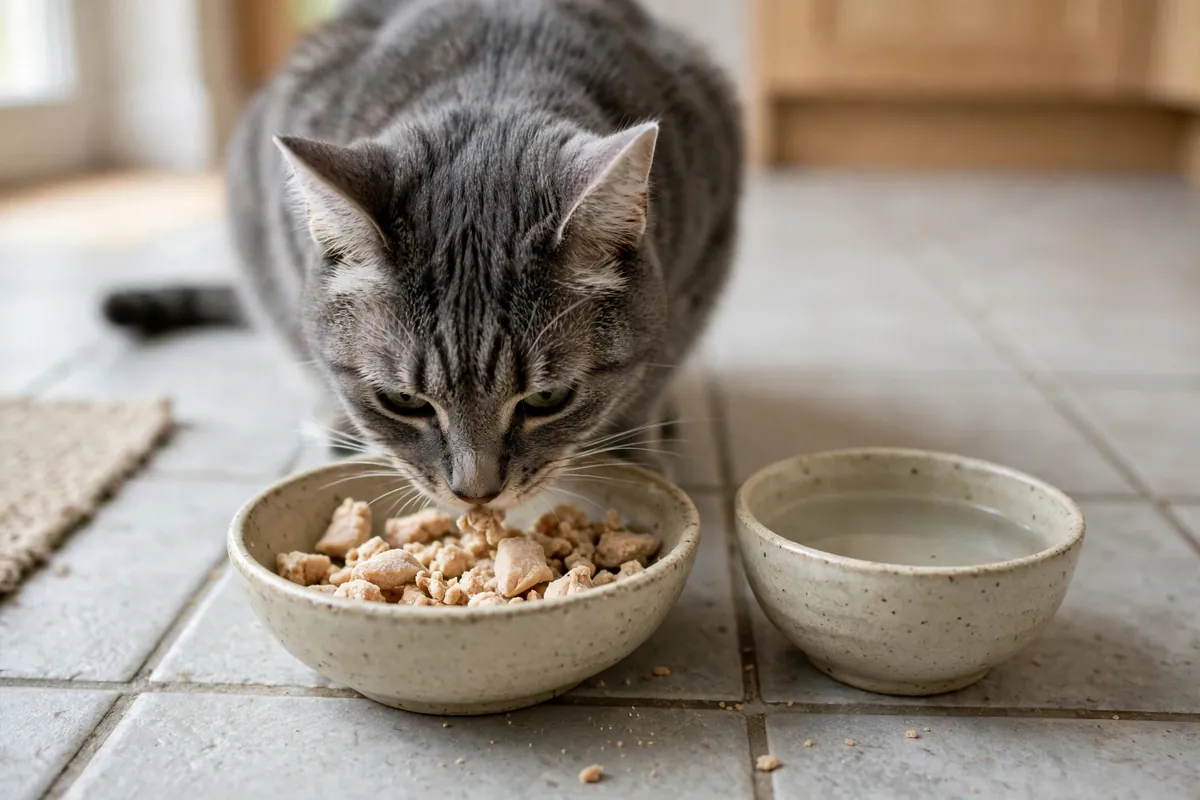
Is freeze-dried cat food worth it? Here is the straight verdict: yes, as a topper sprinkled over your cat's regular food, and yes, as a way to tempt a picky eater — but not as your cat's sole diet unless the bag carries a complete-and-balanced label. Freeze-dried food is real meat with the water removed, so it keeps much of its flavor and nutrition, and most cats go wild for it. The catch is price, and the fact that many popular freeze-dried products are single-ingredient treats, not full meals. Buy the right kind, rehydrate it properly, and it is a genuinely useful addition to the bowl. Buy the wrong kind and feed it exclusively, and your cat could miss essential nutrients.
Freeze-dried cat food has moved from niche pet-store shelves to mainstream aisles in the last few years, and the marketing can be confusing. Words like "raw," "natural," and "minimally processed" get thrown around freely, while the one label that actually matters — complete and balanced — sits quietly on the back of the bag. This guide cuts through that noise: what freeze-drying really does, how it compares with kibble, its honest pros and cons, how to rehydrate it, and exactly when it is worth the money.
What Is Freeze-Dried Cat Food?
Freeze-drying is a gentle preservation method. Raw meat — and in complete formulas, organs, ground bone, vitamins, and minerals — is frozen solid, then placed under vacuum so the ice turns directly into vapor without ever becoming liquid. The result is a lightweight, shelf-stable piece of food that looks and smells remarkably close to the original ingredient, with almost no moisture left in it.
That matters because heat is what damages nutrients in conventional processing. Kibble is extruded at high temperatures, which is perfectly safe but does change proteins and flavor. Freeze-drying avoids that heat, which is why freeze-dried food tastes so intensely meaty to a cat — and why it costs more. You are paying for a gentler process, a higher meat content, and a lot of water weight that has been removed, which makes each bag look smaller than a kibble bag of the same weight.
Is Freeze-Dried Cat Food Good for Cats?
For most cats, yes — with one important condition. Cats are obligate carnivores, meaning they need nutrients found in animal tissue, and freeze-dried meat delivers animal protein in a highly palatable, minimally processed form. Cats that turn their noses up at kibble often eat freeze-dried food enthusiastically, which makes it a practical tool for picky eaters, cats recovering their appetite, and owners trying to add variety without switching the whole diet.
The condition is the label. A food that is "formulated to meet the nutritional levels established by the AAFCO Cat Food Nutrient Profiles" for a stated life stage is a complete diet. A product that says "for intermittent or supplemental feeding only" is not — it is a treat or topper, and feeding it as the entire diet long-term can leave gaps in vitamins, minerals, and amino acids like taurine. This distinction is the single most important thing to check before buying, and it applies to every brand at every price point.
Hydration is the other condition. Freeze-dried food is roughly 95 percent water-free, so a cat eating it dry gets almost no moisture from its meal. Cats already tend to drink less than they should, and a dry-only diet can work against urinary health over time. Rehydrating solves this neatly, which is why the rehydration steps below are not optional extras — they are part of using the product properly.
Freeze-Dried vs Kibble: An Honest Comparison
Freeze-dried vs kibble is not a simple good-versus-bad contest; each format wins on different points. Freeze-dried food generally has a shorter, meat-first ingredient list and less processing, and its smell and texture are far more appealing to most cats. It is also easier to use as a high-value topper: a small amount transforms a boring bowl of kibble into something exciting.
Kibble wins on price, convenience, and dental habit. It costs a fraction of freeze-dried food per day, it can sit in the bowl without spoiling, it needs no preparation, and its crunch gives some mild mechanical cleaning action on teeth (though it is no substitute for brushing). A well-formulated kibble with a complete-and-balanced label is a sound everyday diet, and there is nothing second-rate about feeding it.
The practical middle ground is what most owners land on: kibble or wet food as the daily base, with freeze-dried food as a topper or a few-times-a-week meal. You get the palatability and variety benefits without the full price tag, and your cat still gets a complete diet every day. If budget is no object and you choose a complete-and-balanced freeze-dried formula, feeding it as the main diet is also a legitimate choice — just rehydrate every serving and keep an eye on the monthly cost, which can surprise you.
Freeze-Dried Cat Food Pros and Cons
Pros:
- High palatability. The intense meaty smell wins over picky cats that ignore kibble.
- Minimal processing. No high-heat extrusion, and usually a short ingredient list you can actually read.
- High animal protein. Meat-first recipes suit a cat's carnivore biology.
- Long shelf life. Sealed freeze-dried food stores for months without refrigeration.
- Flexible use. Works as a meal, a topper, a training treat, or a way to tempt a sick or fussy cat to eat.
Cons:
- Price. Per day, freeze-dried food typically costs several times more than kibble.
- No moisture until rehydrated. Fed dry, it adds nothing to your cat's water intake.
- Not always complete. Many products are treats, not meals — the label, not the price, decides.
- Preparation time. Rehydrating takes a few minutes, and uneaten portions cannot sit out like kibble.
- Crumbly mess. Freeze-dried pieces break apart easily, which some cats — and some kitchens — do not love.
How to Rehydrate Freeze-Dried Cat Food
Rehydrating is simple, and it makes a real difference to both hydration and texture. Follow the feeding guide on your bag for quantities, since brands vary, but the method is the same:
- Measure the portion. Place the recommended amount of freeze-dried pieces in your cat's bowl. Break larger patties into smaller pieces so they absorb water evenly.
- Add warm water. Pour in just enough warm — not hot — water to cover the pieces. A common starting point is roughly equal parts water and food by volume, but follow your product's guide.
- Wait three to five minutes. Let the pieces soak until they soften through. Stir once halfway through so no dry, hard centers remain, which can be a choking annoyance for enthusiastic eaters.
- Check the texture. The food should be soft and moist throughout, similar to wet food. Add a splash more water if any pieces are still crunchy in the middle.
- Serve fresh, discard leftovers. Treat rehydrated food like wet food: put it down fresh, and throw away anything uneaten after about 30 minutes. Never save a rehydrated portion for the next meal, and never rehydrate a whole bag at once.
If your cat refuses rehydrated food at first, try a halfway step: sprinkle a little crumbled freeze-dried food dry over their usual wet food, then gradually add a splash of water over several days. Most cats come around once the smell wins them over.
When Freeze-Dried Cat Food Is Worth It — and When It Is Not
It is worth it when you have a picky eater and a sprinkle of freeze-dried topper is the difference between an eaten bowl and a wasted one; when you want a high-value treat for training or medication time; when you travel and want a lightweight, shelf-stable food that needs only water; or when you simply enjoy giving your cat variety and the budget comfortably allows it.
It is not worth it as a sole diet if the product lacks a complete-and-balanced label — that is a treat masquerading as a meal, whatever the price. It is also poor value if your cat already eats a complete diet happily and you are buying freeze-dried food purely because the marketing implies kibble is harmful; it is not. And it is a bad fit if the daily preparation feels like a chore you will skip, because freeze-dried food fed dry every day, without extra water, loses one of its main advantages.
Frequently Asked Questions
Is freeze-dried cat food good for cats?
Yes, when it is a complete-and-balanced formula or used as a topper alongside a complete diet. Freeze-drying preserves nutrients well and most cats love the taste, but a single-ingredient freeze-dried meat with no added vitamins and minerals is a treat, not a full diet.
Do you have to add water to freeze-dried cat food?
You should. Freeze-dried food has almost no moisture, so rehydrating it with warm water for a few minutes protects your cat's hydration and makes it easier to eat. Some products are labeled safe to feed dry as a treat, but for a meal, water is the better choice.
Is freeze-dried cat food better than kibble?
It depends on the product. Freeze-dried food is usually less processed and higher in animal protein than kibble, but a well-formulated kibble with a complete-and-balanced label is a perfectly sound everyday diet, and it is far cheaper and more convenient. Neither format is automatically superior.
Can kittens eat freeze-dried cat food?
Kittens can eat freeze-dried food that is labeled complete and balanced for growth or for all life stages, served rehydrated and softened. Single-ingredient freeze-dried treats are fine in small amounts, but they should not replace kitten food.
How long does rehydrated freeze-dried cat food last?
Treat rehydrated food like wet food: serve it fresh, and discard anything uneaten after about 30 minutes at room temperature. Do not save a rehydrated portion for the next meal, and store the dry product sealed, cool, and dry.