5 Vet-Approved Homemade Cat Food Recipes
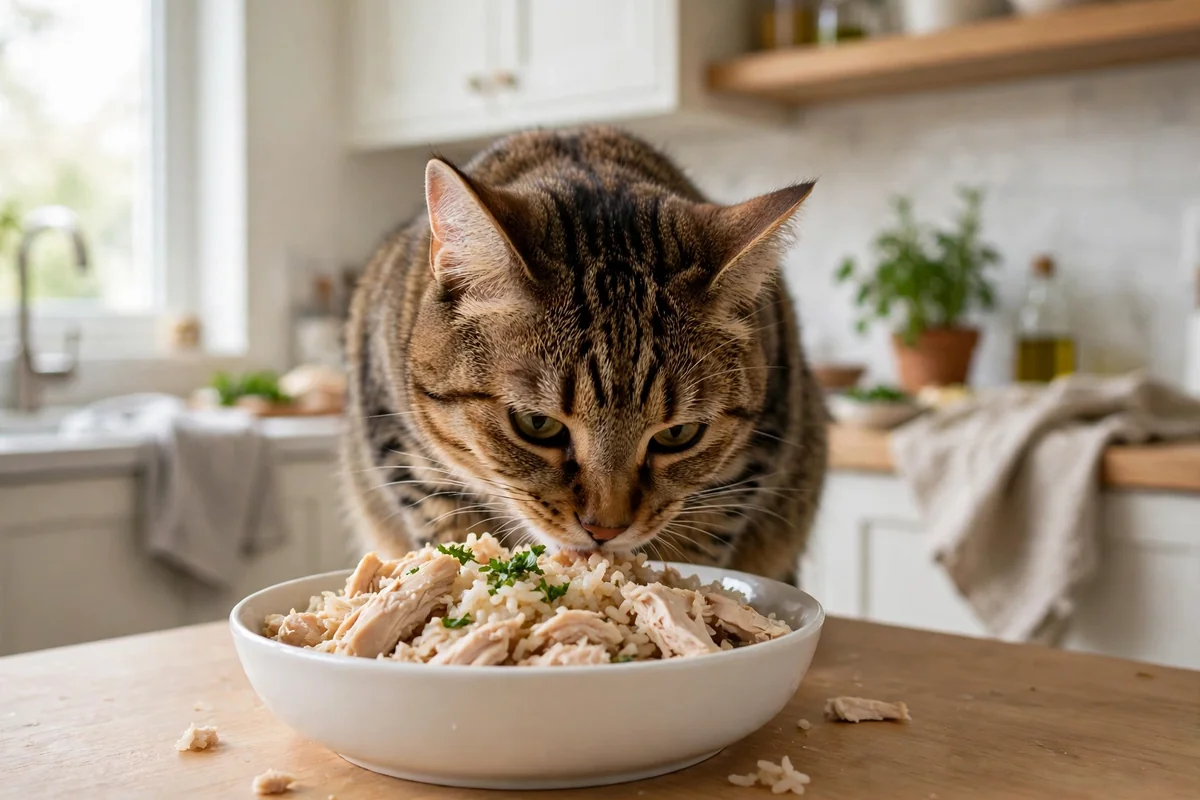
Yes — you can absolutely feed your cat homemade food. But it only works when built around what cats are: obligate carnivores needing animal protein, taurine, arachidonic acid, and preformed vitamin A — nutrients plants can't reliably supply. Plain cooked chicken is a fine occasional treat, but not a complete diet on its own.
Below you'll find 5 vet-approved homemade cat food recipes built on cooked chicken and turkey — plus the taurine rule every home cook must follow and the human foods that should never touch your cat's bowl.
Why Make Homemade Cat Food?
You control every ingredient — a plus for cats with food sensitivities or picky appetites. Freshly cooked food is naturally high in moisture (good for urinary health), and many cats prefer the taste of real meat to processed food. Some owners also cook during diet transitions or when a vet recommends a simplified diet.
That said, commercial foods labeled "complete and balanced" meet established feline nutritional standards in every bag and can — homemade meals can fall short on key nutrients unless planned carefully. Think of the recipes below as excellent additions to a balanced diet, and talk to your vet before making homemade food the whole diet. See our Cat Food guides for base-diet help.
The 5 Ground Rules Before You Cook
- Cook all meat thoroughly — no raw recipes. Raw meat and fish can carry bacteria and parasites. Cook everything through, let it cool, and remove every bone — cooked bones splinter and can injure the mouth or gut.
- Taurine is non-negotiable. Cats can't make enough taurine on their own, and deficiency can cause heart disease and blindness. It's richest in heart and dark meat but breaks down with cooking — so cats on mostly homemade diets often need a supplement. Ask your vet for the right dose.
- Homemade is a supplement, not a swap — unless your vet says otherwise. Keep homemade food to about 10–15% of daily calories unless a veterinarian or veterinary nutritionist designed a balanced recipe for long-term feeding.
- No seasoning, no onion, no garlic. Salt, spices, butter, onion, garlic, chives, and leeks are off the menu. Cook plain — cats don't need flavoring, and several common seasonings are toxic to them.
- Transition gradually. Introduce any new food slowly over 7–10 days, mixing increasing amounts into the old food, to avoid an upset stomach.
Recipe 1: Simple Poached Chicken Dinner
The classic starter recipe — plain, gentle, and almost every cat loves it.
Ingredients: 1 boneless, skinless chicken breast; 2 cups water.
Method: Simmer the chicken in the water for 15–20 minutes until no pink remains. Cool completely, shred into small pieces, and serve at room temperature. Refrigerate the rest.
Note: A great protein topper, but not a complete meal — pair it with your cat's regular balanced food, or ask your vet about taurine and a feline multivitamin if you serve it often.
Recipe 2: Turkey and Pumpkin Stew
A soft, easy-to-digest stew that works well for cats with sensitive stomachs.
Ingredients: 1 lb ground turkey (plain, no seasoning); 1/4 cup plain canned pumpkin (100% pumpkin, not pie filling); 1 cup water.
Method: Brown the turkey in a non-stick pan, breaking it into small crumbles. Stir in pumpkin and water; simmer 5 minutes until slightly thickened. Cool completely before serving.
Note: Pumpkin is a gentle fiber source many vets recommend for mild digestive sluggishness. Freeze in ice-cube trays and thaw a cube or two per meal.
Recipe 3: Chicken Heart and Liver Protein Boost
This is the taurine powerhouse of the bunch — heart meat is nature's richest source.
Ingredients: 1/2 lb chicken hearts; 2 oz chicken liver (a small amount only); 1 cup water.
Method: Rinse, trim excess fat, and simmer in the water for 15–20 minutes. Cool, chop finely, and mix a spoonful into your cat's regular food.
Note: Liver is extremely rich in vitamin A — a little is excellent, but frequent large servings can cause toxicity. Treat this as a weekly boost and ask your vet how often it fits.
Recipe 4: Turkey and Egg Breakfast Bowl
A protein-rich morning meal with eggs for extra nutrition and flavor.
Ingredients: 1/2 lb ground turkey; 2 eggs, hard-boiled and chopped; 1/2 cup water.
Method: Cook the turkey in a non-stick pan with the water until no pink remains. Cool slightly, fold in the chopped eggs, then cool completely and serve.
Note: Always serve eggs fully cooked — raw egg whites contain avidin, which interferes with biotin absorption. Hard-boiled or plain scrambled is the safe way to go.
Recipe 5: Chicken, Sardine and Sweet Potato Plate
A slightly fancier plate with omega-rich fish for skin and coat health.
Ingredients: 1 boneless, skinless chicken thigh; 1 small sardine canned in water (no added salt), drained; 2 tablespoons mashed cooked sweet potato (plain).
Method: Poach or bake the chicken thigh until fully cooked, then shred. Flake the sardine, mash the sweet potato, mix everything warm, and cool to room temperature.
Note: Sardines are a wonderful occasional treat, but fish shouldn't dominate a cat's diet — heavy fish-based diets are linked to thiamine deficiency. Once or twice a week is plenty.
Human Foods That Must Never Touch Your Cat's Bowl
Even the best recipe is dangerous with the wrong ingredients. Keep these far away from your cat's bowl:
- Onion, garlic, chives, and leeks — damage red blood cells and cause anemia, even as powders.
- Chocolate and caffeine — contain compounds cats cannot metabolize safely.
- Grapes and raisins — linked to kidney failure in pets; avoid entirely.
- Alcohol — even small amounts can cause dangerous intoxication in cats.
- Xylitol (in some peanut butters and sugar-free products) — highly toxic to pets.
- Raw meat, raw fish, and raw eggs — bacterial and parasite risk, plus thiamine and biotin interference.
- Cooked bones — splinter and can puncture the mouth, throat, or intestines.
For the full danger list with symptoms to watch for, read 10 Human Foods That Are Poisonous to Cats.
How Much Homemade Food to Serve — and How to Store It
Portion size depends on weight, age, and activity level. A rough starting point: an average 10-pound indoor cat needs around 200–250 calories per day — but homemade meals vary in calorie density, so use our portion guide and confirm amounts with your vet.
Storage: Refrigerate cooked food in a sealed container for 3–4 days, or freeze portions for 2–3 months and thaw overnight in the fridge. Warm to room temperature before serving — never microwave a full bowl, which creates dangerously hot spots.
When to Check With Your Vet First
Talk to your vet before homemade feeding becomes a lifestyle — especially for kittens, pregnant or nursing cats, seniors, and cats with kidney disease, diabetes, urinary issues, or food allergies. For these cats, a one-time consult with a veterinary nutritionist is the cheapest insurance your plan can have.
Frequently Asked Questions
Is homemade cat food better than store-bought cat food?
Not automatically. Commercial foods labeled complete and balanced for cats meet established nutritional standards, while homemade meals can fall short on nutrients like taurine, calcium, and vitamin A unless carefully formulated. Homemade food is a great addition to a cat's diet, but talk to your vet before making it the entire diet.
Can cats eat raw meat in homemade recipes?
No — skip raw meat. Raw meat and fish can carry bacteria and parasites that make cats (and the people preparing the food) sick. Always cook meat thoroughly to a safe internal temperature, then cool it before serving.
Do I need to add supplements to homemade cat food?
Often, yes — especially taurine. Taurine breaks down during cooking, and cats cannot make enough of it on their own. Heart meat is the richest natural source, and many vets recommend a taurine supplement for cats eating mostly homemade meals. Ask your vet for the right dose for your cat.
How long does homemade cat food last in the fridge?
Store cooked homemade cat food in a sealed container in the refrigerator for up to 3 to 4 days. For longer storage, freeze portions for up to 2 to 3 months, then thaw in the fridge overnight. Warm food to room temperature before serving — never microwave a full bowl, which can create hot spots.
Can my cat live on homemade food alone?
Only if the diet is formulated to be nutritionally complete. Most vets suggest keeping homemade food to about 10 to 15 percent of daily calories unless a veterinarian or veterinary nutritionist has designed a balanced recipe for your cat. Unbalanced long-term homemade diets can cause serious deficiencies.