Havana Brown: Complete Breed Guide
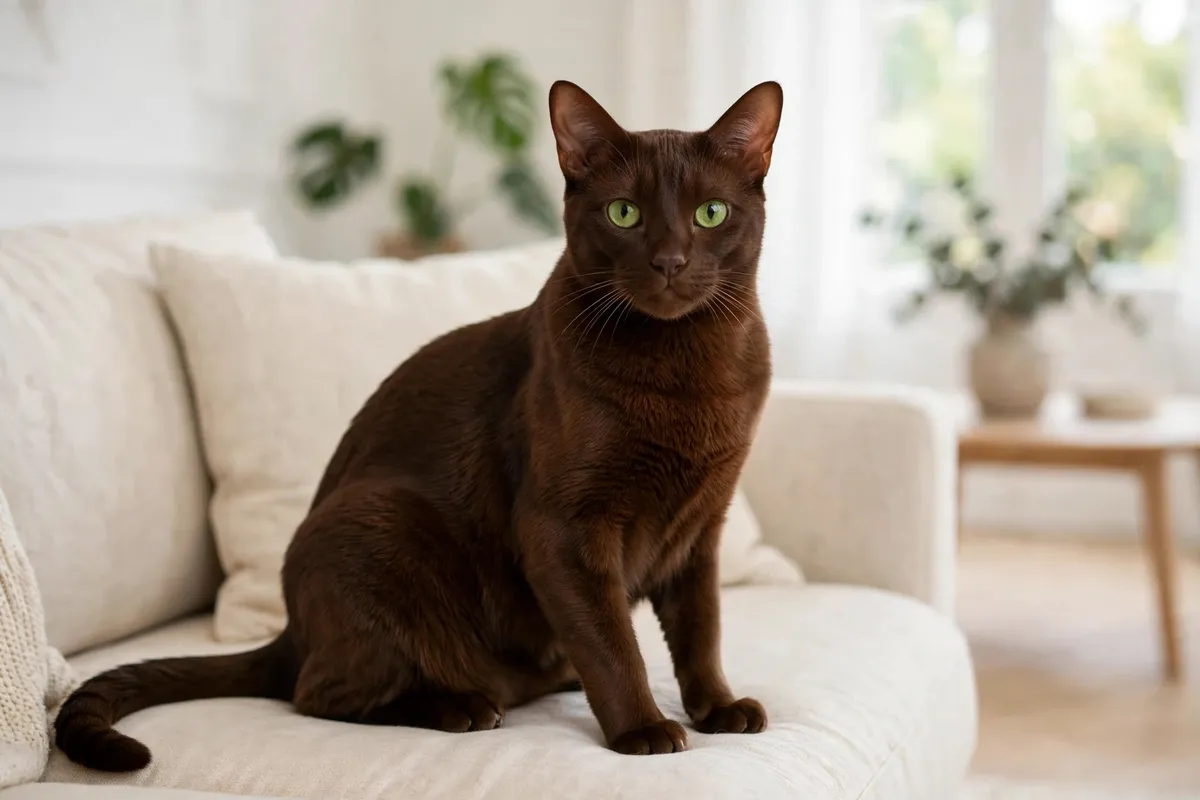
The Havana Brown is one of the rarest and most elegant cat breeds you can own: a medium-sized cat wrapped in a rich, warm mahogany-brown coat, with vivid green eyes and a habit that owners never forget. This cat uses its paws like hands, reaching out to touch your arm, tap a toy, or investigate anything new. It is a small detail, but it sums up the breed perfectly: curious, clever, and deeply interested in people.
The breed was developed in England in the 1950s, and its name comes from the warm brown color of a Havana cigar. If you want a beautiful, people-focused cat that is calmer than a Siamese but just as devoted, the Havana Brown deserves a place on your shortlist. This guide covers its origins, appearance, temperament, grooming needs, health, and whether it fits your home.
Havana Brown at a Glance
The Havana Brown is a medium-sized cat, usually weighing between 3.5 and 5.5 kilograms, with a short, glossy coat in a single rich shade of warm mahogany brown. The eyes are always a clear, vivid green, and even the whiskers are brown, which gives the cat a striking, coordinated look. The ears are large and upright, tilted slightly forward, as if the cat is always listening.
Havana Browns are moderately active and famously people-oriented. They are not hyperactive, but they are not lap ornaments either: they want to be near you, watch what you are doing, and take part. With good care they typically live 12 to 15 years, and they stay playful well into adulthood.
Origin and History: An English Creation
The Havana Brown was created in England in the 1950s, when breeders crossed chocolate-point Siamese cats with solid black domestic shorthairs, aiming for a cat with a solid chocolate coat. The first kittens with the right color and type appeared quickly, and breeders worked to fix the rich brown coat and green eyes as the breed standard.
Early on, the breed was briefly called the Swiss Mountain Cat, but the name Havana Brown stuck, a nod to the color of a Havana cigar. The breed was recognized by major cat associations in the 1960s and later established in North America, but it has always remained rare. Even today, finding a Havana Brown kitten usually means joining a waiting list with a specialist breeder.
Appearance: Mahogany Coat and Green Eyes
The Havana Brown coat is the breed's calling card: a warm, rich mahogany brown, glossy and close-lying, with no markings or patches. The color should be even from root to tip, and the short coat has a smooth, satin feel. Unlike many shorthairs, the coat has a warm reddish undertone in sunlight, which is part of its charm.
The head is slightly longer than it is wide, with a distinctive narrow muzzle and a firm chin. The large ears stand upright and tilt forward, giving the cat an alert, interested expression. The eyes are oval, set wide apart, and always green, ranging from a soft sage to a deep emerald. Kittens are born with blue eyes that change to green as they mature.
Personality and Temperament: A Cat That Reaches Out
Havana Browns are intelligent, curious, and very attached to their people. Their most famous trait is the way they use their paws: they will reach out to touch your hand, tap a toy toward themselves, or pat an object they want to inspect. It is a gentle, deliberate habit, and owners say it makes the cat feel almost like a small companion rather than a pet.
These cats follow their owners from room to room and like to be involved in daily life, but they are quieter and less demanding than their Siamese relatives. They usually get along well with children who play gently and with other cats and cat-friendly dogs. They do not enjoy being left alone for very long hours, so they suit homes where someone is around most of the day.
Grooming a Short Glossy Coat
Grooming a Havana Brown is simple. The short, close-lying coat needs only a gentle brush once a week to remove loose hair and keep it glossy. Shedding is low to moderate, and a quick weekly brush is usually enough to keep it under control. Baths are rarely needed unless the cat gets into something messy.
As with any cat, keep up the routine care: trim the nails every few weeks, check the ears, and brush the teeth regularly. Havana Browns can be prone to dental problems, so dental care matters more for this breed than for many others. A tall scratching post, a window perch, and a few puzzle toys will keep your Havana Brown happy and exercised.
Havana Brown Health and Lifespan
Havana Browns are generally healthy cats, typically living 12 to 15 years. The most common health concern is dental disease, including gingivitis, so regular tooth brushing and vet dental checks are worth the effort. Some lines have also been reported to have urinary tract issues, so watch for straining in the litter box or frequent trips to it.
Responsible breeders screen their cats and are happy to discuss the health history of their lines, so always ask before committing. The most practical health advice is the same as for any cat: feed a good-quality diet in measured portions, keep the cat indoors, stay on top of dental care, and take your cat for a vet check at least once a year.
Is the Havana Brown Right for You?
The Havana Brown is ideal if you want a beautiful, intelligent, deeply affectionate companion and you are happy to have a cat that follows you, talks to you softly, and reaches out a paw to get your attention. It suits homes where someone is around during the day and families who will include the cat in daily life.
It is not the right choice if you are away from home for very long hours, or if you want a cat that keeps to itself. The breed is also rare, so expect a waiting list and a higher price than a common breed. But if a loyal, elegant, chocolate-coated companion sounds like your perfect cat, the Havana Brown is hard to beat.
Frequently Asked Questions
Are Havana Brown cats rare?
Yes, Havana Browns are one of the rarest recognized breeds. Few breeders work with them, so kittens are usually available only through a waiting list, and prices are higher than for common breeds.
Do Havana Brown cats shed a lot?
No, shedding is low to moderate. The short, close-lying coat loses some hair year-round, and a weekly brush keeps it under control. Most owners find the shedding very manageable.
Are Havana Brown cats hypoallergenic?
No cat is truly hypoallergenic, and the Havana Brown is no exception. It produces the same allergy-causing protein as other cats. Allergy sufferers should spend time with the breed before committing.
Are Havana Brown cats good with children?
Yes, they are usually good with children, especially older children who play gently and respect the cat's space. They enjoy interactive play and bond closely with family members.
Why does my Havana Brown reach out with its paws?
Using paws to touch and investigate is a famous Havana Brown trait. They tap objects, toys, and people to explore them, much like a person reaching out a hand. It is normal for the breed and a sign of their curiosity.