Highlander: Complete Breed Guide
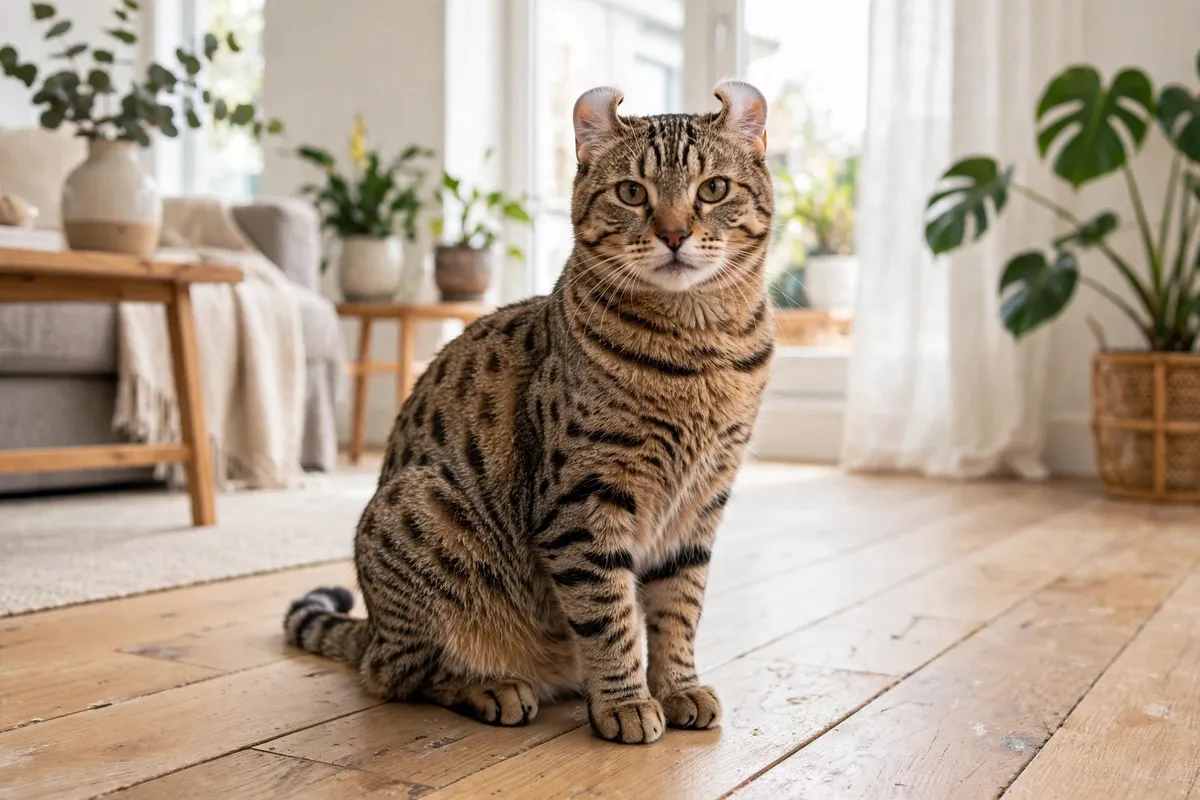
The Highlander looks like a small wildcat that wandered in from the forest: curled ears, a short bobbed tail, a spotted coat, and often extra toes on its paws. But behind that wild look is one of the most playful, clownish, and dog-like cats you can own. Highlanders follow their people around, play fetch, and turn almost anything into a game.
The breed is still young and uncommon, developed in the United States from crosses of two other unusual breeds. If you want a cat with a wild appearance and a goofy, affectionate heart, and you can give it plenty of play and company, the Highlander may be your perfect match. This guide covers its origins, appearance, temperament, grooming, health, and whether it fits your home.
Highlander at a Glance
The Highlander is a medium to large cat, usually weighing between 5 and 9 kilograms, with a muscular, athletic build and a wild look. Its trademark features are ears that curl gently backward, a short bobbed tail, and often polydactyl paws, meaning extra toes. The coat can be short or long, and comes in spotted, tabby, and solid patterns.
Highlanders are energetic, playful, and famously dog-like. They love interactive play, learn to fetch, and often greet their owners at the door. With good care they typically live 12 to 15 years, and they stay playful and kitten-like well into adulthood.
Origin and History: A Modern Wild Look
The Highlander was developed in the United States in the 1990s and 2000s, from crosses between the Desert Lynx, a breed selected for a bobbed tail and spotted coat, and the Jungle Curl, a breed known for its curled ears. The goal was a domestic cat with a wild appearance and a friendly, confident temperament.
The breed is recognized by some associations, including TICA, as a developing breed, while other associations do not yet recognize it. Because it is young and uncommon, Highlanders come from a small number of specialist breeders, and kittens are not easy to find. The breed's wild look is entirely the result of selective breeding of domestic cats: no wild cats are involved.
Appearance: Curled Ears, Bobbed Tail, Extra Toes
The Highlander's curled ears are its most recognizable feature: the ears curve gently backward, giving the cat a constantly alert and slightly surprised expression. The tail is naturally short and bobbed, usually just a few centimeters long, and each cat's tail is a little different in shape.
Many Highlanders are polydactyl, with extra toes on their front paws, sometimes on all four. The extra toes are harmless and often give the paws a wide, mitten-like look. The body is long and muscular, with hind legs slightly longer than the front legs, and the coat is thick, with a spotted or marbled tabby pattern most often seen. Loose skin around the neck and shoulders adds to the wild look.
Personality and Temperament: A Clown in a Wildcat Coat
Highlanders are playful, confident, and very social. They are often described as clownish: they chase toys, leap after feathers, play fetch, and invent games with anything they can bat around the floor. They bond closely with their families and often follow their owners from room to room, supervising whatever is happening.
These cats are usually good with children and with other pets, including dogs, and they adapt well to busy households. They are not a quiet, independent breed: a Highlander left alone for long hours can get bored and restless. They do best in homes where someone is around and where play is part of the daily routine.
Grooming a Wild-Looking Coat
Grooming depends on coat length. Shorthaired Highlanders need only a weekly brush, while longhaired ones need brushing two or three times a week to prevent tangles, especially during seasonal shedding. Either way, shedding is moderate, and regular brushing keeps loose hair under control.
The curled ears deserve a little extra attention: check them weekly and clean them gently with a vet-approved ear cleaner if wax builds up, taking care never to push anything deep into the ear. If your cat is polydactyl, trim the extra claws too, since they can grow unnoticed. The usual routine applies as well: nail trims, dental care, and a tall scratching post.
Highlander Health and Lifespan
Highlanders are generally healthy cats, typically living 12 to 15 years. Because the breed is young and comes from a small gene pool, no major breed-specific disease is widely reported, but responsible breeders still screen their cats and are happy to discuss health history, so always ask.
The curled ears need regular checks, since wax can build up more easily in a curled ear, and any sign of head shaking or scratching should be checked by a vet. The most practical health advice is the same as for any cat: feed a good-quality diet in measured portions, keep the cat indoors, keep up dental care, and take your cat for a vet check at least once a year.
Is the Highlander Right for You?
The Highlander is ideal if you want a striking, wild-looking cat with a playful, dog-like personality, and you have time for daily interactive play. It suits active families, homes with other pets, and owners who enjoy a cat that joins in with everything.
It is not the right choice if you want a quiet, low-energy cat, or if you are away from home for long hours every day. The breed is also uncommon, so expect a search and possibly a waiting list. But if a clownish, loyal, wild-looking companion sounds like your perfect cat, the Highlander is hard to beat.
Before you decide, remember that a Highlander is a commitment to daily play. Set aside time each day for interactive games, rotate toys to keep things fresh, and give your cat a tall cat tree and a window perch to climb and watch from. A Highlander that gets enough play, company, and mental stimulation is a happy, well-behaved companion for many years, and it will repay your time with endless entertainment.
Frequently Asked Questions
Are Highlander cats born with curled ears?
Yes, the curled ears are present from birth, though the curl becomes more obvious as the kitten grows. The ears curve gently backward and should never be forced or bent.
Do all Highlander cats have extra toes?
No, not all Highlanders are polydactyl, but extra toes are common in the breed. The extra toes are harmless and just give the paws a wider, mitten-like look.
Are Highlander cats good with children?
Yes, they are usually very good with children. Highlanders are playful, patient, and sturdy, and they enjoy interactive games. As with any cat, children should be taught to play gently.
Do Highlander cats shed a lot?
Shedding is moderate. Shorthaired Highlanders shed less, while longhaired ones shed more during seasonal changes. A weekly brush, or two to three times a week for long coats, keeps it under control.
How big do Highlander cats get?
Highlanders are medium to large cats, usually weighing between 5 and 9 kilograms when fully grown. Males are generally larger than females, and they reach full size at around three years old.