American Curl: Complete Breed Guide
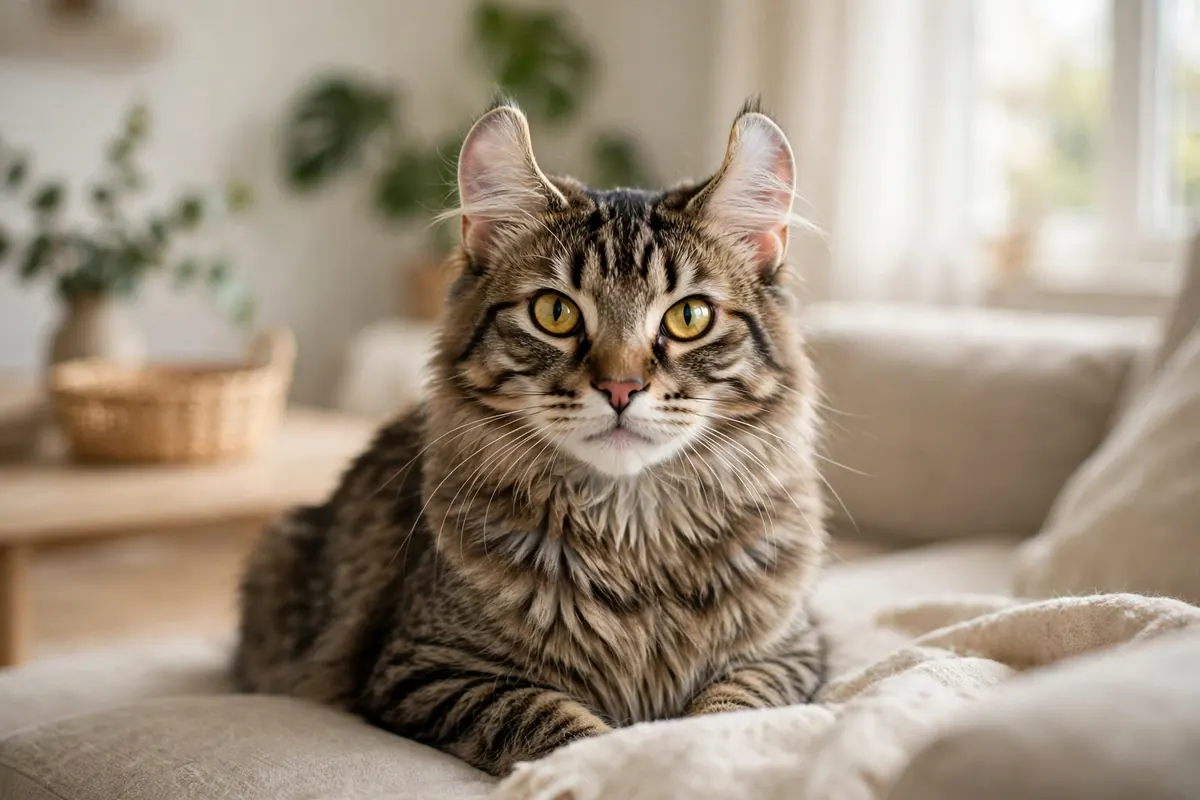
The American Curl is impossible to mistake: a medium-sized cat with soft, silky fur and ears that curl gracefully backward, like a small shell. Those curled ears are the result of a natural genetic mutation, and they give the breed an alert, permanently curious expression. Behind the unusual ears is an affectionate, people-oriented cat that follows its owners around, greets visitors at the door, and stays playful well into adulthood.
If you want a gentle, social cat with a truly distinctive look, the Curl deserves a serious look. This guide covers the breed's history, how the curled ears work, the handling rules that protect them, temperament, grooming, and health — including what to know before bringing one home.
American Curl at a Glance
- Size: medium — typically 5 to 10 pounds, with a well-balanced, rectangular body.
- Build: slender but muscular, with a wedge-shaped head and a long, plumed tail.
- Ears: the signature feature — ears that curl backward in a smooth arc, with firm cartilage at the base and a flexible tip.
- Coat: silky and close-lying, with very little undercoat, in short or long lengths and almost any color or pattern.
- Lifespan: typically 13 to 18 years with good care.
- Personality: affectionate, people-oriented, playful, and curious — often called the Peter Pan of cats because they stay kitten-like for years.
- Good with: children, other cats, and cat-friendly dogs.
- Grooming: low maintenance — weekly brushing is usually plenty.
Origin and History: The Stray Who Started a Breed
The American Curl's story starts in 1981, when a stray longhaired black kitten with oddly curled ears wandered onto a doorstep in Lakewood, California. The homeowners, Joe and Grace Ruga, took her in and named her Shulamith. When Shulamith had kittens, two of them inherited her curled ears — proof that the trait was genetic. Word spread quickly, and within a few years breeders were working with the Rugas to develop the breed.
Geneticists confirmed that the curled ear comes from a dominant gene, which means a Curl crossed with an ordinary domestic cat can produce curled-ear kittens. That is also why responsible breeders outcross Curls to straight-eared cats: breeding two Curls together is avoided, because it can increase the risk of ear and cartilage problems in kittens. The breed was recognized by cat associations within the decade — a remarkably fast rise for a breed that began with a single stray.
Appearance: Those Famous Curled Ears
The American Curl's ears are its calling card. Each ear curls backward in a smooth, graceful arc, and the degree of curl varies from cat to cat — kittens are born with straight ears, and the curl develops over the first few days of life, settling into its final shape by about four months. The cartilage at the base of the ear is firm, while the tip stays flexible, and the ears should never be forced or bent by hand.
The rest of the cat is just as elegant. The body is medium-sized and rectangular, the head is a modified wedge with a straight profile, and the eyes are large, walnut-shaped, and often strikingly colored. The coat is silky and close-lying with very little undercoat, so it rarely mats and sheds lightly. Curls come in both short and long coats, and in almost every color and pattern — the longhaired version has a beautiful plumed tail.
Personality and Temperament: A People Cat Through and Through
American Curls are people cats in the truest sense. They bond closely with their families and like to be involved in whatever is happening:
- Affectionate and social. Curls follow their owners from room to room, sit nearby while you work, and greet visitors at the door rather than hiding.
- Playful for years. They keep a kitten-like playfulness well into adulthood, enjoying feather wands, puzzle toys, and games of fetch.
- Gentle with children. Patient and tolerant, they suit families with respectful kids — always supervise young children and teach gentle handling.
- Good with other pets. They usually accept other cats and cat-friendly dogs, especially with gradual introductions.
- Quietly talkative. Curls are not loud cats, but they trill and chirp softly when happy, and they will answer you when you talk to them.
One honest note: Curls do not enjoy being left alone for long periods. They are happiest in a home where someone is around most of the day, or where another friendly pet keeps them company.
Ear Care: Handling Rules for Fragile Cartilage
The curled ears need gentle handling — this is the one part of Curl care that is different from other breeds. The cartilage in a Curl's ears is firmer and more fragile than in a straight-eared cat, and rough handling can damage it. Follow these rules:
- Never force or bend the ears. Do not straighten a curled ear, pull on it, or fold it for fun — the cartilage can crack or break.
- Handle ears gently when petting. Stroke the head and the back of the ears softly, and let the cat move away if it wants to.
- Check ears weekly. Look inside for wax buildup or debris, and clean only the outer ear with a vet-approved cleaner and a soft cloth or cotton pad — never push anything into the ear canal.
- Teach children the rule. Kids should know that the ears are not handles and must be touched gently, if at all.
- See your vet promptly if an ear looks swollen, red, or painful, or if the cat shakes its head or scratches at its ears more than usual.
With gentle handling, the ears cause no trouble at all — most Curls live their whole lives with healthy ears and no ear problems beyond the occasional wax buildup.
Grooming, Health, and Lifespan
Grooming a Curl is easy. The silky coat has very little undercoat, so it sheds lightly and rarely mats — a weekly brush with a soft brush or grooming mitt is usually enough, with a little more attention for the longhaired variety during shedding seasons. Trim nails every two to three weeks, check ears weekly as described above, and keep up with dental care from an early age. Baths are rarely needed.
American Curls are generally healthy cats with a typical lifespan of 13 to 18 years, and the breed has no widespread inherited disease linked to the curled ears themselves — though responsible breeders still avoid Curl-to-Curl breeding to keep the cartilage healthy. As with any breed, weight gain is worth watching, so feed measured meals and weigh your cat regularly. Annual vet exams, twice yearly for seniors, track weight trends and catch small problems early, and your vet can check the ears at the same time. Keep vaccinations current and maintain parasite prevention as your vet advises.
Is the American Curl Right for You?
The American Curl suits anyone who wants a social, affectionate cat with a one-of-a-kind look. They thrive in homes with children, other pets, and people who are around most of the day, and they do well with first-time owners — the grooming is easy, the temperament is forgiving, and the cat will happily teach you its routines. Apartments work fine as long as the cat gets daily play and attention.
Think twice if you are away from home for long hours every day, or if you want a quiet, independent cat that keeps to itself. Curls are companions first. If the breed appeals to you, check shelters and breed-specific rescues first — Curl-type cats sometimes turn up in rescue. If you choose a breeder, look for home-raised kittens, health-screened parents, veterinary records, and a written health guarantee — and ask how they handle the ear gene, because a good breeder will explain the outcrossing rule without hesitation. Run through our adopting a cat checklist before bring-home day.
Frequently Asked Questions
Do American Curls' curled ears hurt them?
No — the curled ears do not cause pain when they are left alone and handled gently. The curl is a natural genetic trait, and most Curls live their whole lives with healthy ears. Problems only arise if the ears are forced, bent, or roughly handled, which is why gentle handling matters.
Can I touch an American Curl's ears?
Yes, gently — soft strokes on the head and the back of the ears are fine, and most Curls enjoy being petted there. Never straighten, pull, or fold the ears, and teach children the same rule. If the cat pulls away, let it go.
Are American Curls good with kids?
Generally, yes. Their patient, gentle, people-oriented nature makes them a natural fit for families with respectful children. Always supervise young children, teach gentle handling — especially around the ears — and give the cat a quiet place to retreat to.
Do American Curls shed a lot?
No, they shed lightly. The silky coat has very little undercoat, so it rarely mats and sheds less than many other breeds. Weekly brushing is usually enough, with a little more attention for the longhaired variety during shedding seasons.
How long do American Curls live?
American Curls typically live 13 to 18 years with good care. A healthy weight, a balanced diet, regular vet checkups, and gentle ear care are the best foundations for a long life.