Ragdoll Cat: Complete Breed Guide
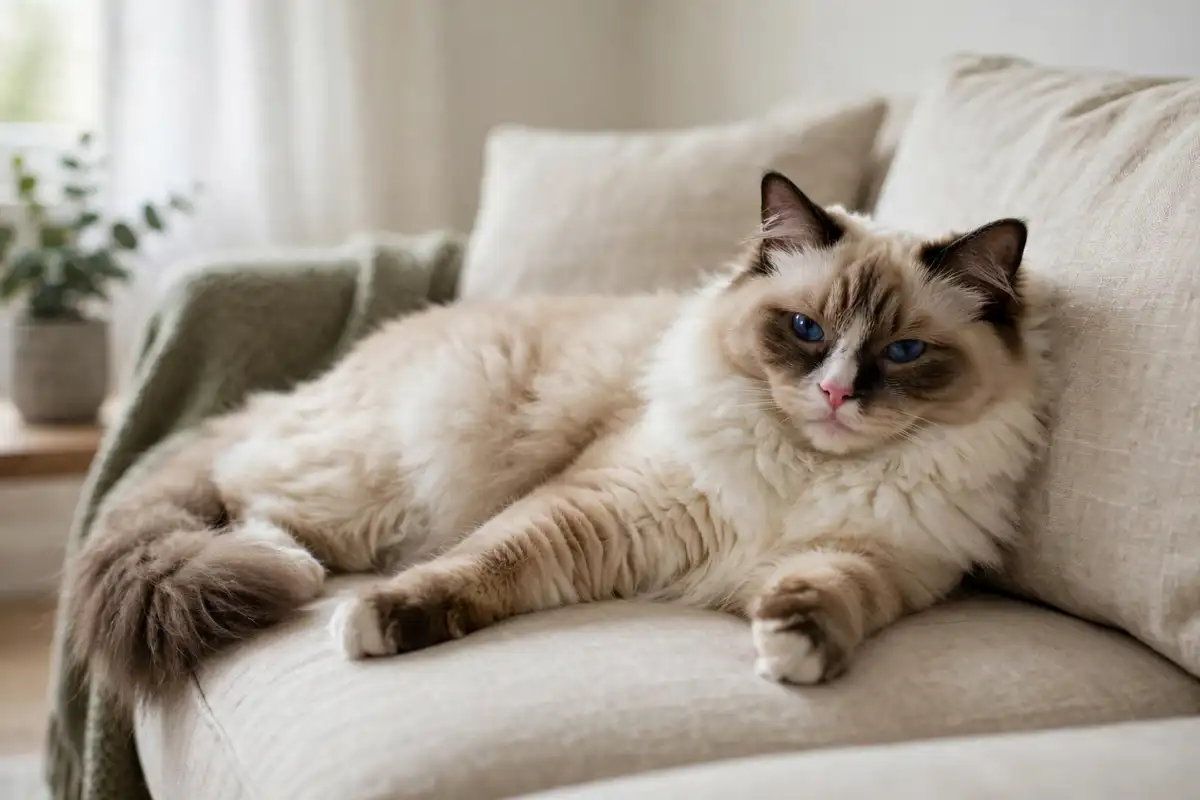
Is a Ragdoll the right cat for you? If you want a calm, affectionate, almost dog-like companion that follows you from room to room and melts into your arms when picked up, the answer is very likely yes. Ragdolls are famous for going limp — "floppy" — when held, and for a gentle temperament that suits families, seniors, and multi-pet homes beautifully. They are not, however, independent cats: Ragdolls crave company and do best with owners who are home often. Their beautiful semi-long coat also needs regular brushing to stay tangle-free.
This guide covers the Ragdoll's plush colorpoint looks, famously sweet personality, grooming routine, everyday care and feeding, health topics to raise with a breeder and your vet, and an honest checklist to decide whether this gentle giant fits your home.
Ragdoll Appearance: Big, Blue-Eyed, and Beautifully Plush
The Ragdoll is a large, substantial cat with a colorpoint coat — a pale body with darker "points" on the ears, face mask, paws, and tail — and vivid blue eyes that are the breed's signature. Seal, blue, chocolate, and lilac are the classic point colors, appearing in three patterns: traditional pointed, mitted (white paws and chin), and bicolor (a striking inverted-V mask on the face).
The coat is semi-long, silky, and plush — but crucially, Ragdolls lack the dense undercoat that makes Persian coats mat so easily. That means fewer tangles and simpler grooming, though not zero maintenance. Ragdolls also mature slowly, often not reaching full size and full coat until three to four years of age, and males can be impressively large and heavy-boned.
Despite their size, everything about a Ragdoll reads soft: the rounded head, the sweet open expression, the plumed tail carried with quiet confidence. It is a cat that looks exactly as gentle as it acts.
Ragdoll Personality: The Famous "Floppy" Cat
The name says it all: many Ragdolls go limp and relaxed when held, like a rag doll in a child's arms. Not every Ragdoll does it every time, but the tendency toward total, trusting relaxation is real — and it is what made the breed famous as the ultimate lap cat.
Ragdolls are famously dog-like in their devotion. They greet you at the door, trail you around the house, and often come when called. Their voice is soft — gentle chirps and quiet meows rather than demanding yowls — which makes them easy housemates even in apartments with thin walls.
Gentle with children and generally welcoming to other cats and calm dogs, Ragdolls are one of the easiest breeds to fold into a busy family. The trade-off for all that sweetness: they are trusting to a fault and bond so strongly that long, lonely days are genuinely hard on them. A second pet for company, or an owner who works from home, suits a Ragdoll best.
Ragdoll Grooming and Coat Care
No dense undercoat means grooming is simpler than the luxurious coat suggests. Brush two to three times a week with a steel comb or slicker brush to prevent tangles, stepping up to daily during the spring shed. Pay special attention to friction zones — behind the ears, under the armpits, and around the collar — where mats are most likely to start.
Trim nails every couple of weeks, check ears for buildup and clean them gently when needed, and keep up with dental care through vet-recommended products. And choose a large, sturdy litter box: a cat this size can feel cramped in a small covered box, so go roomy and scoop daily.
Start grooming while your Ragdoll is young so brushing becomes a ritual you both enjoy — most Ragdolls come to love the attention. For kitten-care basics beyond grooming, the Purrfect Paws homepage links to our litter training, feeding, and first vet-visit guides.
Everyday Care, Feeding, and Indoor Life
Feed a large, slow-maturing breed thoughtfully: high-quality, protein-rich food with wet food as the foundation, and portions guided by your vet as the cat grows through its long adolescence. Keep fresh water available at all times — a cat fountain often encourages better drinking in fussy cats.
Ragdolls should live indoors, full stop. Their trusting, non-confrontational nature makes them poor defenders against traffic, aggressive animals, or theft — and this popular, docile breed is unfortunately a target. Indoor life with tall scratching posts, window perches, and gentle daily play keeps them happy and safe. If an indoor-only life sounds limiting, our Cat Breeds section covers more adventurous breeds — but for a Ragdoll, indoors is non-negotiable.
Match your play style to the breed: Ragdolls enjoy interactive games but tire faster than athletic breeds. Short, gentle sessions with wand toys and soft chase games suit them far better than marathon high-energy workouts.
Ragdoll Health Notes: What to Ask About
The best-known breed-specific topic is hypertrophic cardiomyopathy (HCM). Ragdolls carry a known gene mutation (in the MYBPC3 gene) linked to HCM, and a DNA test exists — responsible breeders test their breeding cats and share the results. Ask for them before you commit to a kitten; a breeder who tests openly is a breeder worth trusting.
Like all cats, Ragdolls need annual vet checkups, current vaccinations, parasite prevention, and attention to urinary health — male cats especially. Keep them lean: a big frame should feel solid and muscular, not soft. No screening can guarantee a healthy cat, but tested parents plus consistent vet care stack the odds in your favor. Pet insurance is also worth considering for any purebred cat, given how quickly specialist care adds up.
Is a Ragdoll Right for You? An Honest Checklist
A Ragdoll will likely thrive with you if:
- You want a gentle, affectionate shadow that follows you around and settles happily in your lap.
- Someone is home much of the day, or there is another friendly pet for company.
- You will commit to brushing a few times a week — it becomes bonding time, not a chore.
- You have kids or calm pets and want a tolerant, easygoing cat.
- You are happy keeping a cat strictly indoors where it is safe.
Think twice if:
- You are away from home for very long hours every single day.
- You want an independent, low-maintenance cat that barely notices you.
- You cannot commit to regular grooming sessions.
- You want a cat that can roam outdoors freely.
For the right home, a Ragdoll is pure gold: calm, loving, patient, and endlessly cuddly. If the indoor-only rule or the grooming commitment gives you pause, browse our Cat Breeds guides for alternatives — the best breed is the one that fits your real life, not the one that photographs best.
Frequently Asked Questions
Do Ragdoll cats really go limp when you pick them up?
Many do — that floppy relaxation is where the breed got its name. Not every Ragdoll goes limp every time, but the tendency to melt into your arms is a genuine and much-loved breed trait.
Are Ragdolls good with kids and other pets?
Generally, yes. Their gentle, tolerant nature makes them one of the best breeds for families with children and for homes with other cats or calm dogs. Always supervise very young children with any cat.
How often should I brush a Ragdoll?
Two to three times a week with a steel comb or slicker brush, and daily during the spring shed. Focus on friction zones — behind the ears, under the armpits, and around the collar — where mats are most likely to start.
Do Ragdolls need to stay indoors?
Yes — indoor living is strongly recommended. Their trusting, non-confrontational nature makes them vulnerable outdoors, and this popular breed is unfortunately a theft target.
Are Ragdoll cats very vocal?
No. Ragdolls are soft-spoken, communicating with gentle chirps and quiet meows. If you want a chatty cat, the Siamese and Bengal guides in our Cat Breeds section are better matches.