Himalayan Cat: Complete Breed Guide
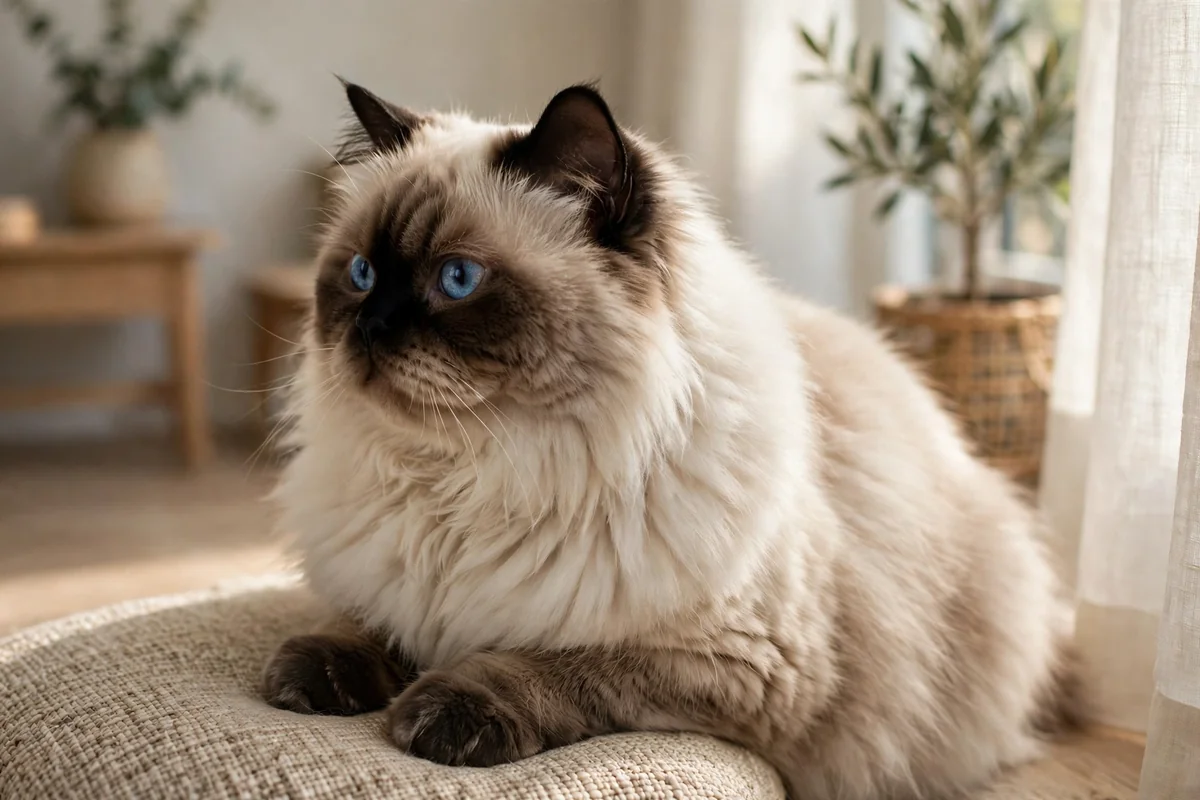
If you picture the perfect lap cat — soft, calm, and happy to spend the whole evening beside you — the Himalayan may be exactly what you are looking for. Himalayan cats combine the luxurious long coat and gentle nature of the Persian with the striking colorpoint pattern and vivid blue eyes inherited from the Siamese. The result is a quiet, affectionate companion that suits calm households, apartment living, and owners who enjoy a daily grooming ritual.
In this complete Himalayan cat breed guide, we cover the breed's Persian and Siamese heritage, its colorpoint coat, temperament, grooming demands, health watch-points, and daily life with children and other pets — so you can decide whether this beautiful breed is the right match for your home. You can also browse more profiles on our Cat Breeds page.
Himalayan Cat History and Heritage
The Himalayan is a deliberately created breed, developed in the United States and Britain during the 1930s and 1940s. Breeders crossed Persian cats with Siamese cats with a clear goal: a cat with the Persian's cobby body and flowing coat, plus the Siamese colorpoint pattern — darker "points" on the ears, face, paws, and tail, with a lighter body. Early results were promising, but it took decades of careful breeding before the Himalayan gained recognition as a distinct breed.
Some cat registries still classify the Himalayan as a color variety of the Persian rather than a separate breed, which is why you may see it listed either way depending on the association. Whatever the label, the Himalayan's identity is clear: it is a Persian-type cat in build and coat, with a colorpoint pattern that comes from its Siamese ancestry. That heritage also explains one of its most charming quirks — while Himalayans are far quieter than Siamese cats, many owners notice a slightly more playful, people-focused streak than in a typical Persian.
Himalayan Cat Appearance: The Colorpoint Coat
The Himalayan's most recognizable feature is its colorpoint coat. Kittens are born almost entirely pale, and their darker points develop gradually over the first months of life as the cooler parts of the body — ears, mask, legs, and tail — produce more pigment. The body stays a soft cream or pale shade, creating a dramatic contrast that makes the breed instantly recognizable.
Common point colors include seal, chocolate, blue, lilac, flame, and tortoiseshell, and every Himalayan has vivid blue eyes, another gift from its Siamese heritage. Beneath the coat is a sturdy, medium-to-large body with short, strong legs, a broad chest, and a round, flat face with a short nose — the classic Persian look. Most adults weigh between 7 and 12 pounds, with males typically larger than females.
Himalayan Cat Temperament and Personality
Ask Himalayan owners what they love most, and the answer is almost always the same: their cat's gentle, devoted nature. Himalayans are calm, affectionate cats that bond closely with their people. They are happy to follow you from room to room, settle on your lap for hours, and greet you with a soft chirp when you come home. Unlike some high-energy breeds, they are not usually frantic about play — a few gentle play sessions a day, plus a sunny window perch, are often enough to keep them content.
Many Himalayans enjoy a quiet kind of playfulness: batting a toy mouse, chasing a feather wand at a relaxed pace, or supervising household activity from a favorite chair. They tend to be quieter than Siamese cats, communicating with soft meows and purrs rather than loud demands. That said, every cat is an individual — some Himalayans are livelier and more talkative than others, especially when young. If your home is noisy and constantly busy, a Himalayan may retreat to a quiet corner; they do best in households that can offer them calm, predictable routines and plenty of lap time.
Himalayan Cat Grooming: Daily Brushing and Eye Care
Here is the honest truth every prospective Himalayan owner needs to hear: this breed's coat is a daily job. The long, fine fur mats easily, especially behind the ears, under the arms, and around the collar area. A daily brush with a stainless steel comb or a wide-toothed comb is the single most important grooming habit — it prevents painful mats, reduces shedding around the house, and helps limit hairballs.
- Daily brushing: Set aside 10 to 15 minutes daily. Work gently through the coat, checking for tangles behind the ears and in the armpits.
- Eye care: Himalayans' flat faces mean their eyes can water more than average. Wipe around the eyes daily with a soft, damp cloth, using a separate area of the cloth for each eye, to prevent tear staining and keep the area clean.
- Regular baths: Many owners bathe their Himalayan every few weeks to keep the coat clean and manageable. Use a shampoo made for cats.
- Nails and teeth: Trim nails every couple of weeks, and brush teeth several times a week with a cat-safe toothpaste — dental care matters for flat-faced breeds.
If daily grooming sounds like a chore rather than a pleasure, be honest with yourself before choosing this breed. For owners who enjoy the ritual, though, grooming time often becomes a bonding moment — many Himalayans learn to purr through the whole session.
Himalayan Cat Health Watch-Points
Himalayans are generally long-lived cats, often reaching their mid-teens with good care, but like all purebred cats, they can be prone to certain health issues. Because of their flat faces, they may be more vulnerable to breathing difficulties in hot, humid weather and to eye problems such as excessive tearing or blocked tear ducts. Their dense coat also makes them more prone to hairballs and skin irritation if mats are left unchecked.
The breed can also be prone to kidney disease, including a hereditary condition called polycystic kidney disease (PKD), which responsible breeders screen for. Regular veterinary checkups, ideally once a year for adults and twice a year for seniors, are the best way to catch problems early. Watch for changes in appetite, thirst, litter box habits, energy, or breathing, and talk to your veterinarian promptly if anything seems off. If you are buying a kitten, ask the breeder about PKD health screening; also consider a breed-specific rescue, where adult Himalayans sometimes need new homes.
Living With Kids and Other Pets
Himalayans generally make gentle family cats, especially in calm households. They tend to be patient with respectful, older children who understand how to handle a cat softly, and they often enjoy being included in quiet family time. Very young children who are still learning gentle touch should always be supervised, as with any cat — and a Himalayan that feels overwhelmed will usually walk away rather than react.
With other pets, slow introductions are the key. Many Himalayans live happily alongside other cats and calm, cat-friendly dogs, particularly when they are introduced gradually and given their own safe spaces. Because they are not usually dominant or territorial, they may do best with pets that are similarly easygoing. In multi-pet homes, give your Himalayan quiet retreats — a high perch or a cozy bed in a low-traffic room.
Is a Himalayan Cat Right for You?
Choose a Himalayan if you want a calm, affectionate lap cat, you enjoy daily grooming, and your home offers a peaceful routine with plenty of lap time. The breed suits apartment dwellers, retirees, people who work from home, and families with gentle older children. You will be rewarded with a devoted, beautiful companion that is content simply being near you.
Think twice if you want a low-maintenance cat, an energetic playmate for very active children, or a breed that thrives in a loud, chaotic household. A Himalayan's coat and flat face both demand regular attention, and a neglected coat quickly becomes a welfare problem rather than just a cosmetic one. If you can commit to the grooming, the vet visits, and the quiet companionship, the Himalayan offers something few breeds can match: a living, purring piece of luxury that is happiest curled up right beside you. For more breed guides, start at the Purrfect Paws homepage.
Frequently Asked Questions
Are Himalayan cats good with children?
Many Himalayan cats do well with calm, gentle children who handle them softly and respect their space. Because they are quiet and easygoing, they tend to suit households with older children better than very rowdy ones. Always supervise young children around any cat.
Do Himalayan cats need daily grooming?
Yes. Himalayan cats have a long, dense coat that can mat quickly, so a daily brush is recommended. Their flat faces also mean their eyes may water, so a gentle daily wipe around the eyes helps keep them clean and comfortable.
Are Himalayan cats the same as Persian cats?
Not exactly. Himalayans were developed by crossing Persians with Siamese cats, giving them the Persian's long coat and build with the Siamese colorpoint pattern and blue eyes. Some registries classify them as a Persian variety, while others list them as a separate breed.
Do Himalayan cats shed a lot?
Yes, Himalayans shed moderately to heavily, especially during seasonal coat changes. Daily brushing removes loose hair, reduces hairballs, and keeps shedding around the house more manageable.
Are Himalayan cats very vocal?
Generally no. Himalayans are quieter than their Siamese ancestors and tend to communicate with soft meows and chirps rather than loud, demanding calls. Many owners find them one of the calmer, quieter breeds.