How Much Wet Food Should I Feed My Cat Daily?
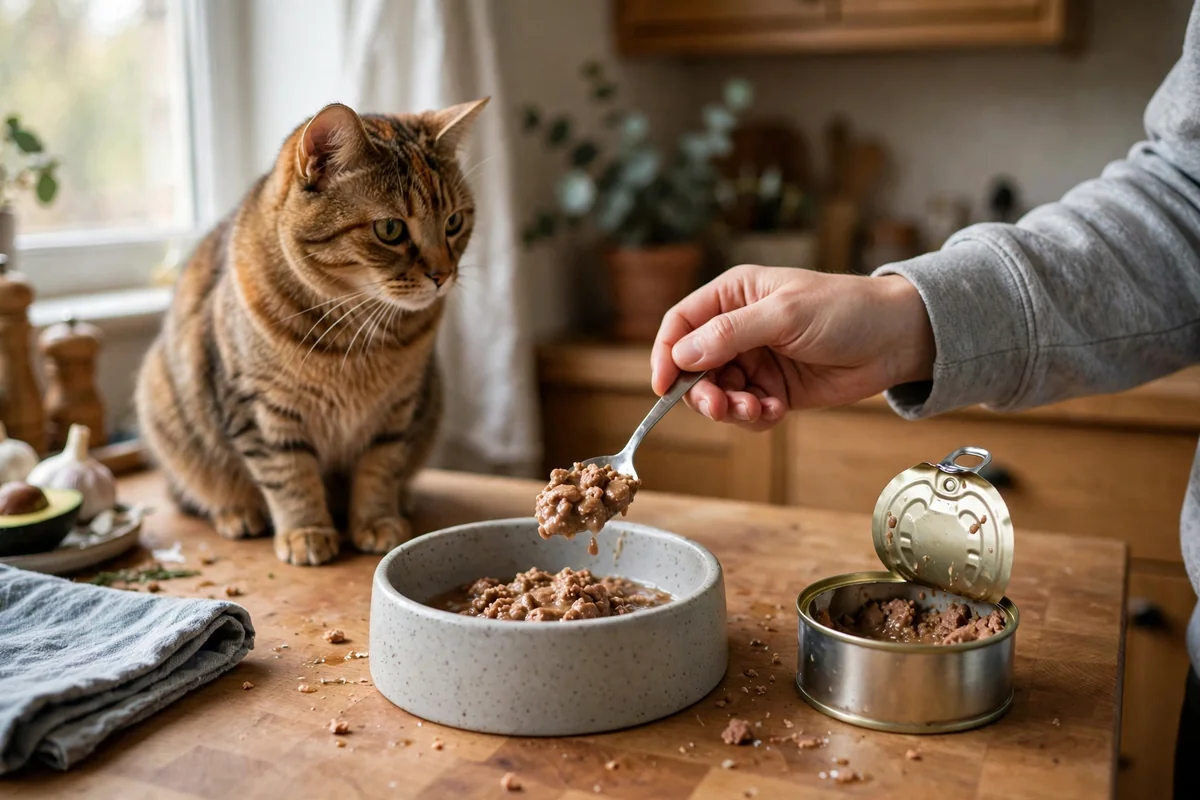
For a typical healthy adult cat, the daily amount of wet food works out to roughly one 3-ounce can per 3 to 3.5 pounds of body weight per day, or about one 5.5-ounce can per 5 to 6 pounds — so an average 10-pound cat needs around two 5.5-ounce cans daily if eating wet food only. That is a starting estimate, not a rule: calorie needs vary with activity, metabolism, and the food's calorie density, so the feeding guide on your can's label and your cat's body condition are the final word. The sections below show you the math, how to mix wet and dry food, and how to adjust for kittens, seniors, and overweight cats.
Wet food amounts confuse owners because cans come in different sizes and calorie counts vary widely between brands — a pâté and a shredded formula from the same brand can differ noticeably. That is why counting cans alone is unreliable, and why the better habit is counting calories. Once you know your cat's approximate daily calorie need and your food's calories per can, the daily amount becomes simple arithmetic that you can repeat for any brand.
The Basic Math: Calories First, Cans Second
An average indoor adult cat needs roughly 200 to 250 calories a day, while an active outdoor cat may need 280 to 320, and a less active or overweight-prone cat may need closer to 180. Check your can's label for calories per can — most 3-ounce cans contain about 70 to 100 calories, and most 5.5-ounce cans contain about 150 to 200. Divide your cat's daily calorie need by the calories per can, and you have the daily can count. For example, a 10-pound indoor cat needing about 220 calories a day, eating a 5.5-ounce can at 170 calories, needs roughly one and a third cans — practically, one can plus a small top-up, or one can plus a measured amount of dry food.
Start with the label's feeding guide for your cat's weight, then adjust by what you see. You should be able to feel your cat's ribs under a thin layer of fat and see a gentle waist from above. If weight creeps up over two to three weeks, trim the daily total slightly; if your cat is losing weight or constantly hungry, increase it slightly. Weigh your cat monthly if you can — bathroom scales with you holding the cat, minus your own weight, work fine — because gradual changes are easy to miss by eye.
How to Mix Wet and Dry Food
Many cats eat a mix, and the math still works: wet food covers part of the daily calories, dry food covers the rest. A common split is half wet and half dry. Take the daily calorie target, give half as wet food and half as dry food, and measure both. For a 220-calorie cat, that means about 110 calories of wet food — roughly one 3-ounce can or two-thirds of a 5.5-ounce can — plus 110 calories of dry food, measured with a proper measuring cup or kitchen scales rather than eyeballed. Guessing dry portions is the most common reason mixed feeding drifts into overfeeding.
Split the wet portion across two meals if you can: morning and evening. Do not leave wet food out for more than about 30 minutes in a warm room, and refrigerate opened cans, using them within two to three days. Warm refrigerated food briefly to lukewarm before serving — cold food straight from the fridge smells faint and many cats refuse it.
Adjustments for Age and Weight
- Kittens: need far more calories per pound than adults because they are growing, and they eat kitten food, not adult wet food. Follow the kitten food's guide and your vet's advice, feeding 3 to 4 small meals a day.
- Senior cats (11+ years): often need slightly fewer calories if they are less active, but some seniors lose weight and need more. Watch weight closely and adjust with your vet, especially if appetite drops.
- Overweight cats: need a reduced daily total, set with your vet, and the reduction should be gradual — never crash-diet a cat, since rapid weight loss can trigger fatty liver disease. Measure every portion and count treats.
- Very active or outdoor cats: may need 20 to 30 percent more than an indoor cat of the same weight, particularly in cold weather.
- Pregnant or nursing cats: need substantially more food, often kitten food, with amounts guided by your vet through pregnancy and weaning.
Common Mistakes With Wet Food Amounts
The biggest mistake is feeding by the can rather than by the cat: "one can a day" underfeeds a large active cat and overfeeds a small quiet one. The second is forgetting treats — a handful of treats can add 20 to 40 calories, which matters on a 220-calorie budget. The third is topping up the bowl whenever it looks empty, which turns a measured diet into free-feeding. And the fourth is ignoring the label when switching brands: a new food with more calories per can needs fewer cans, and owners who keep the old can count often wonder why their cat gained weight.
Wet food has real advantages beyond taste: its high moisture content supports hydration, which helps cats prone to urinary problems, and its strong aroma tempts fussy eaters. Those benefits only hold if the amount is right. Measure the daily total, split it into regular meals, check weight monthly, and adjust in small steps — that routine keeps wet feeding simple, accurate, and healthy for years.
Storing Opened Cans and Switching Brands Safely
Wet food handling affects both safety and appetite. Once opened, cover the can or transfer the food to a sealed container, refrigerate it, and use it within two to three days; discard anything older or left sitting out for hours, since bacteria grow quickly in wet food at room temperature. Before serving refrigerated food, warm it briefly — a few seconds in the microwave with a good stir, checked on your wrist — because cold food smells faint and many cats refuse it, which owners often mistake for fussiness or illness. When switching to a new brand, transition over seven to ten days, mixing increasing amounts of the new food into the old, and recalculate the daily amount from the new can's calorie label rather than keeping the old can count. A higher-calorie food needs fewer cans, and a lower-calorie one needs more, so carrying the old number across brands is one of the most common causes of accidental weight gain or loss.
Frequently Asked Questions
How many cans of wet food should a cat eat per day?
It depends on can size and calories, but as a rough guide, an average 10-pound adult cat needs about two 5.5-ounce cans a day if eating wet food only. Always check your can's calorie label and your cat's weight, and adjust from there.
Can I mix wet and dry food?
Yes. Split the daily calorie target between wet and dry food — for example, half wet and half dry — and measure both portions. Guessing the dry portion is the most common cause of overfeeding on a mixed diet.
How do I know if I am feeding too much wet food?
Check body condition: you should feel ribs under a thin layer of fat and see a waist from above. Weigh your cat monthly — steady weight gain means the daily total needs trimming slightly.
Should kittens eat the same amount of wet food as adults?
No. Kittens need more calories per pound and should eat kitten food, not adult food, in 3 to 4 small meals a day. Follow the kitten food's guide and your vet's advice.
How long can wet food sit out?
About 30 minutes in a warm room. Refrigerate opened cans and use them within two to three days, warming refrigerated portions briefly to lukewarm before serving.