How to Check Your Cat's Temperature at Home Safely
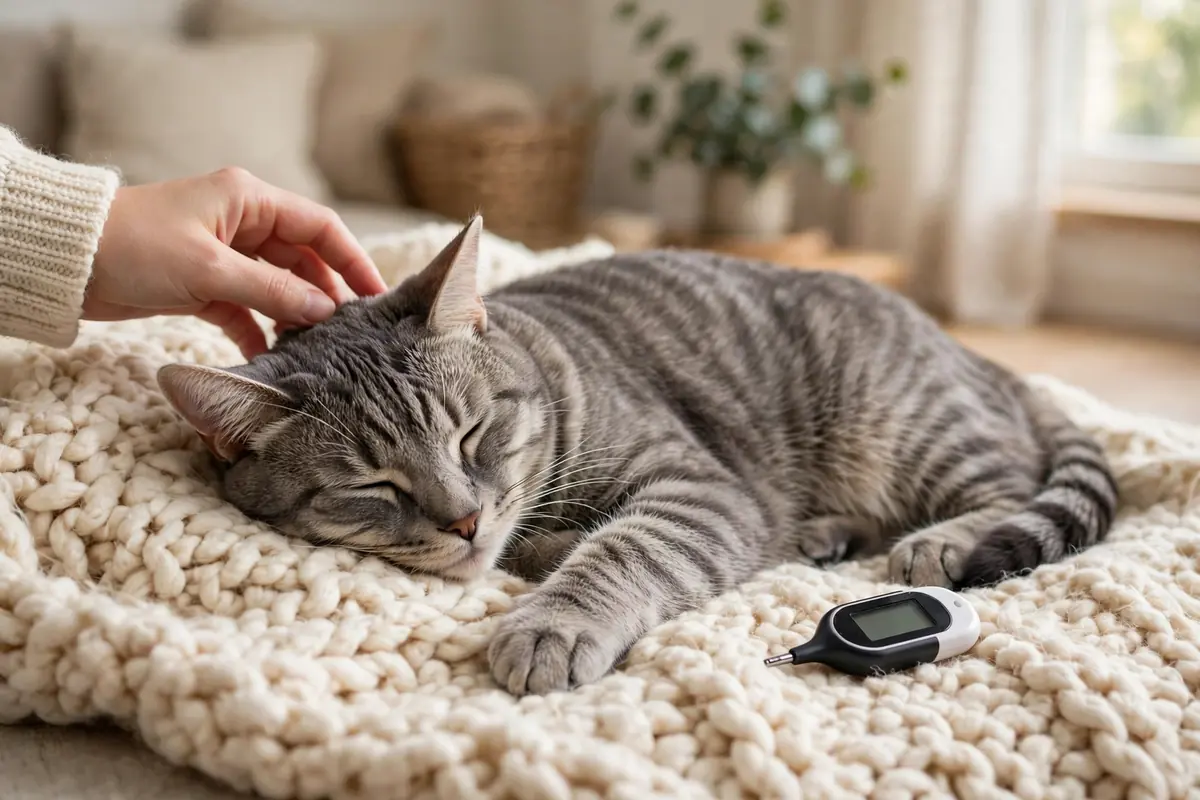
The most accurate way to check your cat's temperature at home is with a digital rectal thermometer made for pets, used gently with a little water-based lubricant. A healthy cat's temperature sits between 100.5°F and 102.5°F (38.0°C to 39.2°C); above 103.5°F (39.7°C) is generally considered a true fever. If your cat becomes very stressed during the attempt, stop — the behavioral signs of illness matter more than a number, and your vet can always check on your behalf.
Many owners worry about this task, and that is fair: it feels awkward the first time, and cats are famously uncooperative patients. But with a calm approach, a helper, and the right thermometer, most cats tolerate a quick reading with little fuss. This guide walks through the method step by step, explains what ear thermometers can and cannot tell you, and covers the situations where you should skip the thermometer entirely.
What You Need Before You Start
Use a digital thermometer, ideally one labeled for pets, because it is designed to read quickly and safely. A fast-reading model matters: the shorter the process, the less stressful it is for your cat. You will also need a small amount of water-based lubricant, such as petroleum jelly, and a soft towel in case your cat needs gentle wrapping. Keep treats nearby for afterwards, and have a pen or your phone ready to note the reading and the time.
Never use a glass mercury thermometer, which can break, and do not use a thermometer that has been used for a person without cleaning it thoroughly first. Ideally, keep one thermometer just for your cat. If your cat has diarrhea, rectal irritation, or a known rectal problem, skip the rectal method and call your vet for advice instead.
Step by Step: The Rectal Method
- Pick a calm moment. Choose a time when your cat is relaxed, not mid-zoomies or just after a stressful event. A quiet room with a non-slip surface works best.
- Get a helper if you can. One person gently holds the cat still, stroking and talking calmly, while the other takes the reading. If you are alone, wrap your cat loosely in a towel like a burrito, leaving the tail end accessible.
- Lubricate the tip. Put a small dab of lubricant on the thermometer tip. Turn the thermometer on and wait for it to be ready.
- Lift the tail gently and insert about half an inch to one inch for an adult cat, less for a kitten. Do not force it — if you meet resistance, stop and reposition.
- Hold still until it beeps. Most digital thermometers take 10 to 60 seconds. Keep your hand steady and your voice calm throughout.
- Read, record, and reward. Note the temperature and time, clean the thermometer, and give your cat a treat and a quiet moment to recover.
If your cat struggles hard, growls, or tries to bite, do not wrestle them into position. A stressed cat's temperature can rise from stress alone, which makes the reading less useful, and a bite or a scratched owner helps nobody. Try once, calmly, and if it fails, rely on behavior and call your vet.
Ear Thermometers: Easier, but Less Reliable
Pet ear thermometers measure temperature from the eardrum area and are much easier to use, which makes them tempting. The trade-off is accuracy: ear readings run lower than rectal readings and vary more between attempts, and they can be thrown off by ear infections, wax, or the shape of your cat's ear canal. They are best used for tracking trends in the same cat over time, rather than for a single yes-or-no fever decision.
If you use an ear thermometer, take two or three readings and look at the pattern rather than one number. A consistently high ear reading plus a lethargic, off-food cat still deserves a vet call, while a single odd reading in a bright, hungry cat probably does not. Never use a human forehead or ear thermometer on a cat and expect a reliable result — the calibration and the ear shape are different.
Reading the Result: What the Numbers Mean
- 100.5°F to 102.5°F (38.0°C to 39.2°C): normal range for a healthy adult cat.
- 102.5°F to 103.5°F: mildly elevated. Watch behavior, appetite, and water intake, and recheck in a few hours.
- Above 103.5°F (39.7°C): generally considered a true fever. Call your vet, especially if your cat is also lethargic or off food.
- Above 104°F (40°C): serious. Seek veterinary advice promptly, the same day.
- Below 100°F (37.8°C): low temperature, which can be just as concerning, particularly in kittens, senior cats, or cats exposed to cold. Call your vet.
Remember that a single reading is only part of the picture. A cat who just played hard, sat in a sunny spot, or visited the vet may read slightly high from stress or activity. Recheck after your cat has rested for 30 minutes if the first reading surprises you and your cat otherwise seems well.
When to Skip the Thermometer and Call the Vet
Do not attempt a home reading if your cat is in obvious distress, breathing with difficulty, collapsed, or aggressive from pain. Do not attempt it if you suspect poisoning, heatstroke, or injury — those are emergencies where the drive to the clinic matters more than a number. And if your cat is a very young kitten, a frail senior, or a cat with a chronic illness, call your vet first and let them decide whether a home reading is useful or whether your cat should simply come in.
Checking a temperature is a useful skill, but it is not a substitute for judgment. The cats who need help most urgently are usually obvious without a thermometer: they stop eating, stop drinking, hide, or change their behavior sharply. Trust those signs, use the thermometer as a backup tool, and let your vet make the medical decisions.
Keeping a Simple Temperature Log
If your vet asks you to monitor a fever at home, a short log is far more useful than a single reading. Note the date, time, temperature, and a few words about how your cat seems — eating, drinking, playing, or hiding. Two or three readings a day, spaced several hours apart, show whether the fever is rising, falling, or holding steady, and that trend often guides your vet's next decision better than any one number. Bring the log to the appointment, or read it out over the phone, and mention any medicines your cat takes, any recent vaccinations, and whether your cat goes outdoors. A clear log turns a worried phone call into a precise update, and it helps your vet decide whether your cat can keep recovering at home or needs to come in for tests.
Frequently Asked Questions
What is a normal temperature for a cat?
Between 100.5°F and 102.5°F (38.0°C to 39.2°C) for a healthy adult cat. Above 103.5°F (39.7°C) is generally considered a true fever.
Can I use a human thermometer on my cat?
A digital human thermometer can work for a rectal reading if it reads quickly and is cleaned thoroughly, but a pet thermometer is better designed for the job. Human ear and forehead thermometers are not reliable on cats.
How far do I insert a rectal thermometer in a cat?
About half an inch to one inch for an adult cat, and less for a kitten. Never force it — if you meet resistance, stop and reposition, or abandon the attempt.
My cat will not let me take its temperature — what should I do?
Stop trying. Stress raises temperature and risks injury. Watch behavior, appetite, and drinking instead, and let your vet take the reading. A calm cat who eats and plays is usually fine.
Are ear thermometers accurate for cats?
Less accurate than rectal readings. They read lower and vary more, so use them to track trends in the same cat rather than for a single fever decision, and confirm worrying results with your vet.