What Medicine Can I Give My Cat for Fever? Vet Answer
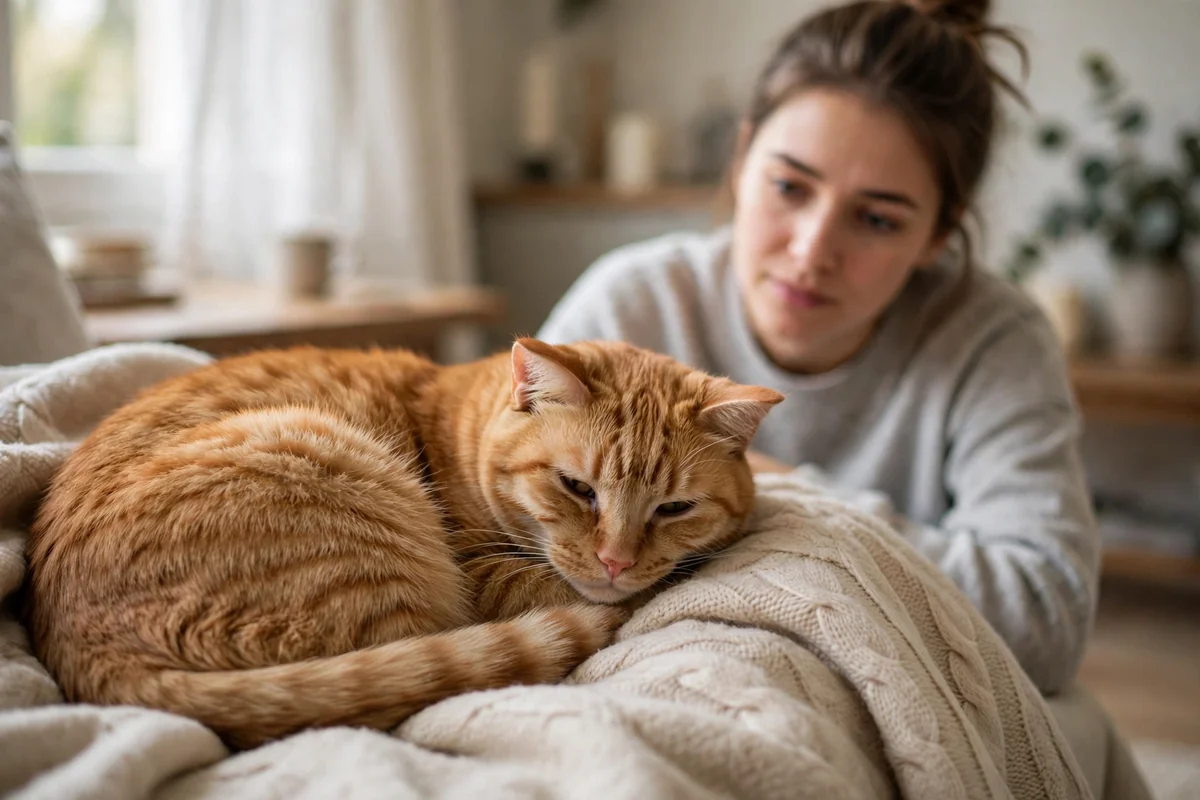
The short answer is: none from your own medicine cabinet. There is no safe human fever medicine for cats, and giving one can turn a mild fever into a life-threatening emergency. If your cat has a fever, the only safe medicines are the ones your veterinarian prescribes after examining your cat. This guide explains why human medicines are so dangerous for cats, what vets actually use instead, what you can safely do at home while you wait for an appointment, and the red flags that mean you should call the vet right away.
It is completely understandable to want to help. When your cat is lying flat, refusing food, and feeling warm, reaching for the paracetamol feels like doing something. But cats process drugs very differently from people and dogs, and that difference is exactly what makes common painkillers so risky for them. Knowing this one fact protects your cat more than any home remedy ever could.
Why Paracetamol Is Toxic to Cats
Paracetamol, known as acetaminophen in the United States, is one of the most dangerous common medicines for cats. Cats lack enough of a liver enzyme called glucuronyl transferase, which humans use to break paracetamol down safely. Without it, a toxic byproduct builds up in the cat's body, damages the liver, and destroys red blood cells so they can no longer carry oxygen properly. Even a single regular-strength tablet can be fatal for an average-sized cat, and smaller cats and kittens are at even greater risk.
The signs of paracetamol poisoning can appear within a few hours and include difficulty breathing, a swollen face or paws, brownish or blue-tinged gums, vomiting, and collapse. There is no home antidote. If you ever suspect your cat has swallowed paracetamol, treat it as an emergency and call your vet or an emergency clinic immediately, even if your cat still looks fine. Early treatment makes a real difference, so do not wait for symptoms to appear.
Ibuprofen, Aspirin, and Other Human Painkillers
Ibuprofen is also toxic to cats. It can cause stomach ulcers, kidney failure, and damage to the nervous system, and cats are far more sensitive to it than dogs. Aspirin is sometimes used by vets in very specific, carefully dosed situations, such as certain heart conditions, but it is not a fever medicine you should ever give at home. Cats clear aspirin from their bodies extremely slowly, so a dose that seems small can accumulate and cause vomiting, loss of appetite, and internal bleeding.
The same warning applies to combination cold and flu remedies, which often hide paracetamol or ibuprofen among their ingredients, and to children's liquid medicines, which are still the same drugs in a smaller bottle. Herbal fever remedies and essential oils are not a safe workaround either — many are untested in cats and some, including tea tree oil, are actively toxic. When in doubt, the rule is simple: if it was made for a human, do not give it to your cat.
What Do Vets Actually Prescribe for Cat Fever?
When a vet treats a feverish cat, the first step is finding the cause, because fever is a symptom, not a disease. A fever after a vaccination, a mild upper respiratory infection, an abscess from a bite wound, or a urinary infection all get different treatment. Your vet may prescribe a cat-specific anti-inflammatory medicine, such as meloxicam formulated for cats, but only at a dose calculated for your cat's weight, age, and kidney health, and usually only for a short course.
Often, the treatment is not a fever medicine at all. Antibiotics help when a bacterial infection is the cause, fluids help a dehydrated cat, and sometimes the best treatment is simply monitoring while the immune system does its job. Your vet may also ask you to track your cat's temperature, appetite, and water intake at home so they can judge whether the fever is improving. Never reuse a leftover prescription from a previous illness or another pet — the dose, the drug, and the situation may all be different this time.
Safe Things You Can Do at Home
While you wait for veterinary advice, supportive care is the safest help you can offer. Keep your cat in a quiet, cool room with fresh water nearby, and let them rest without forcing play or cuddles. You can gently dab a cool, damp cloth on their paw pads and ears, which many cats tolerate well. Offer small amounts of tempting food, such as warmed wet food, and note whether they eat and drink — that information helps your vet enormously.
Do not try to cool your cat with an ice bath or ice packs, do not wrap them in blankets to make them sweat, and do not force water into their mouth with a syringe if they resist, since fluid can accidentally go into their lungs. If your cat is still drinking, responsive, and only mildly warm, monitoring at home for a short period while you arrange a vet call is reasonable. If anything on the red-flag list below appears, skip the waiting and call now.
Red Flags: Call the Vet Within 24–48 Hours, or Sooner
- Fever lasting more than 24–48 hours without improvement, or a fever that keeps coming back.
- Temperature above 104°F (40°C), if you can measure it safely with a pet thermometer.
- Refusing food for more than 24 hours (or more than 12 hours for a kitten).
- Not drinking at all, vomiting, diarrhea, or difficulty breathing.
- Extreme weakness, collapse, or hiding that is very unlike your cat's normal behavior.
- Kittens under 4 months, senior cats, or cats with chronic illness — these cats should be seen sooner, not later.
- Any chance your cat swallowed a human medicine — this is an immediate emergency, day or night.
The bottom line is reassuring once you know it: you do not need a medicine cabinet to help a feverish cat. You need fresh water, a calm resting place, careful observation, and a vet's guidance. That combination keeps your cat safe, and it avoids the one mistake — a well-meaning human painkiller — that can turn a routine fever into a crisis.
Frequently Asked Questions
What medicine can I give my cat for fever at home?
None from your own medicine cabinet. Paracetamol and ibuprofen are toxic to cats. Only give medicines your veterinarian prescribes for your cat, at the dose they specify.
Can I give my cat children's paracetamol in a smaller dose?
No. Children's paracetamol is the same drug, and cats cannot process it safely at any dose. Even a small amount can cause liver damage and destroy red blood cells.
Is aspirin safe for cats with a fever?
No, not at home. Vets occasionally use aspirin for specific heart conditions under close supervision, but cats clear it very slowly, so home dosing risks vomiting, ulcers, and bleeding. Never use it as a fever remedy.
My cat feels warm but is eating and playing — do I need medicine?
Probably not. A warm cat who eats, drinks, grooms, and plays normally usually does not need treatment. Watch for behavior changes, and call your vet if appetite drops or the warmth lasts more than a day or two.
What should I do if my cat swallowed paracetamol?
Call your vet or an emergency clinic immediately, even if your cat looks fine. Tell them the drug, the amount, and the time it was taken. Do not wait for symptoms, and do not try to make your cat vomit at home unless your vet tells you to.