How to Clean a Cat Litter Box Properly
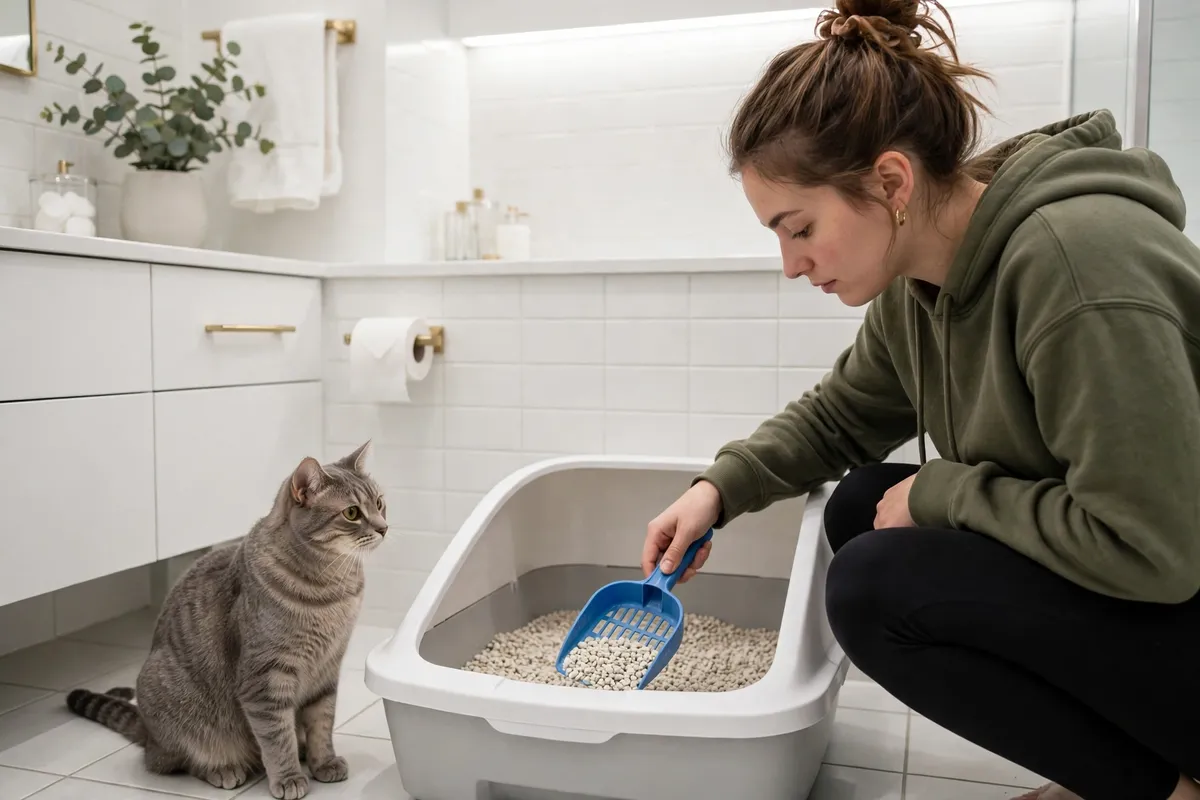
The litter box is the least glamorous part of cat ownership and one of the most important. A clean box is not just about smell — it is about health, behavior, and whether your cat keeps using the box at all. Cats are fastidious animals, and a dirty box is the single most common reason cats start going outside it, which is a problem owners often blame on the cat when the box is really the cause.
Cleaning a litter box properly is simple once you know the rhythm: scoop daily, wash regularly, choose the right litter and location, and watch for changes. This guide covers the whole routine, including the mistakes that make boxes smell worse and the signs that a litter box problem is actually a health problem.
The Daily Scoop: Non-Negotiable
Scoop at least once a day, and twice a day if you have more than one cat or a cat that is particular. Use a sturdy slotted scoop, remove all clumps and solid waste, and dispose of it in a sealed bag in an outdoor bin — never flush cat litter unless the product specifically says it is flushable, and even then, many plumbers and vets advise against it. After scooping, top up the litter to a depth of about two to three inches, which is deep enough for digging and covering without wasting litter.
Daily scooping matters for health as well as smell. Waste left in the box breeds bacteria and ammonia, which irritates a cat's nose and lungs, and it lets you notice changes early: blood in urine, diarrhea, straining, or a sudden change in frequency are all much easier to spot in a freshly scooped box. Think of the daily scoop as a two-minute health check disguised as a chore.
The Weekly Deep Clean
Once a week — or every two weeks at the outside for a single cat with a large box — empty the box completely and wash it. Dump the old litter, wash the box with warm water and a mild, unscented soap, rinse thoroughly, and dry it completely before refilling. Residue from strong cleaners is a common reason cats avoid a freshly washed box: cats hate citrus, bleach, and heavy fragrances, so unscented dish soap is the right choice, and a diluted vinegar rinse can help with stubborn scale or odor if rinsed well.
While the box is empty, check it for scratches and cracks. Deep scratches in plastic harbor bacteria and odor even after washing, and a heavily scratched box is worth replacing — most plastic boxes last about a year of regular use before they start holding smell no matter how well you clean them. Keep a spare box if you can, so the wash never leaves your cat without a toilet while the clean one dries.
Litter Choice and Box Setup
The best litter is the one your cat will actually use. Most cats prefer fine-grained, unscented, clumping litter, because it feels natural under their paws and lets them dig and cover easily. Scented litters are made for human noses, not cat noses, and many cats dislike them enough to avoid the box. If you want to switch litter, do it gradually over a week, mixing the new litter into the old, so your cat does not suddenly face an unfamiliar toilet.
The setup rules are simple and often ignored. You need one box per cat, plus one extra — so two boxes for one cat, three for two cats — placed in different, quiet, accessible spots, not all in a row in one room. Boxes should be away from food and water bowls, easy to enter (especially for kittens, seniors, and arthritic cats, who need a low entry), and in a place the cat can leave from without feeling cornered. Covered boxes help human noses but trap odor inside for the cat, so if you use one, scoop even more diligently.
Odor Control That Actually Works
The best odor control is scooping and washing, but a few extras help. Baking soda sprinkled thinly under the litter can absorb odor without adding fragrance cats dislike. Good ventilation around the box matters — a box in a sealed cupboard will smell worse and your cat will like it less. An air purifier near the box can help in a small apartment, but it is a supplement, not a substitute for cleaning.
What does not work is masking the smell with scented litter, plug-in air fresheners, or strong cleaners near the box. These often make the cat avoid the box while leaving the underlying problem untouched, which is the worst of both worlds. If a clean box still smells strongly, the problem is usually the box itself (scratched plastic), the litter type, or a health issue like unusually strong-smelling urine, which is worth a vet check.
When Avoidance Means a Vet Visit
A cat that suddenly stops using a clean, well-placed box is usually trying to tell you something. Urinary tract infections, bladder stones, constipation, and arthritis can all make using the box painful or difficult, and the cat learns to associate the box with pain. Straining in the box, crying while urinating, blood in urine, or frequent tiny urinations are urgent signs — especially in male cats, where a urinary blockage can become life-threatening within a day.
Stress is the other major cause of avoidance: a new pet, a move, building work, or a changed box location can all trigger it. The response is the same in both cases — first rule out a medical cause with a vet visit, then fix the environment: more boxes, quieter locations, and a return to the litter your cat prefers. Never punish a cat for going outside the box; punishment increases stress and makes avoidance worse, while a clean box and a vet check solve most cases quickly.
How often should I scoop a cat litter box?
At least once a day, and twice a day in multi-cat homes. Daily scooping controls odor, keeps the box inviting, and lets you spot health changes early.
How often should I fully change the litter and wash the box?
Empty and wash the box about once a week, or every two weeks at most for a single cat. Use warm water and mild unscented soap, rinse well, and dry fully before refilling.
Can I use bleach to clean a litter box?
It is best not to. Bleach residue and strong smells put cats off the box, and ammonia in urine mixed with bleach is unpleasant. Mild unscented soap is safer and effective.
How many litter boxes do I need?
One per cat, plus one extra, in different locations. Two boxes for one cat and three for two cats is the standard rule, and it prevents queuing and territorial disputes.
Why does my cat suddenly avoid a clean litter box?
First rule out a medical cause — urinary infection, stones, constipation, or arthritis pain can all cause avoidance. If the cat is healthy, look for stress or a recent change in box location, litter type, or household routine.