Why Is My Cat Peeing Outside the Litter Box?
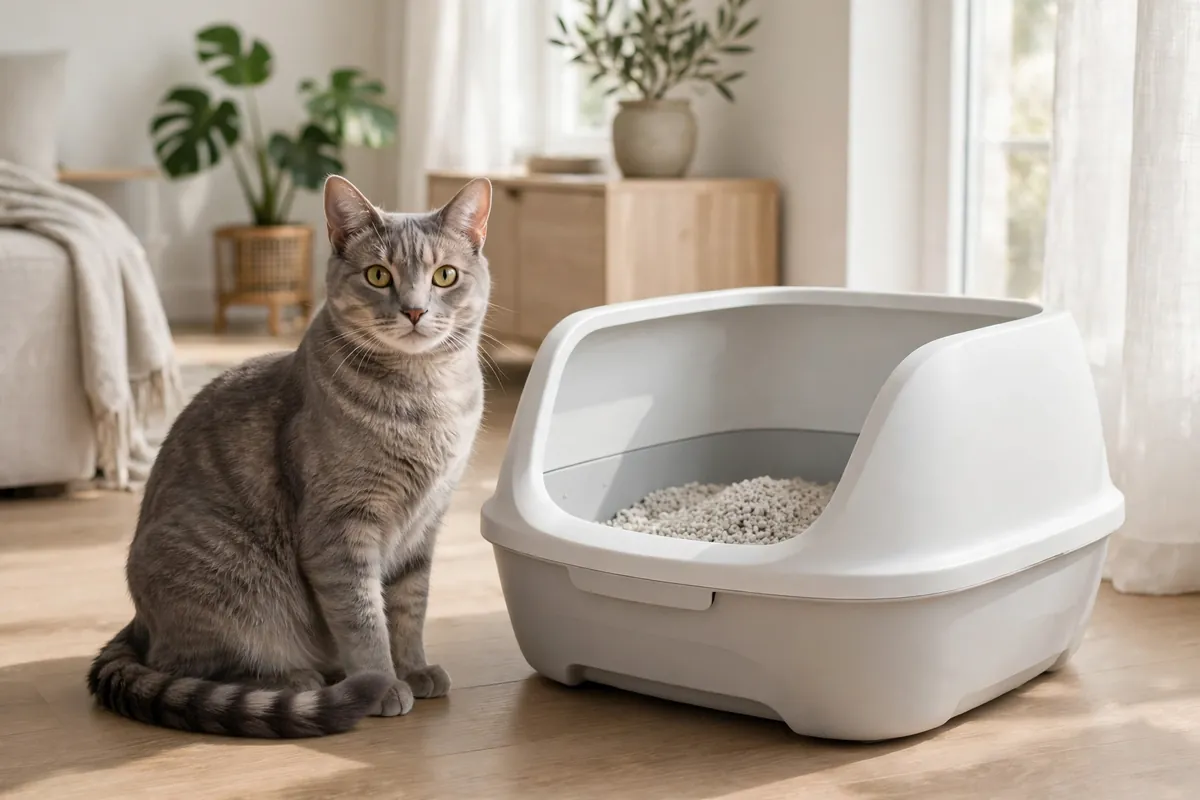
When a cat starts peeing outside the litter box, it is frustrating — and it is almost never spite. Cats are clean animals by nature, so peeing outside the box is usually their way of telling you something is wrong: they may be in pain, they may hate the litter or the box setup, or something in the home may be stressing them. The good news is that most cases improve once you find the real cause, and the fix is often simpler than owners expect.
This guide starts with telling spraying apart from normal peeing, then covers medical causes, box problems, stress triggers, and a fix plan.
Spraying vs. Squatting: The Decision Table
Before you change anything, figure out which behavior you are seeing — spraying and squatting have different causes and fixes:
- Spraying (marking): cat stands upright, tail raised and often quivering, and leaves a small amount of urine on a vertical surface — a wall, a door frame, a furniture leg, or the side of a bag. The smell is often stronger than normal urine.
- Squatting (peeing outside the box): cat crouches low and leaves a larger puddle on a horizontal surface — a rug, a bed, a pile of laundry, or the floor near the box. This is a toileting problem, not marking.
- Spraying clues: it often appears near doors and windows, after a new cat moves in nearby, or when an unneutered cat reaches maturity. Both male and female cats can spray, though it is more common in unneutered males.
- Squatting clues: it often follows a litter change, a moved box, a dirty box, a new pet or baby, or a urinary problem. The cat may also visit the box often but leave quickly, or cry while trying to go.
Rule Out Medical Causes First
Any cat that suddenly starts peeing outside the box deserves a vet visit, even if everything else in the home seems fine. Urinary problems are painful, and a cat that associates the litter box with pain will avoid it — which looks exactly like a behavior problem from the outside.
The most common medical causes include urinary tract infections, bladder inflammation, urinary crystals or stones, kidney disease, diabetes, and arthritis that makes climbing into a high-sided box painful.
Emergency warning: if your cat strains to urinate, cries while trying, passes only a few drops, visits the box again and again, or cannot urinate at all, get emergency veterinary care immediately. A blocked bladder is life-threatening, and male cats are at higher risk because their urethra is narrower. Do not wait until morning — a blockage can become fatal within a day.
For more detail on urinary warning signs, see our guides on cat UTI symptoms and cat urinary blockage signs.
Litter, Box, and Location Problems
Once medical causes are ruled out, the litter box itself is the next suspect. Cats are picky about their toilet, and small changes that seem minor to us can be deal-breakers for them.
- Too few boxes. Use the n+1 rule: one litter box per cat, plus one extra. In a one-cat home that means two boxes; in a three-cat home, four. Boxes should be spread around the home, not lined up side by side in one room — cats in a multi-cat home need separate, safe routes to a box.
- Dirty boxes. Scoop at least once a day, and fully change and wash the box regularly. Many cats refuse a box that smells of another cat or of old waste.
- Wrong litter. Most cats prefer fine, unscented, clumping litter. A sudden switch to a strongly scented or coarse litter is a classic trigger — if you recently changed brands, switch back and see if the problem stops.
- Wrong box. Covered boxes trap odor and can feel like a trap to a nervous cat; very small boxes are uncomfortable for large cats; high sides are hard for kittens, seniors, and arthritic cats. Offer at least one large, open, low-entry box.
- Bad location. Boxes next to a washing machine, a noisy appliance, or a busy doorway feel unsafe. Cats also avoid boxes placed right next to their food and water. Choose quiet, easy-to-reach spots with an escape route.
Our litter training guide covers box setup for kittens, and the same principles apply to adult cats that need a fresh start.
Stress and Territory Causes
Cats are creatures of routine, and stress is one of the most common reasons a healthy, litter-trained cat starts peeing outside the box. Common triggers include a new pet, a new baby, a house move, building work, a change in your work hours, a stray cat visible through the window, or conflict between cats in the same home.
Spraying is especially linked to territory stress: a cat that feels its home is threatened may mark doorways, windows, and new objects. Squatting outside the box can also be stress-related when a cat is too anxious to use a box guarded by another cat, or when the box is in a spot where the cat was startled.
Reducing stress means steady routines, quiet hiding spots, vertical space, and separate resources (food, water, boxes, resting spots) for each cat.
Step-by-Step Fix Plan
Follow this plan in order, and change one thing at a time so you can tell what worked:
- Book a vet check. Rule out UTI, blockage, crystals, and pain before anything else. Bring a note of when the problem started and what the urine looks like.
- Add boxes using the n+1 rule. Place them in different rooms, in quiet spots away from food, with at least one open, low-entry option.
- Reset the litter. Scoop daily, switch back to a fine unscented litter if you recently changed, and keep the depth your cat prefers — usually a few inches.
- Clean old spots properly. Use an enzymatic cleaner made for pet urine, following the label instructions and letting it soak. Enzymatic cleaners break down the urine proteins that keep attracting a cat back to the same spot.
- Reduce stress. Keep routines steady, add hiding spots and vertical space, separate resources in multi-cat homes, and limit your cat's view of outdoor cats if that is a trigger.
- Reward the box. Praise and treat calmly when your cat uses the box. Never punish accidents — punishment raises stress and usually makes the problem worse.
- Reassess after one to two weeks. If there is no improvement, go back to your vet for further testing or behavior support.
Cleaning Mistakes to Avoid
Cleaning matters as much as the fix itself, because a cat that can still smell old urine will often return to the same spot. Avoid ammonia-based cleaners — ammonia smells similar to urine to a cat and can actually encourage re-marking. Avoid bleach on soft furnishings, and do not just mask the smell with air freshener, which does nothing about the scent your cat can detect.
Instead, blot up fresh urine, apply an enzymatic cleaner generously, let it work for the time stated on the label, and repeat if needed. Wash bedding in hot water where possible.
Browse more Cat Behavior guides or return to the Purrfect Paws homepage for the latest articles.
Frequently Asked Questions
Why is my cat suddenly peeing outside the litter box?
A sudden change usually points to a medical problem, a litter or box change, or new stress at home. Rule out urinary illness with a vet visit first, then check the litter, box location, and any recent changes in the household.
How do I tell spraying from normal peeing?
Spraying is usually a small amount of urine left on a vertical surface, such as a wall or furniture leg, with the cat standing and tail raised. Normal peeing outside the box is usually a squat on a horizontal surface and leaves a larger puddle.
How many litter boxes should I have?
The common guideline is one box per cat plus one extra, placed in different spots around the home. That gives every cat a clean, accessible choice and reduces guarding in multi-cat homes.
Does punishment stop a cat peeing outside the litter box?
No. Punishment usually increases stress and makes the problem worse, and it can damage your cat's trust in you. Fix the cause — health, litter, box setup, or stress — and reward calm use of the box instead.
When is peeing outside the litter box an emergency?
If your cat strains to urinate, cries while trying, passes only drops, or cannot urinate at all, seek emergency veterinary care at once. A blocked bladder is life-threatening, especially in male cats.