How to Keep Your Cat Cool in Summer: 12 Tips
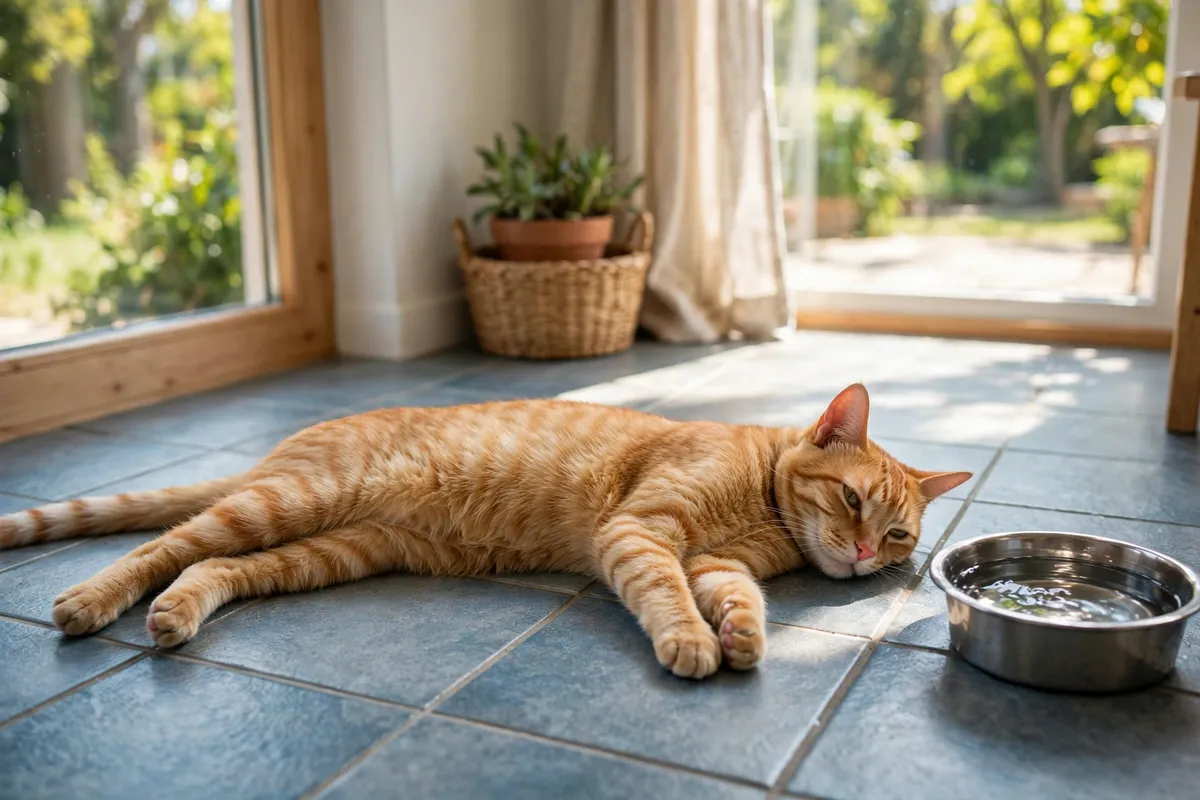
Cats handle heat better than dogs in some ways — they are smaller, they rest through the hottest hours, and they do not need walks in the midday sun — but they can still overheat, and they are much worse at telling us about it. Cats do not pant to cool down the way dogs do, and a cat that is too hot will often just go quiet, which is easy to mistake for a normal summer nap.
The good news is that keeping a cat cool is mostly about small, practical steps: fresh water in the right places, cool surfaces to lie on, shade, airflow, and knowing the warning signs. Here are twelve tips that actually work, from the obvious to the ones most owners miss.
Water, Water Everywhere
Fresh, cool water is the single most important summer tool. Put out several bowls in different rooms, away from food bowls and litter boxes, and refresh them at least twice a day — water left in a warm room goes stale fast, and cats are famously picky about stale water. A pet water fountain helps a lot in summer: moving water stays cooler and more oxygenated, and many cats drink more from a fountain than from a still bowl, which matters because cats are generally low drinkers.
Try adding ice cubes to bowls on very hot days, and keep one bowl in the coolest room of the house. If your cat eats wet food, that also helps hydration — wet food is around 75 percent water — so a summer switch toward more wet food, or adding a little water to wet food, is a sensible seasonal adjustment. Watch the litter box as a hydration gauge: normal-sized, regular urinations mean your cat is drinking enough.
Cool Surfaces and Shade
Cats cool themselves partly by conduction — lying on a cool surface and letting heat flow out of their bodies. Tile, stone, and bathroom floors are summer favorites for exactly this reason, so do not block your cat's access to them with rugs or closed doors. A cooling mat, kept in the shade, gives the same benefit in a carpeted room; look for pressure-activated gel mats that need no refrigeration, and put a thin cloth over them if your cat dislikes the texture.
Shade matters as much indoors as out. Keep curtains or blinds partly closed on sun-facing windows during the hottest hours, especially if your cat loves a sunny windowsill — a windowsill behind glass can become dangerously hot, like a greenhouse. If your cat has a catio or garden access, make sure there is always a shaded area available and never a situation where the cat is locked in a sunny spot with no retreat.
Grooming and Airflow
Regular brushing in summer removes loose undercoat and lets air reach the skin, which helps a cat regulate temperature. This matters most for long-haired cats, who should be brushed several times a week in hot weather — but do not shave your cat. A cat's coat insulates against heat as well as cold, and shaving can cause sunburn and actually make temperature regulation worse. If matting is a problem, a professional groomer can thin the coat safely.
Airflow helps more than air conditioning alone. A fan moving air across the room, an open window with a secure screen, or a cross-breeze through the house all help a cat shed heat. If you use air conditioning, keep it moderate — a sudden move from a very cold room to a hot one is stressful — and never leave a cat in a room that could overheat if the power or the AC fails. On extreme heat days, check on your cat midday even if you are out, or leave a second water source as backup.
Play, Feeding, and Travel Timing
Shift active play to the cooler parts of the day: early morning and late evening. A vigorous play session at noon in a hot room can push a cat toward overheating, especially an overweight or senior cat. Short, gentle sessions in the cool hours keep your cat exercised without the heat risk, and a play session before bed also helps with the summer 3 a.m. zoomies.
Never leave a cat in a parked car, even for a few minutes and even with a window cracked — car interiors can reach lethal temperatures shockingly fast, and this is one of the most preventable causes of pet heatstroke deaths. If you must travel with your cat in summer, use air conditioning, a shaded carrier, and a frozen water bottle wrapped in a cloth beside the carrier for extra cooling. The same rule applies to conservatories, greenhouses, and any small glass room in direct sun.
Heatstroke: Know the Signs
Heatstroke in cats is less common than in dogs but more dangerous because it is recognized later. Warning signs include panting with an open mouth — cats rarely pant, so any open-mouth panting is a red flag — drooling, restlessness followed by lethargy, vomiting, a rapid heartbeat, bright red gums that turn pale, and unsteadiness or collapse. If you see these signs, move the cat to a cool room immediately, offer small amounts of cool water, and dampen the paws and ears with a cool (not ice-cold) cloth.
Do not plunge a hot cat into cold water or pack it in ice — rapid cooling can cause shock. Call your vet or an emergency clinic right away, even if the cat seems to recover, because heatstroke can cause internal damage that shows up hours later. Cats most at risk are seniors, kittens, overweight cats, flat-faced breeds like Persians, and cats with heart or breathing conditions — these cats deserve extra attention on every hot day.
Summer Extras Worth Trying
A few small extras make summer easier. Freeze a little low-sodium broth or water with a treat inside into ice cubes for enrichment — your cat can lick and bat at them. Keep a spare water bowl in the bedroom so your cat does not have to cross a hot house at night. Check window screens before summer starts, since cats lean on screens and a loose screen over an open window is a falling risk that rises in hot weather.
Finally, keep an eye on sunburn. White and light-colored cats, especially on the ears and nose, can sunburn just like people, and repeated sunburn raises skin cancer risk. Limit direct sun for white cats, and ask your vet about pet-safe sunscreen for the ears if your cat insists on sunbathing. Summer with a cat is mostly about comfort, but these small checks are what turn a hot season into a safe one.
Do cats get hot in summer?
Yes. Cats can overheat, especially seniors, kittens, overweight cats, and flat-faced breeds. They hide discomfort well, so watch for panting, drooling, lethargy, and restlessness rather than waiting for obvious distress.
Should I shave my cat in summer?
No. A cat's coat insulates against heat as well as cold, and shaving risks sunburn and worse temperature regulation. Regular brushing is the safe way to help a long-haired cat in summer.
How can I tell if my cat is dehydrated?
Check the gums — they should be moist, not tacky — and gently pinch the skin at the shoulder; it should spring back quickly. Dry gums, sunken eyes, and lethargy mean call your vet.
Is it safe to leave a fan on for my cat?
Yes. Airflow helps cats cool down, and a fan is safe as long as cords are out of reach and the cat can move away from the draft if it wants to.
What should I do if my cat is panting?
Open-mouth panting in a cat is abnormal and a warning sign. Move the cat to a cool room, offer cool water, dampen paws and ears with a cool cloth, and call your vet promptly.