How to Stop Your Cat Scratching Furniture: 8 Fixes
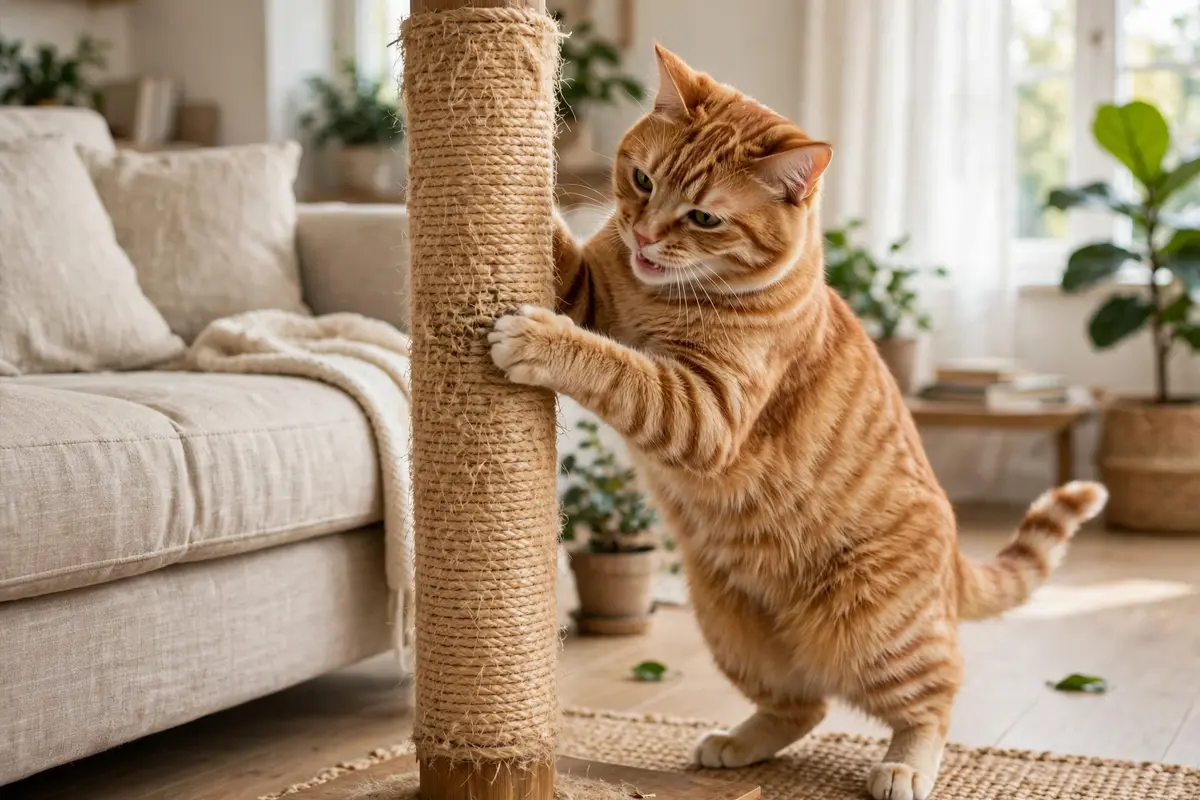
If your sofa is starting to look like it lost a fight with a tiny tiger, here is the good news: you can stop cat scratching furniture without punishing your cat and without getting rid of anything you love. Scratching is a normal, healthy cat behavior, so the goal is not to stop it altogether — it is to move it from your furniture to something better. In most homes, that shift comes down to a sturdy scratching post in the right place, a few gentle deterrents on the sofa, and regular nail care.
This guide covers cat scratching furniture how to stop it step by step, with eight practical fixes you can try this week. Some cats switch in days; others take weeks. Patience and consistency matter more than any single product.
Why Do Cats Scratch Furniture in the First Place?
Cats do not scratch your sofa out of spite. Scratching serves several real purposes. It keeps their claws sharp and removes the old, worn outer sheath of each claw. It stretches the muscles in their shoulders, back, and legs — watch a cat scratch after a nap and you will see a full-body stretch. Scratching also leaves scent: cats have scent glands between their toes, so every scratch marks that spot as theirs. That is why a scratched sofa arm is so attractive to return to — it already smells like your cat.
Some cats scratch more when excited, stressed, or bored — a new pet, a move, or a long stretch without play can all increase it. If scratching suddenly jumps, think about what changed in your cat's world.
Fix 1: Offer a Scratching Post Your Cat Actually Likes
The single most important fix is giving your cat a scratching surface it prefers to the sofa. Not all posts are equal, and many cats ignore a wobbly, carpet-covered post that tips when they lean on it. Look for a post that is tall enough for your cat to stretch fully upright — for most adult cats that means at least 30 inches — and heavy or wide-based enough that it does not wobble. Sisal rope is the most popular covering because it gives claws something to hook into, but some cats prefer sisal fabric, cardboard, or even a rough wooden log.
Pay attention to your cat's style. Cats that scratch vertically on sofa arms usually want a tall post; cats that scratch rugs often prefer a flat or angled scratcher on the floor. If you are not sure, offer one of each and see which gets used.
Fix 2: Get Cat Scratching Post Placement Right
Cat scratching post placement is where most owners go wrong. A beautiful post hidden in a spare bedroom will gather dust while the sofa keeps getting shredded, because cats scratch where they spend time, not where we would like them to. The golden rule is simple: put the post where the scratching already happens.
Start by placing a post directly beside the most-scratched piece of furniture, ideally touching it. Next, add posts near sleeping spots, since cats love a scratch right after waking up, and along the main paths your cat walks through the house. In a larger home, two or three posts beat one expensive one. Once your cat reliably uses the post beside the sofa, you can inch it toward a spot you prefer — a few inches every few days — but never to a room your cat rarely visits.
Fix 3: Make the Sofa Less Appealing
While your cat learns to love the new post, make the old target less inviting. A snug sofa cover or throw protects the fabric and changes the texture your cat is used to. Double-sided sticky tape made for furniture is another gentle option: cats dislike the sticky feeling on their paws and usually give up after a few tries. Apply it to the exact spots your cat scratches, and leave it on for a couple of weeks while the post habit builds.
Do not use anything that frightens or hurts your cat. The aim is a mild, boring deterrent, not a scary experience — and always keep the post nearby, or your cat will simply move on to the next piece of furniture.
Fix 4: Trim Nails Regularly
Regular nail trims will not stop the scratching instinct, but they do reduce the damage dramatically. A cat with freshly trimmed claws leaves far lighter marks on fabric, and trimming also prevents claws from growing too long, splitting, or catching on things. Most indoor cats benefit from a trim every two to three weeks.
Trim only the sharp, clear tip of each claw, staying well away from the pink quick inside the nail. If your cat is new to trimming, go slowly — one or two nails per session, with treats — and stop before your cat gets upset. Our guide to trimming cat nails safely at home walks through the technique step by step.
Fix 5: Try Soft Nail Caps
Soft nail caps are small, smooth covers that glue gently over each claw. They blunt the claw so scratching does far less damage, while the cat can still stretch, walk, and retract its claws normally. Caps usually last four to six weeks before they shed naturally with the old claw sheath, and then they can be replaced.
Nail caps suit cats that tolerate having their paws handled, and they are a useful bridge while a scratching-post habit forms. They are not right for every cat — some cats chew them off, and they should not be used on cats that go outdoors unsupervised. Ask your veterinarian if unsure.
Fix 6: Redirect With Play, Not Punishment
Many cats scratch furniture when they are bursting with energy, especially in the evening. A daily play session with a wand toy, followed by a small meal, channels that energy and often reduces scratching on its own. If you catch your cat heading for the sofa, calmly pick up a toy or lure them to the post with a treat — do not shout or clap loudly at them.
Every time your cat uses the post, reward it with a treat or praise. Cats repeat what pays off, and if the sofa earns no reaction while the post always earns a reward, most cats make the sensible choice within a week or two.
Fix 7: Keep Life Calm and Predictable
Stress scratching is real. Cats mark with their claws when they feel unsure about their territory, so a new baby, a new cat, or rearranged furniture can trigger a scratching spree. Keeping feeding times, litter box locations, and resting spots steady helps a cat feel secure.
Pheromone diffusers that mimic the calming scent cats leave when rubbing their cheeks on things can help some cats settle, though they are one small part of a calmer home, alongside play and routine.
Fix 8: Protect Furniture While the Habit Changes
Old habits take time to break, so protect your furniture in the meantime rather than expecting overnight perfection. Washable throws, arm covers, and scratch guards for chair legs all buy you time. Choose covers that are easy to remove and wash.
It also helps to cover existing scratch marks: a sofa arm already frayed and scent-marked invites scratching again, while a tight cover breaks that cycle.
What Not to Do: Declawing Is Not the Answer
Declawing is sometimes presented as a quick fix, but it is not a nail trim — it is the surgical amputation of the last bone of each toe. Cats declawed this way can suffer lasting pain, difficulty walking and balancing, and behavior changes such as biting or avoiding the litter box. It is banned or heavily restricted in many countries and opposed by veterinary organizations as a routine solution.
Scratching posts, good placement, nail trims, nail caps, and gentle deterrents solve the furniture problem without harming your cat. If scratching feels unmanageable, talk to your veterinarian or a certified cat behaviorist first — there is almost always a kinder fix.
When to Ask for Professional Help
Most scratching problems improve with the fixes above, but seek advice if your cat suddenly scratches far more than usual, seems in pain, has damaged claws, or shows changes such as hiding or not eating. A veterinarian can check for pain or skin problems, and a behaviorist can help with anxiety-driven marking.
Give the plan at least three to four weeks before judging it. Cats learn by repetition, and a post that has been in the right place for a month, rewarded every time, will win over the sofa for most cats.
Frequently Asked Questions
How do I stop my cat scratching the sofa?
Give your cat a sturdy scratching post right next to the sofa, make the sofa less appealing with a cover or double-sided tape, and reward your cat every time it uses the post. Most cats switch over within a couple of weeks once the better option is in the right place.
Where should I put a cat scratching post?
Put it where your cat already scratches, near resting spots, and along the routes your cat walks through the house. A post hidden in a spare room rarely gets used, no matter how nice it is.
Does trimming a cat's nails stop scratching?
Trimming blunts the claws and reduces damage, but it does not stop the scratching instinct. Combine regular nail trims with a good scratching post for the best result.
Should I punish my cat for scratching furniture?
No. Shouting, spraying water, or punishing your cat usually makes it anxious and secretive, so it scratches when you are not watching. Redirecting to a post and rewarding the right choice works far better.
Is declawing a solution for scratching?
No. Declawing is an amputation of the last bone of each toe, not a simple nail removal. It can cause lasting pain, difficulty walking, and behavior problems, and it is banned in many places. Scratching posts, nail care, and deterrents are kinder and more effective.