Korat: Complete Breed Guide
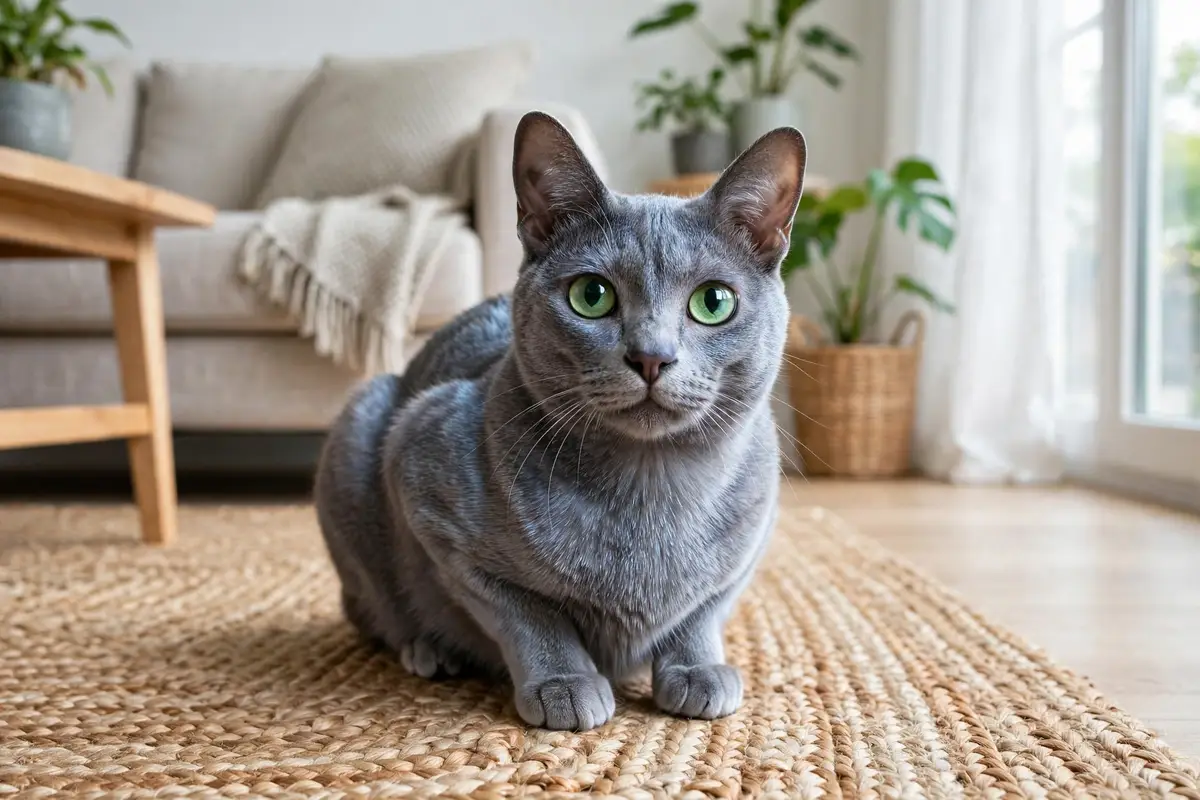
The Korat is one of the oldest cat breeds in the world, a silver-blue cat from Thailand with a heart-shaped face, large luminous green eyes, and a bond with its people that runs unusually deep. In Thailand it is known as the Si-Sawat, the good luck cat, and it was traditionally given as a gift to bring prosperity. It is a quiet, sensitive cat that chooses its person carefully and then loves them completely.
Korats are not party cats. They are gentle, observant, and slow to trust strangers, but once they bond, they are devoted for life. If you want a calm, intelligent companion for a quiet home, and you are happy to earn a cat's trust rather than demand it, the Korat may be your perfect match. This guide covers its origins, appearance, temperament, grooming, health, and whether it fits your home.
Korat at a Glance
The Korat is a medium-sized cat, usually weighing between 3 and 5 kilograms, with a short, fine, silver-blue coat that shimmers in the light. The silver tipping on each hair gives the coat a luminous, almost glowing quality. The eyes are large, round, and luminous green, though kittens are born with amber eyes that slowly turn green over the first few years.
Korats are quiet, sensitive, and deeply bonded to their people. They are not loud or demanding, but they notice everything and prefer a calm, predictable routine. With good care they typically live 15 to 19 years, making them one of the longer-lived breeds.
Origin and History: Thailand's Good Luck Cat
The Korat comes from Thailand, where it appears in the Tamra Maew, the Book of Cat Poems, dating back hundreds of years. In Thai tradition the Korat is a good luck cat, and a pair of Korats was traditionally given to newlyweds as a blessing for prosperity and happiness.
The first Korats arrived in the United States in 1959, and the breed was recognized by major associations over the following decades. Despite its long history, the Korat has always remained uncommon, and it is still bred by a small number of dedicated breeders. Its appearance has changed very little over the centuries, which is part of its appeal: this is a cat that looks much as it did hundreds of years ago.
Appearance: Silver-Blue Coat and Heart-Shaped Face
The Korat coat is short, fine, and close-lying, colored a soft silver-blue with silver tipping on each hair that gives it a shimmering, halo-like glow. The coat lies flat against the body and has a smooth, satin feel. There are no markings: the silver-blue color should be even all over.
The face is heart-shaped, with a broad forehead, large upright ears set high on the head, and a gently pointed chin. The eyes are large, round, and prominent, and they are the breed's most striking feature: luminous green in adults, deepening in color as the cat matures. Kittens start with amber or hazel eyes, and the green develops gradually over two to four years.
Personality and Temperament: Quiet, Sensitive, Devoted
Korats are gentle, intelligent, and deeply attached to their people, but they bond on their own terms. They are often slow to trust strangers and may hide when visitors arrive, then emerge once they are sure the coast is clear. With their own family, they are affectionate and playful, and they often choose one favorite person to follow around the house.
These cats are sensitive to noise, sudden change, and chaos, and they do best in calm, predictable homes. They are usually good with older children who are gentle and quiet, and with other calm pets. They do not enjoy being left alone for long hours, and they can become stressed by loud parties or frequent house guests.
Grooming a Short Silver Coat
Grooming a Korat is simple. The short, fine coat needs only a gentle brush once a week to remove loose hair and keep it glossy. Shedding is low to moderate, and a quick weekly brush is usually enough to keep it under control. Baths are rarely needed unless the cat gets into something messy.
As with any cat, keep up the routine care: trim the nails every few weeks, check the ears, and brush the teeth regularly. A tall scratching post, a window perch, and a few quiet toys will keep your Korat happy. Because Korats are sensitive cats, place their bed and litter box in a calm, quiet corner of the home.
Korat Health and Lifespan
Korats are generally healthy and long-lived, typically reaching 15 to 19 years. The most important breed-specific concern is gangliosidosis, a rare inherited condition affecting the nervous system. Responsible breeders test their cats for the GM1 and GM2 forms of the condition and will show you the results, so always ask before committing.
Korats carry very little body fat, and some vets note that they can be more sensitive to anesthesia than other breeds, so mention the breed at vet visits. Beyond that, the usual advice applies: feed a good-quality diet in measured portions, keep the cat indoors, stay on top of dental care, and take your cat for a vet check at least once a year.
Is the Korat Right for You?
The Korat is ideal if you want a quiet, gentle, deeply loyal companion and your home is calm and predictable. It suits single people, couples, and quiet families who will give the cat time to bond and respect its need for peace. Owners who earn a Korat's trust often say it is the deepest bond they have ever had with a cat.
It is not the right choice for a noisy, chaotic household, or for someone who wants a bold, outgoing cat that charms every visitor. The breed is also uncommon, so expect a search and possibly a waiting list. But if a sensitive, silver-blue companion sounds like your perfect cat, the Korat is hard to beat.
Before you decide, spend time with the breed if you can. Visit a breeder, sit quietly, and let the cat come to you. A Korat that chooses you is making a promise, and owners who accept that promise with patience are rewarded with one of the deepest bonds in the cat world.
Frequently Asked Questions
Do Korat cats' eyes change color?
Yes, Korat kittens are born with amber or hazel eyes, and the eyes slowly turn luminous green over two to four years. The green keeps deepening as the cat matures.
Are Korat cats good with children?
They are usually good with older children who are calm and gentle. Young, noisy children can stress a Korat, so this breed suits quieter families best.
Do Korat cats shed a lot?
No, shedding is low to moderate. The short, fine coat loses some hair year-round, and a weekly brush keeps it under control.
Are Korat cats rare?
Yes, Korats are uncommon. They are bred by a small number of dedicated breeders, so kittens are usually available only through a waiting list.
Why are Korats called good luck cats?
In Thailand the Korat, known as the Si-Sawat, is a traditional good luck symbol. A pair of Korats was often given to newlyweds as a blessing for prosperity and happiness.