Russian Blue Cat: Complete Breed Guide
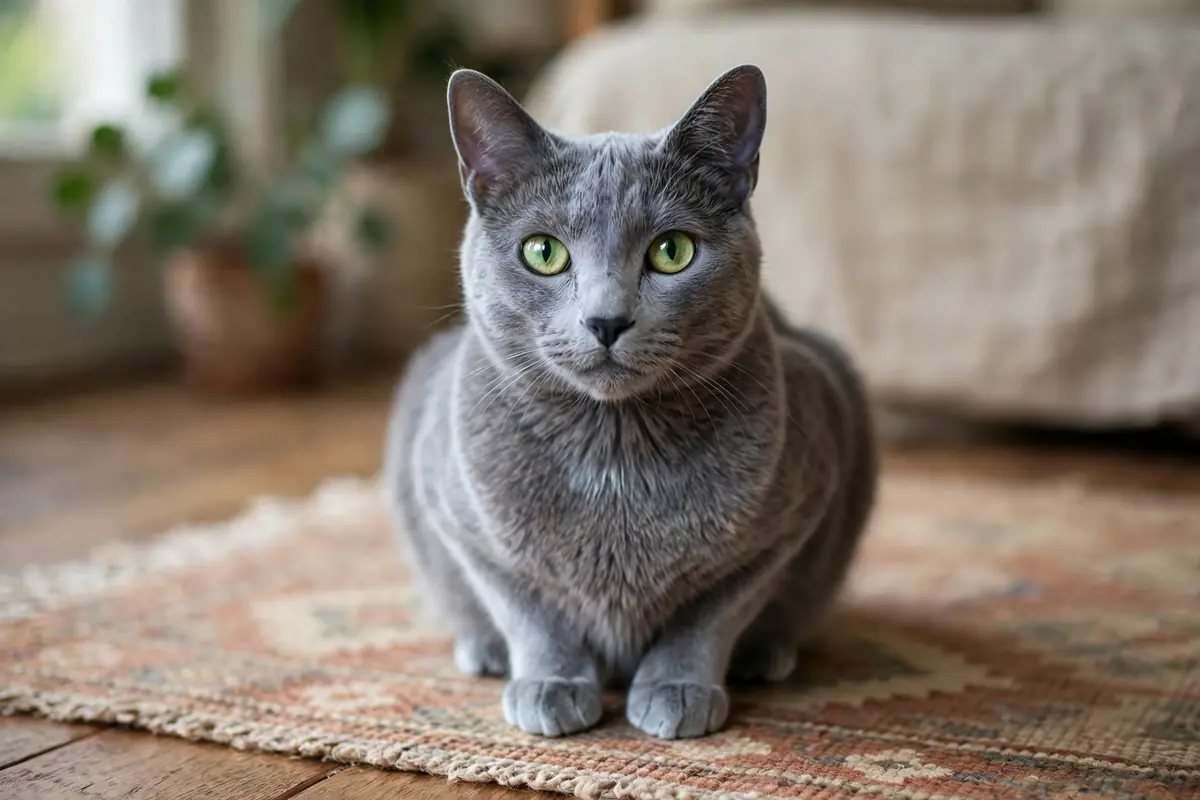
The Russian Blue is an elegant, silver-coated breed with luminous green eyes and a personality that rewards patience with extraordinary devotion. Shy with strangers but deeply bonded to its family, this quiet, playful cat suits calm households looking for a loyal, low-drama companion. This complete guide covers the breed's history, appearance, temperament, care needs, health, and how to find a kitten from a responsible source.
Know this before you fall for those emerald eyes: Russian Blues choose their people carefully and thrive on routine. If you want a graceful shadow devoted to your household alone — not a cat that charms every guest — read on.
Russian Blue Overview: A Breed Wrapped in Mystery
The Russian Blue's origins are, fittingly for such a reserved cat, a little mysterious. The breed is believed to have developed naturally in northern Russia, and legend holds that sailors brought these striking blue cats from the port of Arkhangelsk to Britain in the 1800s. They appeared at some of the earliest English cat shows, where their shimmering coats and green eyes set them apart.
Like many European breeds, the Russian Blue nearly vanished during the World Wars, when breeding stock was lost and food shortages made keeping cats a luxury. Dedicated breeders in Britain and Scandinavia rebuilt the breed afterward, preserving its defining traits.
Today the Russian Blue is known as a thinking person's cat: observant, sensitive, and quietly affectionate. Owners tend to become lifelong converts — many say that once you have lived with a Russian Blue, no other cat quite compares.
Russian Blue Appearance: Silver-Tipped Coat and Emerald Eyes
A medium-sized cat with a fine-boned yet muscular body, built for grace rather than bulk: wedge-shaped head, prominent whisker pads, large wide-set ears, long elegant legs. Males run larger, but both sexes carry themselves with regal poise.
The coat is the breed's crowning glory: a short, dense double coat in luminous blue-gray, each hair tipped in silver — the famous silver tipping that gives the Russian Blue its shimmering look. The plush undercoat stands slightly away from the body, and stroking against the grain feels like touching velvet.
Then there are the eyes: large, almond-shaped, and set wide apart, maturing to a vivid emerald green that contrasts dramatically with the silver-blue coat. Kittens' eyes shift from blue to yellow before slowly deepening to green, usually by one to two years of age. A Russian Blue's gaze is direct, intelligent, and just a little bit knowing.
Russian Blue Personality and Temperament
The Russian Blue has a two-sided personality, and understanding both sides is the key to a happy relationship. With strangers, this breed is famously reserved — many vanish at the doorbell. This is not fear; it is simply the breed's nature.
With their own family, Russian Blues are a different animal entirely: affectionate, playful, and devoted. They bond most strongly with one or two people, following their chosen human and greeting them with quiet chirps. The affection is genuine but polite — a Russian Blue asks for attention with a look rather than demanding it with a yowl.
Playfulness surprises many new owners — Russian Blues stay kittenish well into adulthood, loving feather wands, fetch games, and anything that moves like prey. They are notably intelligent too, mastering puzzle feeders and memorizing routines. They love routine and can be unsettled by sudden changes, so a predictable schedule keeps them at their best.
Is a Russian Blue Right for You? Homes, Kids and Other Pets
The Russian Blue suits calm households — and makes an excellent apartment cat. Clean, quiet, and content indoors, with a soft voice neighbors will never hear through the walls. A cat tree by the window, scratching posts, and daily play are all one needs to be happy in a smaller space.
Families can do very well with this breed, with one caveat: Russian Blues prefer gentle, predictable handling. Older children who interact calmly usually become fast friends, while very young toddlers may find the cat simply avoids them. Teach kids to let the cat come to them; the bond builds on the cat's terms.
Other pets are generally accepted with gradual introductions. Another calm cat makes a good companion if you work long hours, since this breed dislikes being alone all day. Cat-savvy dogs are usually fine too. Small caged pets must always be kept secure and separate; the hunting instinct is very much intact.
A loud, chaotic home with constant visitors is a poor fit — a sensitive Russian Blue may spend much of its time hiding. And if you want an instantly social cat that charms every guest, this probably is not your breed. The Russian Blue's love is deep, but reserved for family.
Russian Blue Care: Grooming, Exercise and Diet
Grooming. Good news: the Russian Blue's stunning coat is relatively easy to maintain. The dense double coat sheds less than many breeds, and weekly brushing with a soft brush or steel comb keeps the silver tipping bright; brush twice a week during seasonal shedding. Occasionally check down to the skin for tangles.
Exercise and enrichment. Do not let the elegant looks fool you — Russian Blues need real play. Aim for two interactive sessions daily, 10 to 15 minutes each, with wand toys, crinkle balls, or fetch games. Puzzle feeders satisfy intelligence and hunting drive; a tall cat tree plus window perch covers climbing and bird-watching. Keep a consistent daily rhythm; this breed finds comfort in routine.
Diet. Feed a high-quality, meat-based diet suited to your cat's life stage, and measure meals rather than leaving food out — Russian Blues gain weight if overfed, and extra weight dulls their athletic grace. Keep fresh water available and treats to about 10 percent of daily calories. Have your vet assess body condition at annual checkups.
Russian Blue Health: What Owners Should Know
The Russian Blue is generally a healthy, hardy breed — many live well into their mid-teens and beyond. No dramatic breed-specific diseases are strongly associated with it, but "generally healthy" is no reason to skip veterinary care.
Health priorities are the same as for every cat: annual wellness exams, core vaccinations, parasite prevention, dental care, and a healthy weight. Watch for dental disease (bad breath, red gums, reluctance to eat hard food) and litter-box straining, which can signal urinary issues.
Weight management deserves special attention: the fine-boned frame means even a little extra weight shows — and strains joints and organs. Measured meals, daily play, and vet body-condition checks keep your cat lean for life. When choosing a kitten, ask about the parents' health history and have your new kitten see your own vet within the first days home.
Finding a Russian Blue Kitten: Reputable Breeders and Rescue
This breed's popularity attracts scammers too — so choose carefully. Start with breeder referral lists from recognized cat associations and expect a wait. A reputable breeder raises kittens in the home, provides veterinary records and a written contract, health-tests breeding cats, and interviews you as thoroughly as you interview them. You should meet the mother cat, at least by video.
Red flags include breeders who always have kittens ready, will not show where kittens are raised, offer no health records or contract, demand wire-transfer deposits before answering questions, or sell kittens younger than 12 weeks. Bargain prices usually mean corners were cut — walk away from anything rushed or secretive.
Rescue is absolutely worth considering. Russian Blue mixes appear regularly in shelters, and breed-specific rescues rehome purebred adults whose owners' circumstances changed. An adult rescue shows you the finished personality at a fraction of breeder prices. Check shelters and rescue networks regularly.
Frequently Asked Questions
Are Russian Blue cats hypoallergenic?
No cat is truly hypoallergenic. Russian Blues shed relatively little and some mild allergy sufferers tolerate them well — but reactions vary, so spend time with one first if allergies are a concern.
Why does my Russian Blue hide when visitors come over?
That is classic Russian Blue behavior, not fear. The breed is reserved with strangers and bonded to its family; most warm up on their own schedule — let the cat approach first.
Are Russian Blue cats good for apartments?
Yes — they are excellent apartment cats: quiet, clean, and content indoors. They need a cat tree, scratching posts, and daily play, but they are not destructive or loud, making them ideal for smaller homes and shared walls.
When do a Russian Blue kitten's eyes turn green?
Kittens' eyes change from blue to yellow, then deepen to emerald green, usually fully set by one to two years. Yellowish-green eyes in a young Russian Blue are completely normal.
Do Russian Blue cats like to cuddle?
On their own terms, absolutely. Russian Blues are deeply affectionate with their chosen people and prefer to initiate affection themselves. Respect their boundaries and you will earn remarkable devotion.