Kurilian Bobtail: Complete Breed Guide
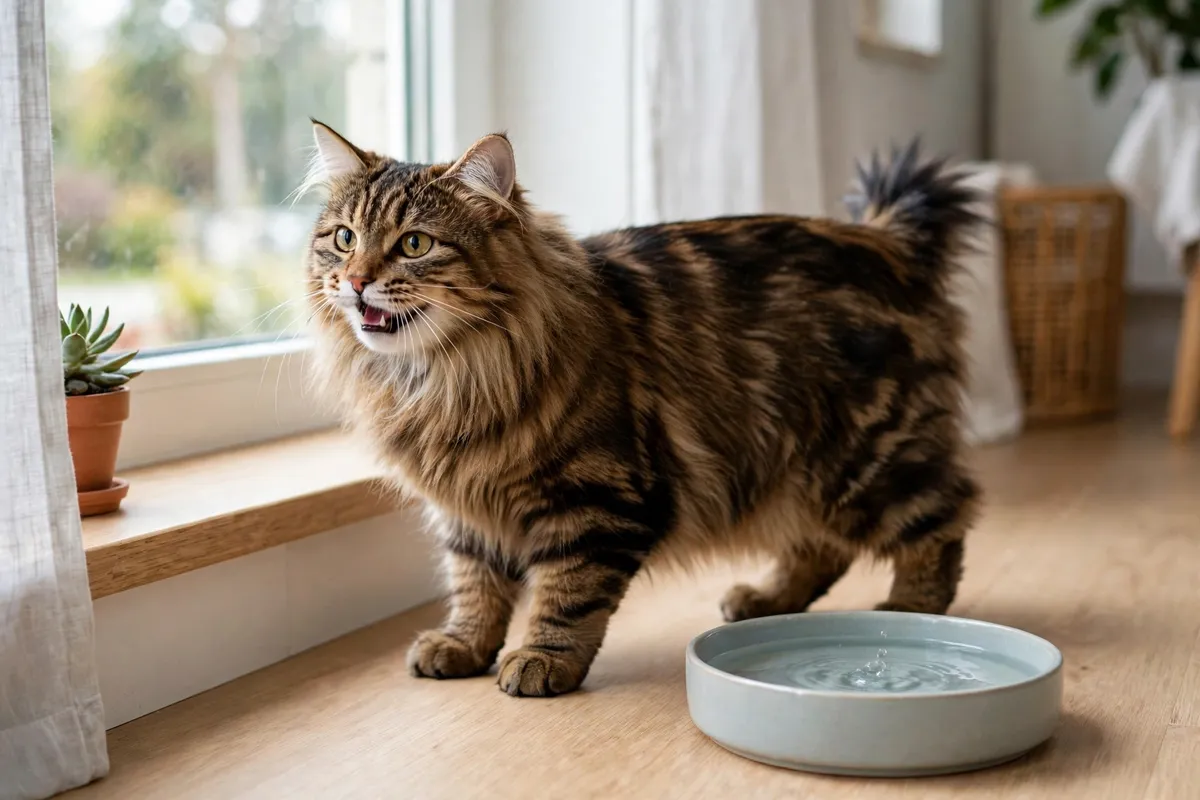
The Kurilian Bobtail is a rugged, dog-like cat from the remote Kuril Islands, between Russia and Japan, and it has two features no other breed can match: a short pom-pom tail that is unique to every cat, like a fingerprint, and a genuine love of water. This is a cat that may paddle in the sink, follow you into the bathroom, and play fetch like a retriever.
Behind the wild island looks is a friendly, loyal, and playful companion that gets along with children, dogs, and other cats. If you want an active, interactive cat with a truly unusual tail and a big personality, the Kurilian Bobtail may be your perfect match. This guide covers its origins, appearance, temperament, grooming, health, and whether it fits your home.
Kurilian Bobtail at a Glance
The Kurilian Bobtail is a medium to large cat, usually weighing between 4 and 7 kilograms, with a sturdy, muscular build and a thick semi-long coat. Its trademark is the short pom-pom tail, just a few centimeters long, with a kinked or curled shape that is different on every cat. The hind legs are longer than the front legs, giving the cat a slightly arched back and a springy, hopping gait.
Kurilian Bobtails are active, intelligent, and famously dog-like. They play fetch, follow their owners, and often enjoy water. With good care they typically live 15 to 20 years, and they stay playful well into adulthood.
Origin and History: An Island Survivor
The Kurilian Bobtail is a natural breed from the Kuril Islands, a volcanic island chain between Russia and Japan. For centuries these cats lived as working mousers on the islands, hunting rodents and even fishing in the island streams. Their short tails, thick coats, and love of water all developed naturally in that harsh island climate.
The breed was brought to mainland Russia in the late 20th century and was recognized by Russian and then international associations, including TICA and FIFe. It remains uncommon outside Russia and northern Europe, and it is still bred by a relatively small number of breeders.
Appearance: Pom-Pom Tail and Island Coat
The tail is the Kurilian Bobtail's calling card: a short pom-pom, usually 3 to 8 centimeters long, made of kinked or curled vertebrae covered in fur. No two tails are alike, and breeders say each tail is as individual as a fingerprint. The tail is never docked: it grows that way naturally.
The coat is semi-long, thick, and slightly water-resistant, with a dense undercoat that protects against cold and wet weather. It comes in many colors and patterns, with tabby being common. The body is strong and muscular, the head is wedge-shaped with medium ears, and the hind legs are longer than the front legs, which gives the cat its distinctive arched profile.
Personality and Temperament: A Dog in a Cat's Body
Kurilian Bobtails are often described as dogs in cats' bodies. They are loyal, playful, and very social, following their owners around, greeting them at the door, and learning to fetch toys. They are intelligent cats that enjoy puzzle feeders, games, and learning tricks.
These cats are usually excellent with children and with other pets, including dogs, and they adapt well to busy households. Their love of water is real: many Kurilian Bobtails will paddle in a sink, play with dripping taps, or even join their owner near the bath. They are not a quiet, independent breed: they want company and play every day.
Kurilian Bobtails are also famously good hunters and problem solvers. They will work out how to open a cupboard, fetch a favorite toy from under the sofa, and learn the sound of the treat bag from another room. Give them puzzle feeders and rotating toys to keep their clever minds busy, and they will reward you with endless entertainment and loyalty.
Grooming a Thick Island Coat
Grooming a Kurilian Bobtail takes a little more effort than a shorthair. The thick semi-long coat needs brushing two or three times a week to prevent tangles, especially during the spring and autumn shedding seasons, when the coat changes. A steel comb helps reach the dense undercoat without hurting the skin.
Shedding is moderate to heavy during seasonal changes, so regular brushing keeps loose hair under control. Baths are rarely needed, though this breed tolerates water better than most cats. As usual, keep up nail trims, ear checks, and dental care, and provide a tall scratching post and plenty of toys.
Kurilian Bobtail Health and Lifespan
Kurilian Bobtails are generally healthy and hardy cats, typically living 15 to 20 years. As a natural breed shaped by a harsh island climate, they have no major breed-specific disease widely reported, and they are known for strong immune systems and robust health.
The short tail is natural and causes no health problems, unlike the spinal issues seen in some other short-tailed breeds. Responsible breeders still screen their cats and are happy to discuss health history, so always ask. The most practical advice is the same as for any cat: a good-quality diet in measured portions, an indoor lifestyle, dental care, and a vet check at least once a year.
Is the Kurilian Bobtail Right for You?
The Kurilian Bobtail is ideal if you want an active, loyal, dog-like cat and you have time for daily play. It suits families with children, homes with dogs, and owners who enjoy an interactive cat that joins in with everything, including water play.
It is not the right choice if you want a quiet, low-energy cat, or if nobody is home during the day. The breed is also uncommon outside Russia and northern Europe, so expect a search and possibly a waiting list. But if a pom-pom-tailed, water-loving companion sounds like your perfect cat, the Kurilian Bobtail is hard to beat.
Before you decide, make sure your home can handle an active, water-loving cat. Keep a sturdy water bowl that cannot tip over, offer a shallow paddling tray in warm weather if your cat enjoys it, and give your Bobtail a tall cat tree and plenty of toys. A Kurilian Bobtail with enough play, water, and company is a joyful companion for many years.
Frequently Asked Questions
Is every Kurilian Bobtail tail different?
Yes, every Kurilian Bobtail tail is unique, like a fingerprint. The short pom-pom tail is made of kinked vertebrae covered in fur, and no two tails have exactly the same shape.
Do Kurilian Bobtail cats really like water?
Many do. The breed developed on islands where cats fished in streams, and many Kurilian Bobtails enjoy paddling in sinks, playing with dripping taps, and getting their paws wet.
Are Kurilian Bobtail cats good with dogs?
Yes, they are usually very good with dogs. Kurilian Bobtails are social, confident, and dog-like themselves, and they often become close friends with a household dog.
Do Kurilian Bobtail cats shed a lot?
Shedding is moderate most of the year and heavier during spring and autumn coat changes. Brushing two or three times a week keeps loose hair under control.
How big do Kurilian Bobtail cats get?
They are medium to large cats, usually weighing between 4 and 7 kilograms when fully grown. Males are generally larger than females.