Norwegian Forest Cat: Breed Guide
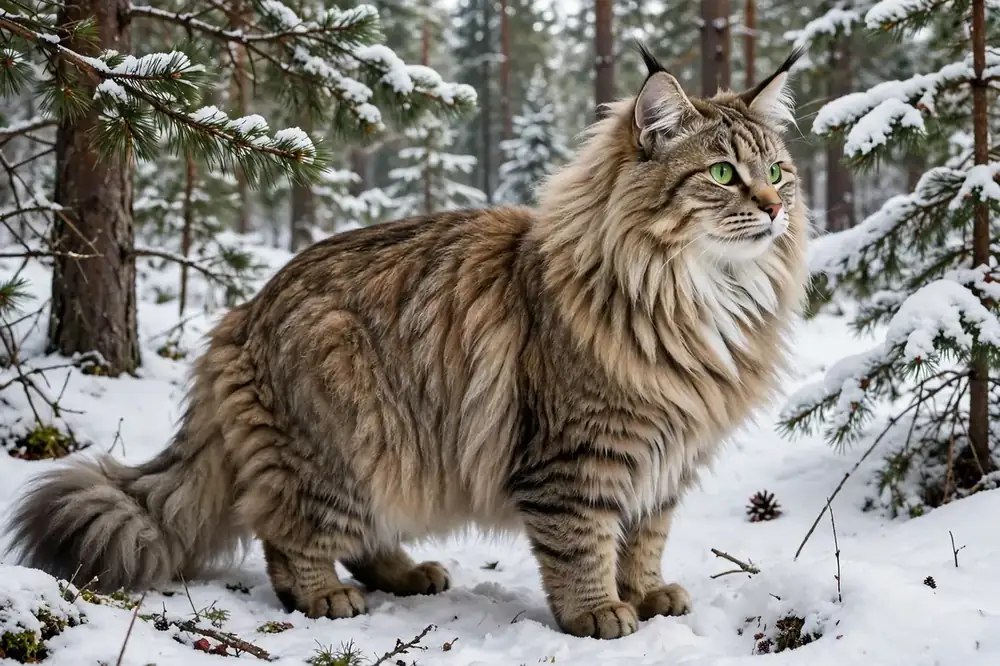
Few cats look like they walked straight out of a fairy tale, but the Norwegian Forest Cat comes close. Known in its homeland as the skogkatt — literally "forest cat" — this large, rugged breed developed naturally in the forests of Norway, where it survived icy winters and earned a place in Norse folklore. With a magnificent double coat, a bushy tail, and the heart of a climber, the Norwegian Forest Cat (often nicknamed the "Wegie") is equal parts wild beauty and gentle companion.
If you are drawn to big, fluffy cats with an independent spirit, this breed deserves a serious look. This guide covers everything you need to know: the breed's history, its striking appearance, its personality, daily care, grooming demands, health considerations, and how to decide whether a Norwegian Forest Cat fits your home and lifestyle.
Breed Overview & History
The Norwegian Forest Cat is one of Europe's oldest natural breeds. Longhaired cats have lived in Scandinavia for centuries, adapting to the harsh northern climate, and the modern breed descends directly from those hardy forest dwellers. Norse mythology even features longhaired cats — legend says the goddess Freyja's chariot was pulled by two giant cats, which many believe were the ancestors of today's Wegies.
Despite this ancient heritage, the breed is relatively new to the cat fancy. Norwegian breeders began a formal breeding program in the 1930s, but World War II interrupted the work. It was not until the 1970s that the breed gained official recognition in Europe, and it arrived in the United States a decade later. Today the Norwegian Forest Cat is loved worldwide, prized as a natural breed that was shaped by climate and survival rather than by extreme human design.
Unlike breeds created by crossing others, the Wegie is considered a "natural" breed — its traits, from the water-resistant coat to the powerful climbing legs, evolved to help it thrive in the wild. That heritage still shows in its behavior: these are athletic, resourceful cats with a strong connection to the outdoors, even when they live their whole lives inside.
Appearance & Coat
The Norwegian Forest Cat is one of the largest domestic cat breeds, with a solid, muscular build that looks powerful without being bulky. Males are noticeably larger than females, and the breed matures slowly — many Wegies do not reach their full size until around three to four years of age. Everything about them is built for cold weather and climbing: strong hind legs that are slightly longer than the front legs, large paws with tufts of fur between the toes, and a long, bushy tail carried proudly.
The head is triangular with a straight profile, strong chin, and large, expressive almond-shaped eyes. The ears are medium to large with tufts at the tips, and a full ruff of fur frames the neck like a lion's mane. The crowning glory, though, is the coat: a semi-long, dense double coat with a woolly undercoat and longer, glossy guard hairs that shed water. In winter the coat is at its fullest, complete with a thick ruff and "britches" on the hind legs; in summer it thins out considerably.
Wegies come in a wide range of colors and patterns, with and without white markings. Tabby, solid, tortoiseshell, and bicolor coats are all common. No matter the color, the overall impression is the same: a majestic, wild-looking cat that seems built for adventure.
Personality & Temperament
Norwegian Forest Cats strike a lovely balance between affection and independence. They are social cats that genuinely enjoy human company and usually bond closely with their family — but they are not typically clingy. A Wegie is more likely to settle beside you on the sofa than demand to be held, and they appreciate attention on their own terms. This easygoing confidence makes them a good fit for households that want a loving cat without a Velcro shadow.
Intelligence is another hallmark. These cats are curious problem-solvers that enjoy interactive toys, puzzle feeders, and games that challenge them. Their forest heritage also makes them exceptional climbers — they love heights and are famous for scaling straight down trees headfirst, a trick most cats cannot manage. Expect your Wegie to claim the highest shelf, the top of the wardrobe, or the tallest cat tree in the house.
Wegies are generally gentle and patient, which helps them get along with respectful children and other pets. They tend to be moderately vocal, communicating with a range of chirps, trills, and soft meows rather than constant chatter. Playful well into adulthood, they keep a kittenish streak that surprises many owners of such a dignified-looking breed.
Living With a Norwegian Forest Cat
A Norwegian Forest Cat adapts well to indoor life, but your home should respect its climbing instincts. A tall, sturdy cat tree is less of a luxury and more of a necessity — give them vertical territory and they will be far less tempted to scale your curtains or bookshelves. Wall-mounted shelves and window perches are also big hits with this breed, satisfying their love of surveying their kingdom from above.
These are active, athletic cats that need daily play to stay happy and fit. Wand toys, feather teasers, and fetch games all work well, and many Wegies enjoy puzzle toys that make them work for treats. Because they are large and muscular, they also eat a bit more than the average cat, so a high-quality diet in appropriate portions — guided by your veterinarian — matters, especially since indoor cats of any breed can drift toward extra weight.
Wegies are social enough that they usually do best in homes where they are not left alone for very long stretches. They often enjoy the company of another cat, particularly one with a similar energy level. If you work long hours, consider adopting a pair or arranging regular companionship. For more breed ideas, browse our cat breeds collection, and visit the Purrfect Paws homepage for everyday care tips.
Grooming Needs
That glorious coat does require maintenance, though less than you might expect. The silky texture of the guard hairs resists tangling, so a thorough brushing once or twice a week is usually enough for most of the year. Use a steel comb or a slicker brush, working gently through the ruff, the britches, and behind the ears — the spots where mats like to start.
Spring is the exception. When a Wegie sheds its heavy winter undercoat, loose fur comes out in clouds and mats can form quickly, especially in the armpits and around the collar area. During the spring shed, brush every couple of days and check for tangles by running your fingers through the coat. A bath is rarely needed — the coat is naturally dirt-resistant — but an occasional bath with a cat-safe shampoo can help during heavy shedding season.
Do not forget the routine basics: trim nails every few weeks, check and clean ears as needed (those tufted ears can collect a bit of wax), and keep up with dental care. Because Wegies drink and groom normally, most owners find the overall grooming load very manageable outside of spring.
Health Considerations
Norwegian Forest Cats are generally hardy — centuries of natural selection built a robust breed. That said, like all pedigreed cats, they can be prone to certain inherited conditions. The most discussed are hypertrophic cardiomyopathy (a heart condition seen across many breeds), hip dysplasia (unusual in cats but documented in this large breed), and glycogen storage disease type IV, a rare inherited disorder that responsible breeders screen for.
If you are buying from a breeder, ask directly about health testing: a reputable breeder will screen breeding cats and share results openly. Kittens should come with veterinary records, vaccinations, and a health guarantee in writing. Adopting from a breed rescue is another wonderful option — many Wegies and Wegie mixes wait for homes in shelters and rescues.
Day to day, keep up with annual veterinary checkups, vaccinations, parasite prevention, and a healthy weight. Large breeds can be prone to joint strain if they become overweight, so portion control and active play really matter. Any sudden change in appetite, energy, breathing, or litter box habits deserves a prompt vet visit.
Is This Breed Right for You?
A Norwegian Forest Cat could be a wonderful match if you want a large, striking cat with a calm, independent nature — and you can offer vertical space, regular play, and weekly grooming. They suit families, singles, and multi-pet homes alike, and their patient temperament makes them one of the more adaptable longhaired breeds.
Think twice if you want a constant lap cat, cannot commit to brushing during shedding season, or live in a very small space with no room for a tall cat tree. Also be honest about allergies: no cat is truly hypoallergenic, and a longhaired breed produces plenty of dander and loose fur.
The best next step is to meet the breed in person. Visit a reputable breeder or a breed rescue, spend time with adult cats as well as kittens, and ask lots of questions about temperament and health screening. A well-chosen Wegie repays the effort many times over — with years of quiet companionship, comic climbing antics, and that unmistakable wild beauty padding through your living room.
Frequently Asked Questions
Are Norwegian Forest Cats good with children and other pets?
Generally yes. Norwegian Forest Cats are known for being patient, gentle and sociable, which helps them fit well into family homes with respectful children. They usually get along with other cats and with cat-friendly dogs, especially when introduced gradually.
Do Norwegian Forest Cats shed a lot?
They shed moderately through most of the year but go through a heavy seasonal shed in spring, when they drop their thick winter undercoat. Regular brushing — more often in spring — keeps loose fur under control and prevents mats.
Are Norwegian Forest Cats lap cats?
They are affectionate but independent. Many enjoy sitting beside you or near you rather than on your lap, and they appreciate attention on their own terms. They bond deeply with their people but rarely demand constant cuddling.
Do Norwegian Forest Cats like water?
Many do show more curiosity about water than the average cat, likely because their water-resistant coat evolved to handle rain and snow. Still, every cat is an individual — do not expect yours to hop in the bathtub.
How big do Norwegian Forest Cats get?
They are one of the largest domestic cat breeds, with a sturdy, muscular build. Males are noticeably larger than females, and the breed matures slowly, often not reaching full size until around three to four years of age.