Orange Cat Personality: Are They Really Crazy?
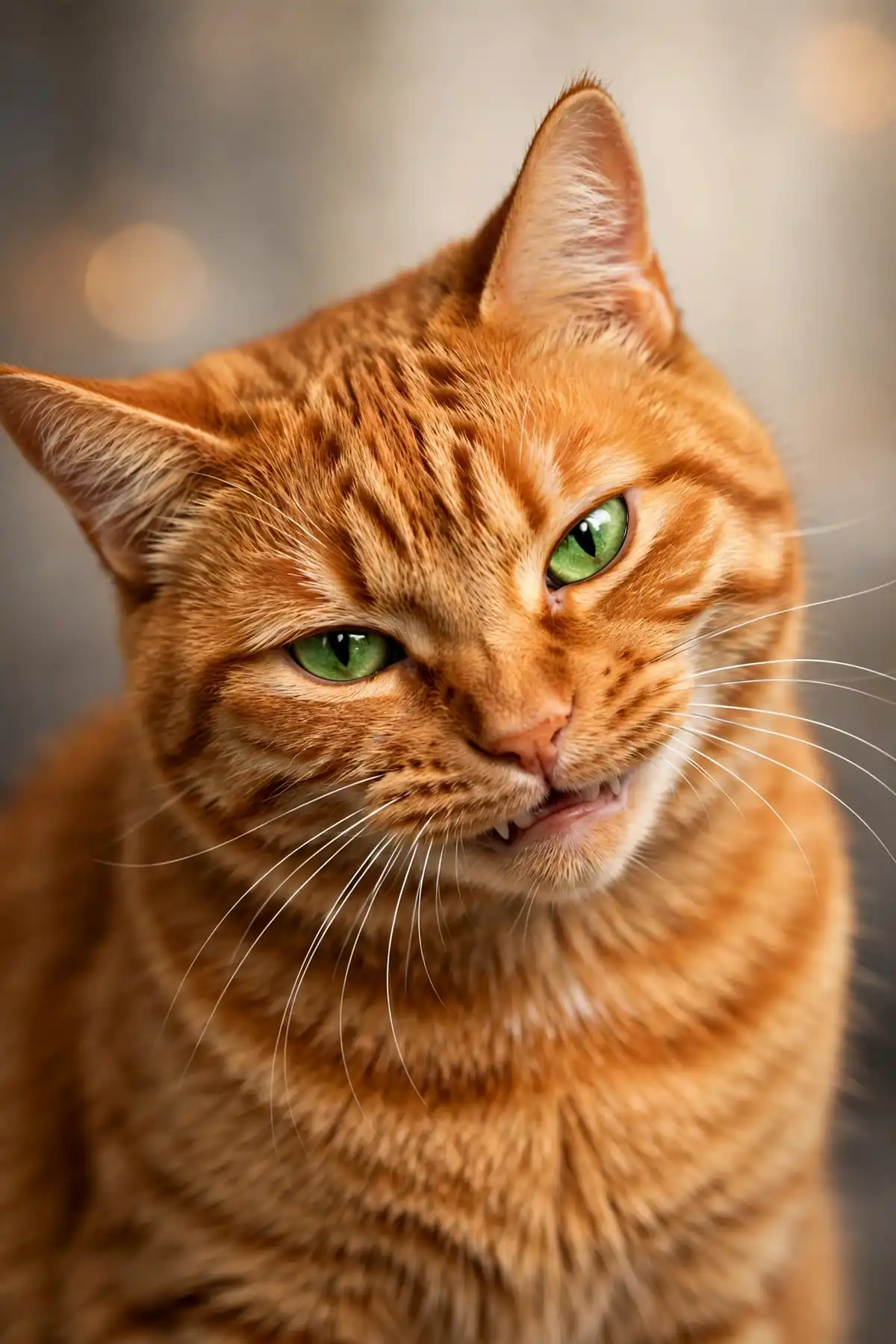
Are orange cats really crazy? No — orange cats are not scientifically proven to be any wilder, goofier, or "dumber" than other cats. But the "orange cat behavior" meme exists for a reason: ginger cats are often described by their owners as extra playful, extra social, and extra prone to dramatic 3 a.m. zoomies. The truth is a fun mix of real feline behavior, a dash of confirmation bias, and some genuinely fascinating genetics.
Whether you already share your home with a ginger agent of chaos or are wondering if the memes are warning you away, this guide separates orange cat fact from fiction — the real genetics behind orange coats, what behavior researchers actually know, and how to live happily with one of the internet's favorite felines.
The "Orange Cat Behavior" Meme, Explained
Somewhere in the depths of social media, a legend was born: orange cats share a single braincell, and they take turns using it. Videos of ginger cats walking into glass doors, screaming at empty rooms, falling off counters, and launching themselves into laundry baskets racked up millions of views, and the stereotype stuck: orange cats are chaotic.
Here is what the meme gets right: many owners of orange cats report high energy, bold playfulness, and a theatrical streak. Here is what it gets wrong: attributing that to the color itself. What we are really seeing is confirmation bias — when a ginger cat does something goofy, it gets labeled "orange cat behavior" and posted online; when a gray cat does the exact same thing, it is just a cat being a cat. No peer-reviewed study has found that orange cats are less intelligent or inherently crazier than cats of any other color.
That said, personality in cats is shaped by a real cocktail of genetics, early socialization, breed tendencies, and individual quirks. Coat color is a tiny ingredient in that mix — never the whole recipe.
Why Are Most Orange Cats Male?
Now for the genuinely cool science. Orange is one of the few cat coat colors with a strong sex bias, and the reason sits on the X chromosome. The gene responsible for orange pigment (called the O allele) lives on the X chromosome. Male cats have one X and one Y chromosome, so they need just one copy of the orange gene to turn ginger. Females have two X chromosomes, so they need the orange gene on both — one inherited from each parent.
The result: the vast majority of orange cats are male. Female orange cats absolutely exist — they are just less common, and orange-and-white "tortoiseshell-ish" females are their own beautiful story. This is also why almost all calico and tortoiseshell cats are female: the same X-linked genetics at work.
Every Orange Cat Is a Tabby
Here is another fact most people do not know: there is no such thing as a solid orange cat. The orange gene always produces tabby markings. That is why every ginger cat — no matter how pale or deep their color — carries stripes, swirls, spots, or the classic "M" on the forehead.
Orange tabbies come in several pattern flavors:
- Classic (blotched) tabby — bold swirls and marble-like patterns on the sides.
- Mackerel tabby — narrow tiger-like stripes, the most common ginger look.
- Spotted tabby — broken stripes that read as spots.
- Ticked tabby — each hair banded with color, giving a sandy, shimmering coat (common in Abyssinian-type oranges).
Ginger cats with white bibs, socks, and bellies get that white from a completely separate gene. Check out our cat breed guides to see how orange appears across breeds from Maine Coons to British Shorthairs.
What's Actually True About Orange Cat Personality
So if the "chaos gremlin" label is a meme, what do orange cats actually tend to be like? Honest answer: it varies enormously by individual. But a few tendencies show up often enough that owners keep mentioning them:
- Social and people-oriented. Many orange cats are described as dog-like in their devotion — following owners around, greeting visitors, and demanding to be in the middle of everything.
- Playful well into adulthood. That legendary energy? Often real. Plenty of ginger cats stay kittenish for years, which is delightful if you enjoy interactive play — and exhausting if you wanted a couch ornament.
- Confident and bold. Orange cats are frequently reported as less timid around strangers and new situations. Boldness reads as "chaos" when it sends a cat leaping onto the highest shelf in the house.
- Affectionate cuddlers. When the zoomies finally end, orange cats are famously snuggly — the "velcro cat" reputation is well earned in many households.
Is any of this hard science? Not exactly — coat-color research in cats is thin and mixed. Treat these as common owner observations, not genetic destiny: how your cat was raised, its breed background, and its own quirks matter far more than its fur.
Where Does the Chaos Stereotype Come From?
Part of the answer may be simple demographics. Because most orange cats are male, and young male cats in general tend to be among the most energetic, playful, and mischievous members of the species, people may be noticing male cat behavior and misattributing it to the orange coat. A rambunctious young ginger tomcat is really just doing what rambunctious young tomcats do — he is just doing it in a very photogenic color.
Add social media's love of a good narrative, and you get a self-reinforcing loop: the funniest clips get labeled "orange cat behavior," the label gets more searches, and more clips get filed under it. The meme is entertainment, not ethology — enjoy it as such.
Should You Adopt an Orange Cat?
If the memes have you hesitating, do not let them. An orange cat is not a breed — it is a color — so you will find ginger cats with every personality under the sun, from serene lap warmers to full-time comedians. The right question is never "are orange cats good?" but "is this cat a good fit for my home?"
Meet the individual cat. Ask the shelter or foster home about energy level, sociability, and how the cat handles noise and handling. If you want a playful, interactive companion, many orange cats will be perfect. If you need a calm, quiet cat for a small apartment, an older, mellower ginger — or one of the best cat breeds for kids and families — might suit you better. Color is the last thing to decide on; temperament is the first.
Living With an Orange Cat: Practical Tips
- Burn the energy. Two structured play sessions a day (morning and evening) with a wand toy or feather teaser will dramatically reduce the 3 a.m. zoomies.
- Feed the brain. Puzzle feeders and food-dispensing toys channel that curiosity into something other than your curtains.
- Go vertical. Tall cat trees and wall shelves give bold climbers an approved outlet for their mountaineering instincts.
- Secure the breakables. If your ginger cat is a counter-surfer, museum putty and closed cabinets are your friends. This is just sensible cat-proofing for any confident cat.
- Enjoy the comedy. The best thing about an orange cat's zest for life is that it is contagious. Lean in.
Orange cats are equal parts elegance and absurdity, and a ginger cat that trusts you is one of life's great joys — braincell jokes included. Explore our full cat breed collection for more breed deep-dives.
Frequently Asked Questions
Are orange cats really crazier than other cats?
There is no scientific evidence that orange cats are crazier or dumber than other cats. The stereotype comes from internet memes and confirmation bias. What is real: many orange cats are energetic, social, and playful — which owners lovingly describe as chaos.
Why are most orange cats male?
The orange color gene sits on the X chromosome. Male cats need only one copy of the gene to be orange, while females need two — one from each parent — so the vast majority of orange cats are male. Female orange cats exist but are less common.
Is an orange cat a breed?
No. Orange (ginger) is a coat color and pattern, not a breed. Orange cats can be domestic shorthairs, Maine Coons, Persians, British Shorthairs, and many other breeds. Every orange cat is technically a tabby, since the orange gene always produces tabby markings.
Do orange cats have more health problems?
The orange gene itself is not linked to any specific disease. Their health depends on breed, lifestyle, and care — not coat color. Their famously high energy can occasionally lead to adventure-related bumps, so good cat-proofing helps.
Are orange cats good family pets?
Many orange cats are affectionate, social, and playful, which makes them fun family companions. Meet the individual cat first — energy level and temperament vary much more between individuals than between coat colors.