Best Cat Breeds for Kids and Families
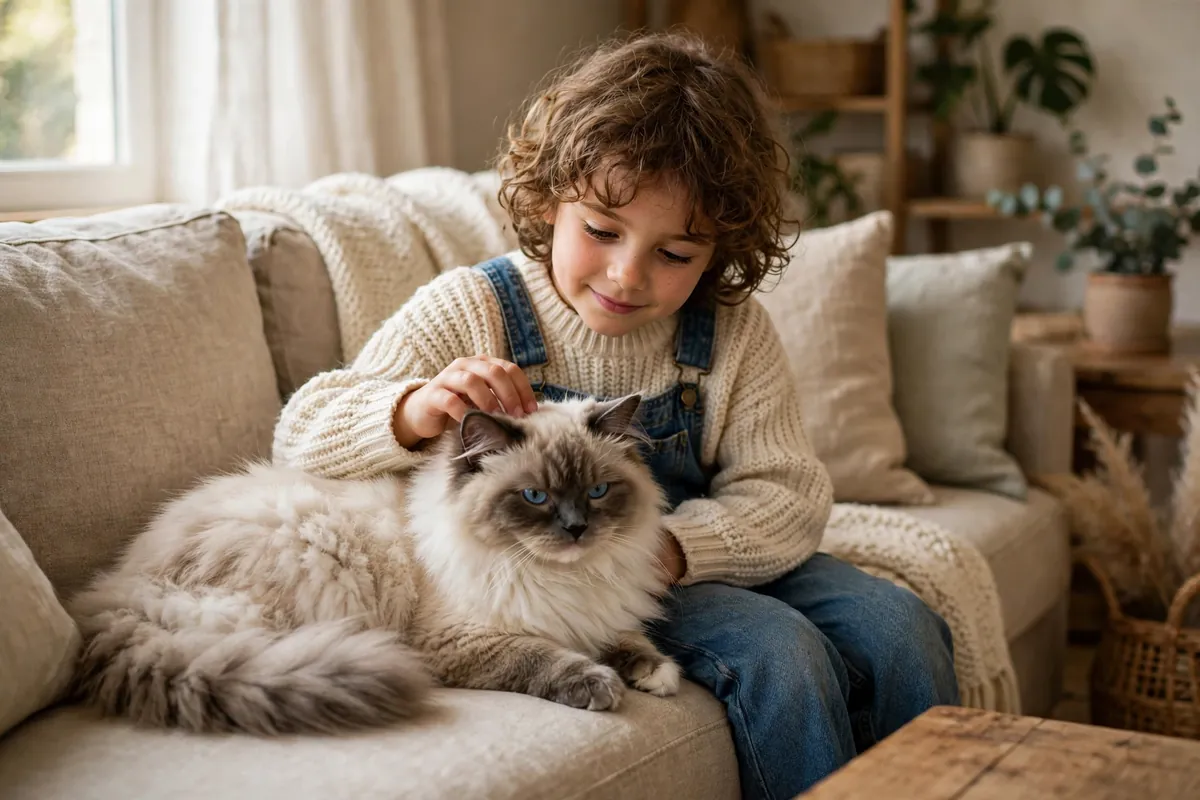
Looking for the best cat breeds for kids and families? The short answer: Ragdolls, Maine Coons, British Shorthairs, Birmans, Abyssinians, Scottish Folds, and Siamese top nearly every list of kid-friendly cat breeds, because they tend to be gentle, patient, and tolerant of the noise and clumsy handling that come with children. But breed is only half the story — the individual cat's temperament and socialization matter just as much.
Bringing a cat into a home with children can be wonderful: kids learn empathy and responsibility, and a calm cat becomes a genuine companion. The trick is choosing a cat whose personality fits family life rather than hoping for the best. This guide profiles the seven breeds that handle kids best and shares the safety ground rules that keep children and cats happy.
What Makes a Cat Breed Kid-Friendly?
Not every sweet-looking cat is a good family cat. When experts talk about kid-friendly cat breeds, they are really describing a bundle of traits:
- Patience and tolerance. Kids pull tails, grab ears, and squeal without warning. A family cat needs a high threshold before it swipes or bites.
- Calm around noise. Slamming doors, shouting games, and visiting cousins should not send the cat into a permanent hiding spot.
- Social and affectionate. Cats that actively seek company — sitting on laps, following family members — bond with children far better than aloof ones.
- Playful without rough edges. Energy is great for kids, but it should come with soft mouths and sheathed claws, not aggressive wrestling.
- Confidence. Nervous, easily startled cats feel stressed in busy homes. Confident cats take the chaos in stride.
Remember that early socialization shapes temperament enormously — a well-raised mixed-breed cat can outshine a poorly socialized pedigree. Browse our cat breed guides to learn each breed's personality in depth.
7 Best Cat Breeds for Kids and Families
1. Ragdoll — The Ultimate Family Cat
Ragdolls earn their name: when picked up, many go delightfully limp in your arms like a rag doll. This is the breed most often recommended for families with small children, and for good reason. Ragdolls are famously gentle, famously patient, and famously fond of following their people from room to room like puppies. They are large, sturdy cats, which means they are less fragile when a toddler hugs a little too hard — though hugs should always be supervised. Their long, silky coat needs brushing a couple of times a week, a small price for one of the most loving cat breeds you will ever meet.
2. Maine Coon — The Gentle Giant
Maine Coons are among the largest domestic cat breeds, and their size is matched by their easygoing nature. They are playful well into adulthood, enjoy the company of children without demanding constant attention, and are famously tolerant of being handled. Maine Coons are also sturdy enough to handle the occasional clumsy grab, and many adapt beautifully to the noise of a busy household. Their long coats need regular brushing, and their playful streak means they love interactive toys the whole family can enjoy. Read our full Maine Coon breed guide before deciding.
3. British Shorthair — The Calm Plush Bear
British Shorthairs are the steady, unflappable members of the cat world. With their round faces, dense plush coats, and calm demeanor, they are ideal for families that want a cat who stays relaxed while kids play nearby. They are affectionate without being clingy — happy to sit beside your child rather than demand constant attention. British Shorthairs are not usually lap-huggers, but they tolerate children well and rarely react with aggression. They also adapt well to apartment life, so they suit families in smaller homes. See our British Shorthair breed guide for details.
4. Birman — The Sweet-Natured Companion
Birmans combine the gentle temperament of the Ragdoll with the playful curiosity of the Siamese family they descend from. They are affectionate, social, and notably patient — they tend to communicate softly rather than acting out when something bothers them. Birmans bond closely with their families and usually get along well with other pets too, which matters in multi-pet homes. Their silky, single-layer coat mats less than you would expect for a longhaired breed, making grooming manageable for busy parents.
5. Abyssinian — The Playful Best Friend
If your kids want a cat that actually plays with them, the Abyssinian is a standout. These athletic, curious cats love games, puzzles, and climbing, and they bring an almost dog-like enthusiasm to family life. Abyssinians are smart and social — they thrive on interaction and can become destructive if left alone and bored all day, so they suit families where someone is usually home. They are slim and agile rather than cuddly lumps, so teach kids to respect their need for movement. Our Abyssinian breed guide covers their energetic personality in detail.
6. Scottish Fold — The Gentle Clown
Scottish Folds, with their folded ears and wide-eyed expressions, have a gentle, adaptable nature that works well in family homes. They are quiet, affectionate cats that bond with all family members rather than choosing one favorite. Folds are not high-energy, so they suit calmer households or families with older children who want a cuddle companion. One important note: the folded-ear trait is linked to a cartilage condition, so buy only from responsible breeders who health-test, or better yet, adopt a Fold-type mix from a shelter.
7. Siamese — The Chatty Family Member
Siamese cats are the extroverts of the cat world: vocal, social, and deeply involved in family life. Kids who want a cat that "talks back" and joins in activities often adore Siamese. They are intelligent and trainable, which makes them fun for older children who want to teach tricks or play fetch. The trade-off: Siamese demand attention and can be loud about it, so they suit families that are home a lot. Their short coat is easy to care for. Learn more in our Siamese breed guide.
Kid-Safety Tips Every Family Should Follow
Even the gentlest breed needs fair ground rules. These habits protect your kids and your cat:
- Always supervise toddlers and young children with the cat. No exceptions — a child can accidentally hurt a cat in seconds, and a startled cat can scratch.
- Teach the "one-finger pet" rule. Show kids how to stroke gently along the back and cheeks. No pulling tails, ears, or whiskers, and no picking the cat up without an adult.
- Give the cat an escape route. A quiet room, a high perch, or a cat tree the kids know is off-limits lets the cat decompress when it has had enough.
- Never wake a sleeping cat. Make this a household law. A startled cat may bite before it realizes what is happening.
- Trim claws regularly (or use soft nail caps) to reduce scratch damage during play.
- Wash hands after litter box contact and keep small children away from the litter box entirely.
Kitten or Adult Cat: Which Is Better for Kids?
Many families assume a kitten is the obvious choice — but for homes with small children, an adult cat of 1 to 4 years old is often the smarter pick. Kittens are fragile, their temperament is still forming, and their sharp little claws and teeth make playtime risky for young hands. An adult cat's personality is already set, so a shelter or breeder can match you with a proven calm, kid-tolerant individual. Shelters are full of gentle adult cats whose foster families can tell you exactly how they behave around children.
Frequently Asked Questions
What is the best cat breed for young children?
The Ragdoll is often considered the top choice for young children because of its famously calm, floppy, and patient temperament. The Maine Coon and British Shorthair are also excellent family cats, known for being gentle and tolerant of noise and handling.
What age is safe for a child to have a cat?
There is no fixed rule, but most experts recommend waiting until children are at least 4 to 6 years old before bringing home a cat, because younger toddlers can accidentally hurt a cat with rough grabbing. Families with toddlers can still succeed with very calm breeds if interactions are always supervised.
Are male or female cats better with kids?
Individual temperament matters far more than sex. That said, many owners find neutered males of gentle breeds like Ragdolls and Maine Coons especially laid-back and affectionate, while some females can be a little more independent. Meet the individual cat before deciding.
Which cat breeds should families with kids avoid?
Very shy, noise-sensitive, or high-strung individuals of any breed may struggle with loud, busy households. Any individual cat that shows fear or aggression around children needs a quieter home — regardless of breed.