Oriental Shorthair: Complete Breed Guide
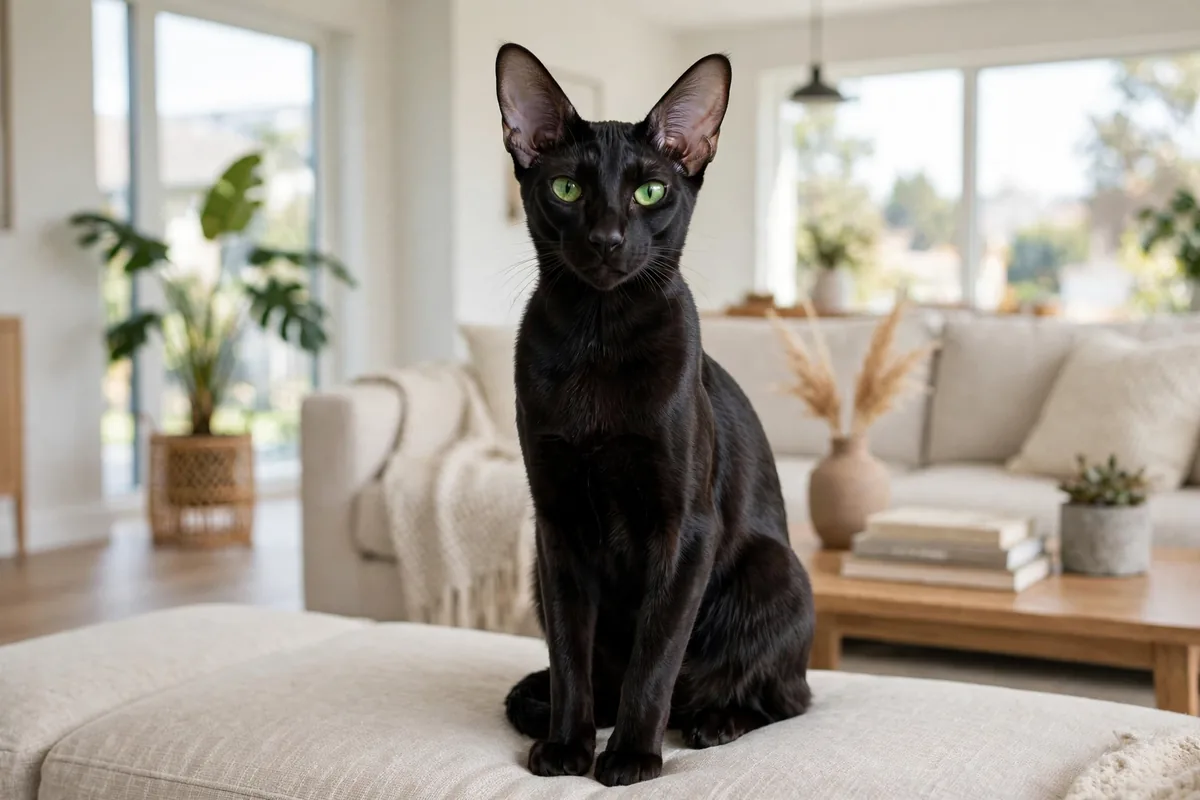
If the Siamese is the classic, the Oriental Shorthair is the same cat in every color you can imagine. Sleek, long, and elegant, with huge upright ears and a voice it is not shy about using, the Oriental Shorthair comes in more than 300 color and pattern combinations, from solid ebony to silver tabby to tortoiseshell. Underneath that variety is one consistent personality: clever, athletic, deeply people-focused, and famously talkative.
Orientals are not background cats. They follow you from room to room, comment on everything you do, and expect a reply. For the right owner that devotion is the whole point; for a quiet household that wants an independent cat, it can be a lot. This guide covers the breed's origins, appearance, temperament, grooming, health, and how to decide whether an Oriental Shorthair fits your life.
Oriental Shorthair at a Glance
The Oriental Shorthair is a medium-sized cat, usually weighing between 2.5 and 5.5 kilograms, with a long, tubular body, fine bones, and a short coat that lies close to the body. The ears are strikingly large and upright, the eyes are almond-shaped and usually green, and the tail is long and tapering. Everything about the breed is long and angular, from the wedge-shaped head to the slim legs.
Orientals are highly active and intensely social. They play hard, climb high, and bond strongly to their people, often choosing one favorite person to shadow. They typically live 12 to 15 years, and they stay energetic and curious well into old age. If you work from home, expect a supervisor on your desk.
Origin and History: A Siamese in Every Color
The Oriental Shorthair was developed in England in the 1950s and 1960s, when breeders crossed Siamese cats with other breeds, including the Russian Blue, the British Shorthair, and the Abyssinian, aiming to create a cat with the Siamese body and temperament in colors other than the classic pointed pattern. The solid-color offspring were first shown as a separate variety, and over time the breed was recognized in its own right.
In the United States the breed developed along similar lines, with American breeders expanding the color range even further. Today the Oriental Shorthair is recognized in more color and pattern combinations than almost any other breed, and its Siamese heritage is obvious in its voice, its build, and its devotion to people.
Appearance: 300 Colors, One Elegant Shape
The Oriental Shorthair's signature is variety. The breed standard recognizes more than 300 color and pattern combinations, including solid ebony, white, blue, cream, red, and chocolate, plus tabby, tortoiseshell, smoke, and shaded patterns. Whatever the color, the coat is short, fine, and glossy, lying flat against the body with a satin sheen.
The body is long and svelte, with a wedge-shaped head, a straight profile, and ears so large they look almost oversized on a kitten. The eyes are almond-shaped and set at a slant, usually a vivid green, though white Orientals may have blue or odd-colored eyes. The overall impression is of a cat drawn with long, clean lines.
Personality and Temperament: The Loudest Talker in the Cat World
Oriental Shorthairs are often described as the loudest talkers in the cat world, and the description is fair. They meow, chirp, and trill to comment on meals, greet you at the door, complain about a closed door, and narrate their day. If you want a quiet cat, this is not the breed. If you enjoy a running conversation with your pet, you will love it.
They are also famously athletic and demanding. Orientals love to climb, fetch, learn tricks, and solve puzzle feeders, and they get bored quickly without stimulation. They bond hard to their people and can become distressed if left alone for long hours, so they do best in homes where someone is around most of the day, or where a second cat keeps them company.
Grooming a Short Sleek Coat
Grooming an Oriental Shorthair is wonderfully easy. The short, fine coat needs only a weekly brush with a soft brush or grooming glove to remove loose hair and keep the shine. They shed lightly, and most owners find a quick weekly session is enough, with a little extra during seasonal changes.
As with any cat, keep the claws trimmed, the ears checked, and the teeth brushed when you can. Orientals are prone to dental problems, so dental care matters more for this breed than for many others. A routine of gentle handling from kittenhood makes all of it easy.
Oriental Shorthair Health and Lifespan
Oriental Shorthairs typically live 12 to 15 years. Because they share the Siamese gene pool, they share some of its health risks. Dental disease is common, so regular veterinary dental checks help. Some lines carry a risk of progressive retinal atrophy, an eye condition that gradually affects vision, and a small number of cats develop amyloidosis, a liver condition seen in Siamese-related breeds.
Respiratory issues, including asthma, also appear in this family of breeds. Choosing a breeder who screens for these conditions and buying from lines with good health records makes a real difference. Keep your Oriental at a healthy weight, feed a complete and balanced diet, and book annual vet check-ups, and you give your cat the best chance of a long, healthy life.
Is the Oriental Shorthair Right for You?
The Oriental Shorthair is right for you if you want a cat that acts like a companion, not a decoration. You will get a clever, athletic, talkative friend that follows you around, plays fetch, learns tricks, and greets you loudly every time you come home. It is an excellent choice for active owners, families with older children, and anyone who works from home and enjoys company.
It is not right for you if you want a quiet, independent cat, or if you are away from home for ten hours a day. An Oriental left alone and understimulated can become bored, vocal, and destructive. But if you can give this cat attention, play, and conversation, few breeds return the investment so generously.
Frequently Asked Questions
Are Oriental Shorthairs hypoallergenic?
No cat breed is truly hypoallergenic, including the Oriental Shorthair. They do shed less than many longhaired breeds and have a short, fine coat, which some allergy sufferers find easier to live with, but they still produce the Fel d 1 protein that triggers allergies. Spend time with the breed before committing if allergies are a concern.
How much does an Oriental Shorthair cost?
From a reputable breeder, an Oriental Shorthair kitten usually costs between $800 and $2,000, depending on color, pedigree, and location. Rare colors and show-quality kittens cost more. Rescue and breed-specific adoption groups sometimes have Orientals for a much lower fee.
Do Oriental Shorthairs get along with other pets?
Yes, usually very well. Orientals are social cats that often enjoy the company of other cats, especially another Oriental or Siamese, and they generally adapt well to cat-friendly dogs. Early introductions and a gradual meeting process work best, as with any breed.
Why does my Oriental Shorthair meow so much?
Talking is the breed's nature. Oriental Shorthairs use their voice to greet you, ask for food, demand play, and comment on their surroundings. Sudden increases in meowing, especially at night or alongside appetite or litter-box changes, are worth a vet check, but everyday chattiness is normal for this breed.
Are Oriental Shorthairs good for first-time cat owners?
They can be, if you understand what you are getting. A first-time owner who is home a lot, enjoys an interactive cat, and is ready for daily play and conversation will love an Oriental. If you want a low-maintenance, independent cat, a calmer breed may be a better first choice.