Scottish Fold: Breed Guide
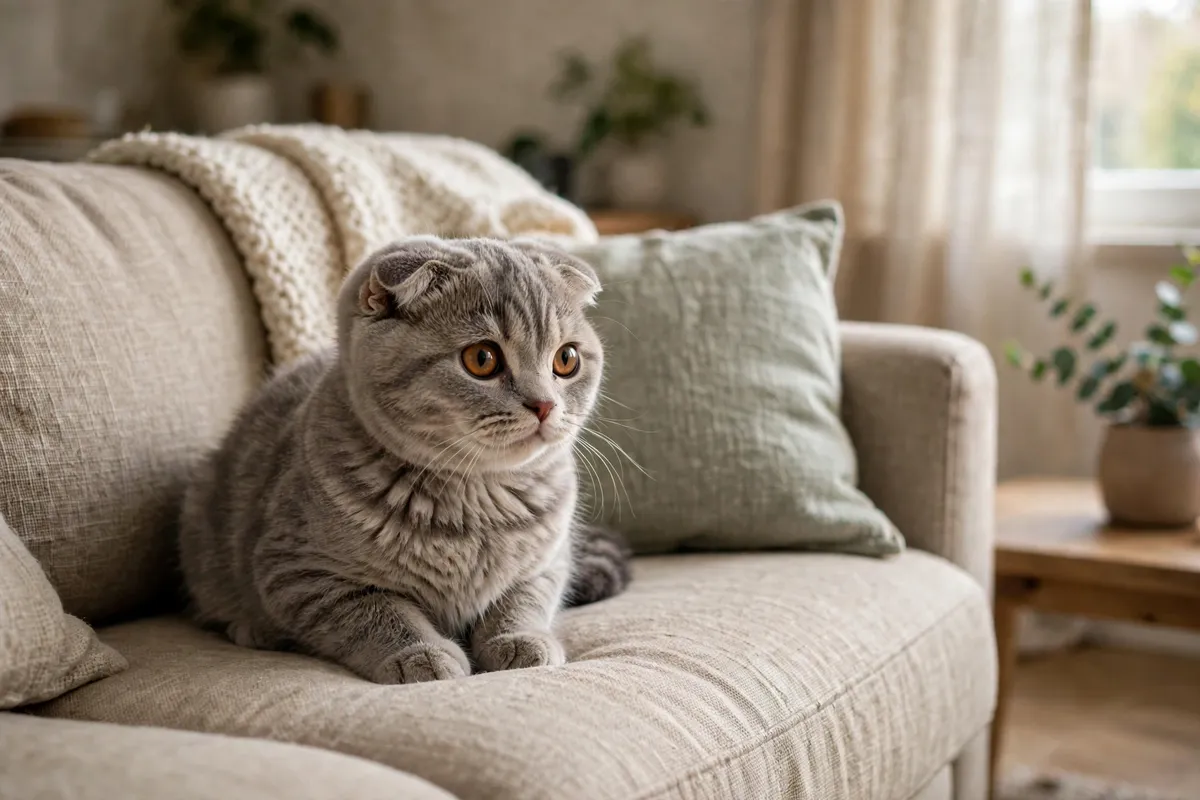
Is a Scottish Fold right for you? If you want a calm, gentle, owl-faced companion who adores couch time and gets along with almost everyone, the Scottish Fold is hard to beat. Behind those famous folded ears is a famously easygoing, affectionate personality that suits apartments, families, and first-time owners alike.
But those ears carry a story every responsible owner should know. Below: the breed's origin, the genetics behind the fold, temperament, grooming, the joint condition linked to the gene, typical costs, and whether a Fold fits your home.
Scottish Fold Origin and History
Every Scottish Fold alive today traces back to a single barn cat in Scotland. In 1961, on a farm near Coupar Angus, a shepherd named William Ross noticed a white cat named Susie whose ears folded forward instead of standing upright. Ross acquired one of Susie's kittens, Snooks, and with geneticist help began a breeding program that produced the folded-ear trait reliably.
The breed crossed the Atlantic in the early 1970s, where breeders outcrossed it with American Shorthairs and British Shorthairs to widen the gene pool; the Cat Fanciers' Association granted championship status in 1978. The long-haired variety — the Highland Fold — developed alongside the shorthair, and today the Fold is one of the most popular pedigree breeds in the US.
Why the Ears Fold: The Genetics, Briefly
The folded ear is caused by a dominant gene mutation affecting cartilage development. When a kitten inherits the gene from one parent, cartilage in the ear pinna stays soft instead of stiffening, so the ear tip flops forward — sometimes in a single fold, sometimes in a double or even triple fold that lies almost flat against the head.
Surprisingly, all Scottish Fold kittens are born with straight ears; the fold appears around 3 to 4 weeks in kittens carrying the gene. Kittens whose ears never fold — called Scottish Straights — are still genuine Scottish Folds.
The same mutation that folds the ears affects cartilage everywhere in the body, which is why ethical breeders never breed two folded-ear cats together and why the breed carries a known joint condition — covered honestly below.
Scottish Fold Personality and Temperament
Scottish Folds have a reputation as the teddy bears of the cat world, and it is well earned. Most Folds are:
- Calm and gentle. They are not typically hyper or destructive. A Fold is more likely to follow you quietly from room to room than to race up the curtains.
- People-oriented but not clingy. Folds bond closely and like being near you, though many prefer sitting beside you rather than on you.
- Soft-voiced. They tend to have a quiet, almost chirpy meow and are not known for yowling.
- Playful in moderation. They enjoy wand toys, puzzle feeders, and the occasional game of fetch — in short sessions rather than marathon zoomies.
- Adaptable. Folds adjust well to new homes, routines, and visitors — a forgiving choice for first-time owners.
Two quirks made them internet-famous: the "Buddha sit" — sitting upright like a person — and sleeping flat on their backs. Both are normal Fold habits, but mention any new stiffness to your vet.
Living With a Scottish Fold: Home and Family Fit
Apartments: Excellent. Their low activity level and quiet voices make Folds one of the best breeds for apartment living — a scratching post, window perch, and 10–15 minutes of daily play keep them content.
Families with children: Very good, with a caveat. Folds are patient and rarely lash out, but dislike rough handling — teach children to pet gently and never yank tails or tug folded ears.
Other pets: Folds generally coexist peacefully with other calm cats and with cat-friendly dogs, especially when introduced gradually. Because they are not fighters, pair them with easygoing companions rather than dominant, high-energy animals.
A Fold handles a normal workday alone fine, but they get lonely with very long daily absences — if you are away 10+ hours regularly, consider a companion cat.
Grooming a Scottish Fold
The short-haired Scottish Fold is pleasantly low-maintenance: a weekly brushing with a soft brush or grooming mitt removes loose hair and keeps the coat glossy. The long-haired Highland Fold needs brushing two to three times a week to prevent tangles and mats, especially around the collar and hindquarters.
The folded ears trap warmth and moisture, so wax builds up faster. Check them weekly and clean visible wax with a vet-approved cleaner on a cotton ball — never go deep into the canal. Dark discharge, odor, or head-shaking means a vet visit to rule out mites or infection.
Trim nails every two to three weeks, and brush more in spring and fall when Folds shed heaviest — a weekly de-shedding session helps a lot.
Health Concerns: Joints and Osteochondrodysplasia
This is the section to read carefully before buying a Scottish Fold. The gene that folds the ears — osteochondrodysplasia — is a cartilage disorder that affects the whole skeleton. Every cat with folded ears has it to some degree; severity varies enormously.
In mild cases, a Fold lives a normal, comfortable life. In more affected cats, the disorder causes thickened, stiff joints — often noticeable first in a short, inflexible tail or in hind legs that seem reluctant to jump or bend. Over time it can progress to arthritis-like changes. Signs worth watching for include:
- Stiffness after rest, reluctance to jump or climb.
- A tail that feels thick or does not flex normally.
- Changes in gait, such as a stilted or "waddling" walk.
- Avoiding the litter box if the sides are high.
- New irritability when handled around the legs or back.
This does not mean every Fold suffers — many live 12–15 comfortable years. But responsible breeding matters enormously: reputable breeders never mate two folded-ear cats (fold-to-fold pairings greatly raise the risk of severe disease) and show you the parents' health records. Keep your Fold lean, ask how the breeder screens for joint problems, and make annual mobility-focused vet checkups non-negotiable.
How Much Does a Scottish Fold Cost?
Prices vary by region, lineage, and coat type, but as a general guide in the US market:
- Pet-quality kitten from a reputable breeder: roughly $800 to $2,000.
- Show or breeding-quality kitten: often $2,000 and up.
- Adoption/rescue: $75 to $300 — breed-specific rescues occasionally have Folds and Fold mixes.
A responsible breeder health-screens their cats, avoids fold-to-fold pairings, lets you meet the mother, and provides full vet records. Be suspicious of bargain prices, hidden parents, or no-questions-asked sales. Budget also for the usual essentials — food, litter, vet care — plus a cushion for potential joint care later in life.
Is a Scottish Fold Right for You?
A Scottish Fold is a wonderful match if you want a gentle, quiet, adaptable companion and you are prepared for the breed's one real caveat: the cartilage condition behind those ears. Choose a breeder who breeds responsibly, keep your Fold lean and active, and stay alert to stiffness as they age.
If you prefer a high-energy playmate, plan to be away from home constantly, or want a breed with the simplest possible health profile, another breed may suit you better — browse our Cat Breeds section to compare. And if you are already set on a Fold, start with our full article library for feeding, grooming, and care basics that apply to every cat, including yours.
Frequently Asked Questions
Are all Scottish Fold kittens born with folded ears?
No. Every Scottish Fold kitten is born with straight ears. The fold develops between about 3 and 4 weeks of age in kittens carrying the gene — kittens whose ears never fold are still Scottish Folds (sometimes called Scottish Straights) but cannot show or pass on the folded look in the same way.
Do Scottish Folds have health problems because of their folded ears?
The same gene also affects cartilage throughout the body, so every folded-ear cat carries some degree of osteochondrodysplasia. Severity varies widely — many live comfortably — but breeders should avoid fold-to-fold pairings, and owners should watch for stiffness at vet checkups.
Are Scottish Folds good with kids and other pets?
Yes. Scottish Folds are famously gentle, quiet, and tolerant, which makes them a natural fit for families with respectful children and for homes with other calm pets. They dislike rough handling, so teach children to pet gently and avoid grabbing their tail or legs.
How much does a Scottish Fold kitten cost?
From a reputable breeder, pet-quality kittens generally run $800 to $2,000 or more, depending on lineage, region, and rights. Prices far below that can signal poor health screening.
Do Scottish Folds shed a lot?
Short-haired Scottish Folds shed a moderate amount and do well with weekly brushing. Long-haired varieties (often called Highland Folds) shed more and need brushing several times a week to prevent mats. Shedding usually increases in spring and fall.