Serengeti: Complete Breed Guide
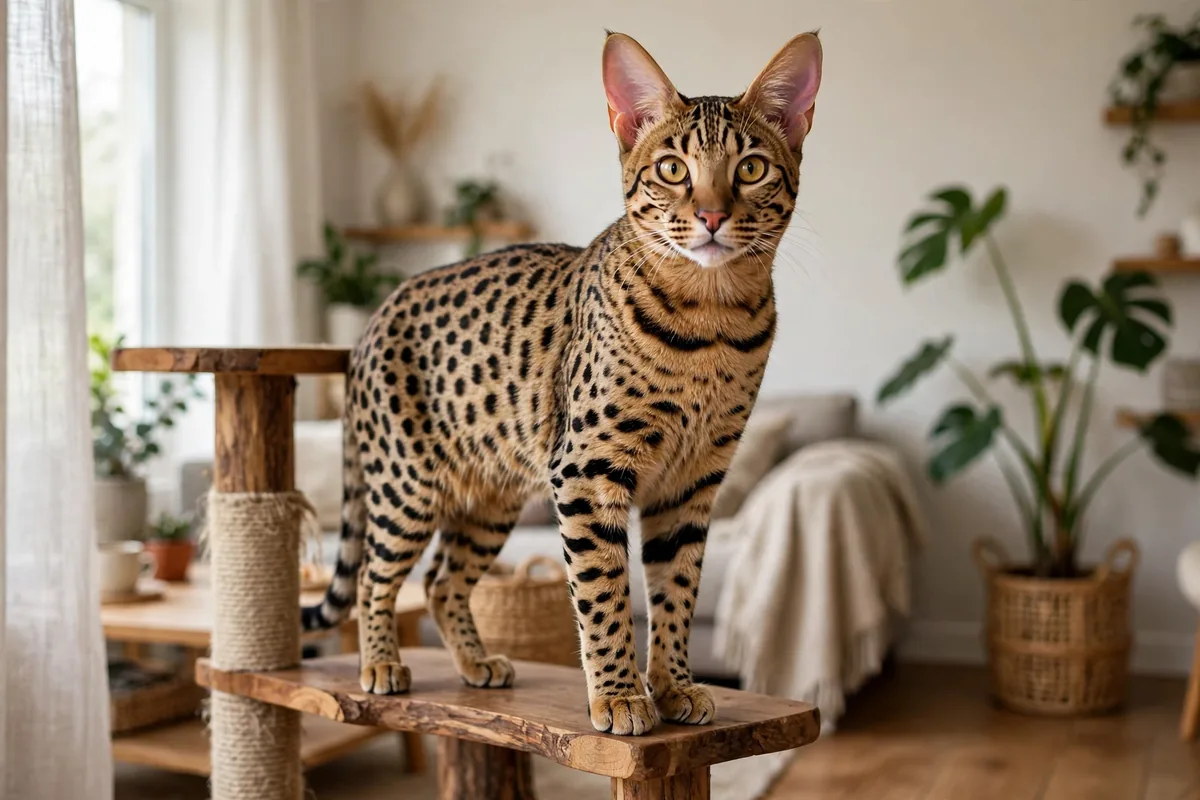
The Serengeti looks like it stepped out of the African savanna: tall, long-legged, golden-spotted, with huge ears and a serval's confident stare. The surprise is that there is no wild blood in this breed at all. The Serengeti was created by crossing Bengal cats with Oriental Shorthairs, producing a cat that looks wild but is fully domestic, affectionate, and deeply bonded to its people.
That wild look comes with wild energy. Serengetis are athletic, vocal, and endlessly curious, and they need space to climb, run, and play. If you can give them that, you will get one of the most entertaining and loyal cats you can own. This guide covers the breed's origins, appearance, temperament, exercise needs, grooming, and health.
Serengeti at a Glance
The Serengeti is a large, long-legged cat, usually weighing between 3.5 and 7 kilograms, with a golden or silver coat covered in bold black spots. The ears are very large and upright, the neck is long, and the legs are long and powerful, giving the cat a tall, elegant silhouette that really does recall a serval.
Serengetis are extremely active and highly social. They love to climb to the highest point in the room, play fetch, and talk to their owners in a range of chirps and meows. They typically live 12 to 15 years, and they need an owner who enjoys an energetic, involved cat rather than a quiet lap ornament.
Origin and History: A Serval Look Without Wild Blood
The Serengeti was developed in California in the 1990s by biologist and breeder Karen Sausman, who wanted to create a cat with the look of a serval but without using any wild cats in the breeding. She crossed Bengal cats, which already carry a spotted wild look, with Oriental Shorthairs, which contributed the long legs, large ears, and sleek body.
The first Serengetis appeared in 1994, and the breed was recognized by cat associations in the years that followed. Unlike the Savannah, which is a hybrid with real serval ancestry, the Serengeti is a fully domestic breed, which makes it legal to own everywhere and easier to live with, while still looking strikingly wild.
Appearance: Spots, Ears, and Long Legs
The Serengeti's coat is its showpiece: a short, glossy coat in golden, silver, or smoke, covered in bold, random black spots that are larger and more widely spaced than a Bengal's rosettes. The belly is lighter, the tail is ringed, and the overall pattern is designed to echo the serval's markings.
The body is long and muscular, with a wedge-shaped head, a straight profile, and ears that are among the largest of any domestic breed, set upright and close together. The legs are long and the paws are oval, giving the cat a tall, leggy stance. Everything about the Serengeti says speed, height, and alertness.
Personality and Temperament: High Energy, High Devotion
Serengetis are confident, curious, and constantly on the move. They climb to the top of cat trees, bookshelves, and door frames, and they will investigate anything new in the house. They are also very vocal, using a wide range of meows, chirps, and trills to communicate, and they form strong bonds with their owners, often choosing one person to follow around.
They are not a good fit for a quiet, low-energy household. A bored Serengeti can become destructive, opening cupboards, knocking things off shelves, and demanding attention at 3 a.m. But for an active owner who provides climbing space, interactive play, and puzzle feeders, the Serengeti is endlessly entertaining and deeply affectionate.
Grooming a Short Spotted Coat
Grooming a Serengeti is easy. The short, close-lying coat needs only a weekly brush with a soft brush or grooming glove to remove loose hair and keep the shine. They shed lightly, and most owners find that one quick session a week is plenty.
Because Serengetis are so active, it is worth checking their claws regularly, as they wear them down on climbing posts and rough play, and keeping the ears clean. Dental care matters too, as the Oriental side of the family is prone to dental problems. A routine of gentle handling from kittenhood makes all of it simple.
Serengeti Health and Lifespan
Serengetis typically live 12 to 15 years and are generally healthy, benefiting from the hybrid vigor of their Bengal and Oriental parentage. There are no major breed-specific diseases, though they can be prone to the same issues as their parent breeds, including dental disease and, in some lines, urinary problems.
The biggest health risk for a Serengeti is not genetic but lifestyle: a bored, under-exercised cat that overeats can gain weight quickly, and obesity brings its own problems. Keep your Serengeti active with climbing, play, and measured feeding, choose a breeder who health-screens, and book annual vet check-ups.
Is the Serengeti Right for You?
The Serengeti is right for you if you want a stunning, athletic, endlessly entertaining cat and you have the space and energy to match. You will get a loyal, vocal companion that climbs to the top of the room, plays fetch, and greets you with a chirp every time you come home. It suits active owners, families with older children, and anyone who enjoys a cat with a real personality.
It is not right for you if you want a calm, quiet lap cat, or if you live in a small flat with no room for climbing. A Serengeti needs vertical space, daily play, and company, and without them it will find its own entertainment, usually at your expense. Give it what it needs, and it will repay you many times over.
Frequently Asked Questions
Is the Serengeti part serval?
No. Unlike the Savannah, which is a hybrid with real serval ancestry, the Serengeti is a fully domestic breed created by crossing Bengal cats with Oriental Shorthairs. It looks like a serval by design, but it has no wild blood, which is why it is legal to own everywhere and generally easier to live with.
How much exercise does a Serengeti need?
A lot. Serengetis need daily interactive play, climbing structures, and mental stimulation such as puzzle feeders and training sessions. A tall cat tree, wall shelves, and at least two or three play sessions a day will keep a Serengeti happy. Without enough activity, they can become bored and destructive.
Are Serengetis good with children and other pets?
Serengetis usually do well with older children who understand how to play gently with an energetic cat, and they often enjoy the company of other active cats. They can live with cat-friendly dogs, but their high prey drive means small pets such as hamsters or birds should be kept safely separate.
How much does a Serengeti kitten cost?
From a reputable breeder, a Serengeti kitten usually costs between $1,000 and $2,500, depending on pedigree, markings, and location. The breed is still uncommon, so you may need to join a waiting list. Always check the breeder's health screening and living conditions before committing.
Do Serengetis shed a lot?
No, Serengetis have a short, close-lying coat that sheds lightly. A weekly brush is usually enough to keep shedding under control. They are not hypoallergenic, though, and they still produce the Fel d 1 protein, so allergy sufferers should spend time with the breed first.