Siberian Cat: Complete Breed Guide
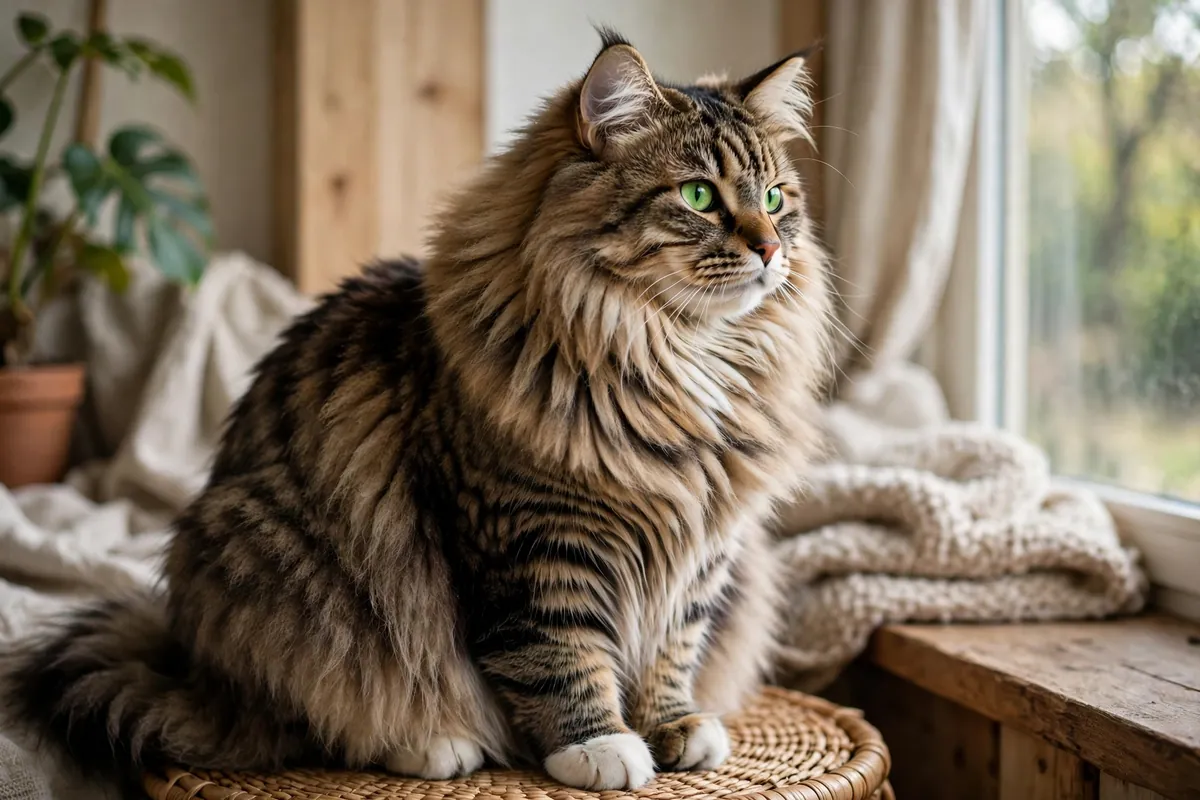
The Siberian cat is a large, gentle forest cat from Russia, known for its magnificent triple coat, dog-like loyalty, and calm, affectionate nature. Shaped by nature over centuries in Siberia's harsh climate, this breed combines rugged hardiness with a sweet temperament. If you want a big, fluffy companion who follows you around and curls up on your lap, the Siberian deserves a serious look.
Siberian Cat Breed at a Glance
- Origin: Russia (a natural breed).
- Size: Large: males 6–9 kg, females 4–6 kg.
- Coat: Long, thick triple coat, seasonal.
- Temperament: Affectionate, loyal, playful, and calm.
- Lifespan: 12–15 years.
- Maturity: Slow — full size by ~5 years.
- Good with: Children, cats, cat-friendly dogs.
History: A Natural Breed From the Russian Forests
Unlike many modern breeds, the Siberian was not created by selective crossing. Cats resembling Siberians have lived in Russia for at least a thousand years and appear in fairy tales as loyal, clever companions. The breed developed naturally in the forests of Siberia, where only the hardiest cats survived the long, freezing winters — which explains the dense triple coat and sturdy build.
First exported in the late 1980s, Siberians are now recognized by all major cat registries and remain one of the few truly "natural" breeds — shaped by climate and survival, not human design.
Temperament and Personality
Siberians are often described as dog-like, and for good reason. They bond closely with their people, greet owners at the door, and follow them around the house. They are affectionate without usually being demanding, and many enjoy sitting on laps or sleeping nearby.
They are also playful and intelligent, enjoying interactive play, puzzle feeders, and fetch, and often stay kittenish well into adulthood. They tend to be tolerant of children and other pets, including dogs, if introductions are gradual. They are calm and adaptable, but dislike being left alone for long stretches.
The Fel d 1 Myth: Are Siberians Hypoallergenic?
Here is the honest truth: no cat breed is truly hypoallergenic, and Siberians are no exception. Cat allergies are mostly triggered by Fel d 1, a protein in a cat's saliva and skin oils that spreads onto fur during grooming. Some Siberians appear to produce lower Fel d 1 levels, and many allergy sufferers report milder reactions — but this varies enormously between cats, and some produce normal levels.
That variation is exactly why you should never buy a Siberian on the promise that it will not trigger your allergies. If allergies are a concern, spend time with the specific cat first — ideally several visits in the breeder's or shelter's home — before committing. Some breeders offer Fel d 1 testing for individual cats, which can help, but even a low result is not a guarantee of no reaction. Talk to your doctor about allergy management before bringing any cat home.
The Triple Coat and Seasonal Shedding
The Siberian's coat is one of its defining features: a dense undercoat, a longer guard coat, and a middle layer, all working together to insulate against cold. In winter it becomes thick and full, with a ruff around the neck and fluffy "britches" on the hind legs. In summer it thins considerably, and some Siberians look much slimmer.
That seasonal change means shedding comes in waves: heavy shedding in spring and autumn as the coat switches between winter and summer versions, and moderate shedding the rest of the year. The good news is that the Siberian coat is surprisingly low-maintenance for its length — somewhat water-resistant and less prone to matting than many other long-haired coats. Brushing once or twice a week — three or four times in shedding season — is usually enough, with attention behind the ears and under the armpits.
Slow Maturity: A Kitten for up to 5 Years
New Siberian owners are often surprised by how slowly these cats grow up. While most cats reach full size by about a year old, Siberians keep growing until around five years old. A two-year-old may still look lanky, and males keep broadening into their third and fourth years.
Slow maturity also shows in behavior: Siberians often keep playful, kitten-like energy for years, so do not expect a calm, settled adult at twelve months. Feeding should be adjusted as they grow — a growing Siberian needs a complete, balanced diet for its age, and your vet can advise when to switch from kitten food to adult food, since the long growth period makes the timing less obvious.
Grooming Routine
- Brushing: Once or twice a week normally, three to four times in shedding season, with a steel comb or slicker brush.
- Bathing: Rarely needed — only when genuinely dirty; the water-resistant coat makes baths a patient job.
- Nails: Trim every two to three weeks, or provide sturdy scratching posts.
- Ears and teeth: Check ears weekly for dirt or redness, and brush teeth several times a week if tolerated.
- Mats: Check behind the ears, under the armpits, and around the collar regularly, and gently work out tangles before they tighten.
Exercise and Play
Siberians are active, athletic climbers and jumpers, so a tall cat tree or wall shelves will be well used. Daily interactive play — wand toys and fetch — keeps them fit and mentally stimulated. Some even enjoy water, paddling a paw in their water bowl.
Puzzle feeders, rotating toys, and short training sessions (Siberians can learn tricks and even to walk on a harness) also help prevent boredom — a bored Siberian may invent its own entertainment, usually involving knocking things off shelves.
Health Issues and Lifespan
Siberians are generally a hardy, healthy breed, helped by their natural origins and diverse gene pool, with a lifespan of around 12 to 15 years. Like all breeds, they have some conditions to be aware of:
- Hypertrophic cardiomyopathy (HCM): A heart condition seen in many breeds; responsible breeders screen with heart ultrasounds — ask about HCM screening.
- Polycystic kidney disease (PKD): Less common in Siberians, but worth asking breeders about.
- Obesity: The most common everyday risk: Siberians are big, food-loving cats, and slow growth makes it easy to overfeed a young cat that still looks slim. Extra weight strains joints and raises the risk of diabetes.
Regular vet checkups, a suitable diet, and a healthy weight are the best steps toward a long, healthy life together.
Obesity Risk: Keeping a Big Cat at a Healthy Weight
Because Siberians are large and love food, weight management deserves attention. It is easy to mistake a growing Siberian's appetite for a need for more food, and treats add up quickly in a cat this size. Feed measured meals, follow your vet's portion guidance, and use play to burn energy. You should feel your cat's ribs with light pressure and see a slight waist from above — if not, ask your vet about a weight plan. Crash diets are dangerous for cats, so weight loss must be gradual and vet-supervised.
Is a Siberian Right for Your Home?
Siberians suit families with children, multi-pet households, and first-time owners prepared for grooming and play. They adapt well to apartment living with daily play, climbing space, and companionship — a lonely, under-stimulated Siberian will not thrive. They suit homes where the cat is not left alone most of the day, and allergy sufferers should first spend time with the individual cat.
Cost is worth planning for: buying from a reputable breeder is a significant investment, plus food for a large cat, vet care, and grooming tools. Adoption is a wonderful alternative — Siberian mixes and occasionally purebreds appear in shelters and rescues at much lower cost, and an adult rescue lets you see its true size and temperament first.
Frequently Asked Questions
Are Siberian cats really hypoallergenic?
No cat is truly hypoallergenic. Siberians often produce lower Fel d 1 levels, but levels vary greatly between cats, and some allergy sufferers still react. Spending time with the specific cat before committing is the safest test.
How big do Siberian cats get?
Siberians are a large breed: males typically reach 6 to 9 kilograms and females 4 to 6 kilograms, but they mature slowly and may not reach full size until about five years of age.
Do Siberian cats shed a lot?
Yes, seasonally. Their thick triple coat sheds heavily in spring and autumn as it changes between winter and summer coats. Regular brushing in shedding season keeps loose fur under control.
Are Siberian cats good for families and apartments?
Generally yes. Siberians are affectionate, playful, and tolerant of children and other pets. They can adapt to apartment living with daily play, climbing space, and attention, though they do best with room to move.
How long do Siberian cats live?
Siberians are generally hardy, with a lifespan of around 12 to 15 years — longer with good vet care, a healthy weight, and an indoor lifestyle.