Somali Cat: Complete Breed Guide
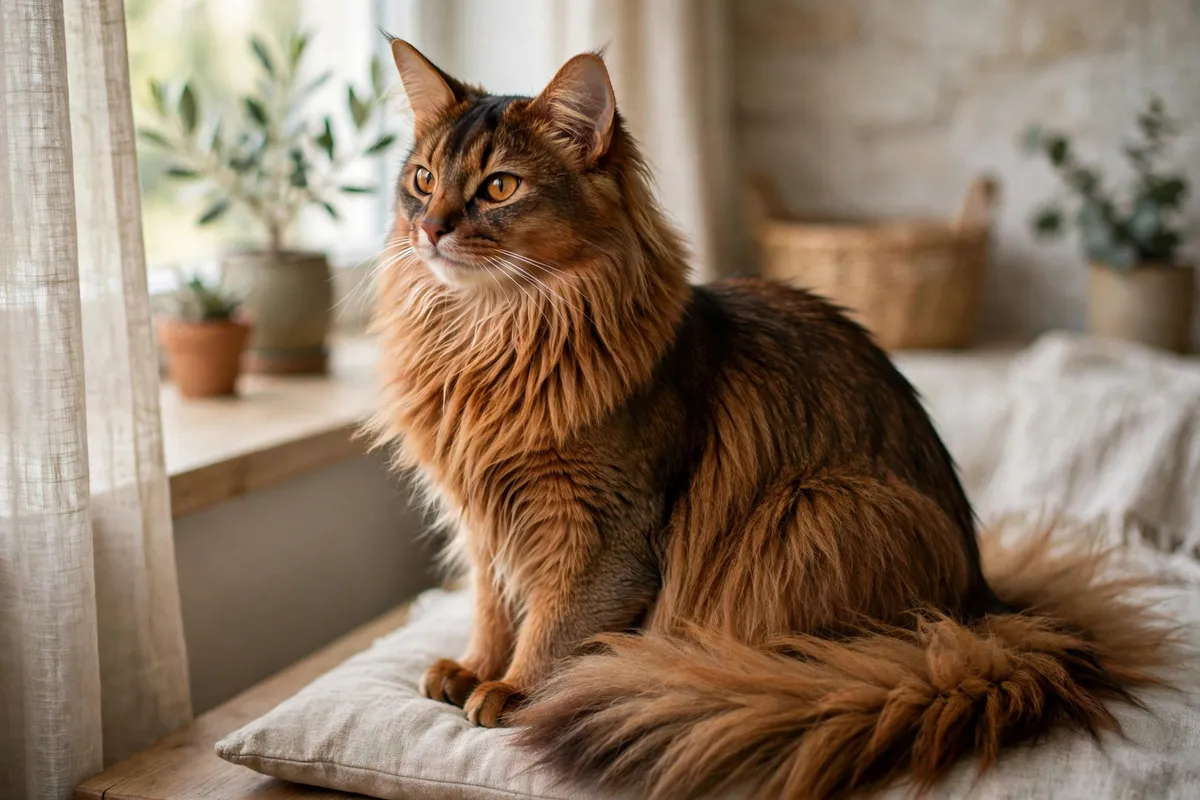
With a magnificent plumed tail, a ticked coat that shimmers in the light, and the face of a fox, the Somali looks like a cat designed to be admired — and then it immediately ruins the pose by chasing a toy across the room. The Somali is the long-haired version of the Abyssinian, and it shares the Abyssinian's intelligence, energy, and devotion to its people, wrapped in a semi-long coat that demands a little more grooming and rewards it with spectacular looks.
Somalis are not a good fit for a quiet, empty house, but for an active household that wants a cat involved in everything, they are hard to beat. This guide covers the Somali's temperament, appearance, grooming needs, health, and the honest trade-offs of living with one of the cat world's great extroverts.
Appearance: The Fox Cat
The Somali's most striking feature is its coat: medium-long, soft, and ticked, meaning each hair has bands of color along its length, which gives the coat a warm, shimmering, agouti effect. The classic color is ruddy, a rich reddish-brown with darker ticking, but Somalis also come in red, blue, and fawn. The tail is the showpiece — full, plumed, and carried high — and the breed is often nicknamed the fox cat for its pointed face, large ears, and bushy tail.
Somalis are medium-sized cats, typically 8 to 12 pounds, with a lithe, muscular body that looks athletic rather than chunky. Their eyes are large, almond-shaped, and usually gold or green, outlined as if with eyeliner. Kittens are born with darker, woollier coats that take time to develop: a Somali's full coat and color often do not mature until around 18 months to two years, so patience is part of the package.
Temperament: Playful, Social, and Busy
Somalis are famously active and people-oriented. They follow their owners from room to room, greet visitors at the door, learn to fetch, and often learn to open doors and cupboards if it gets them what they want. They are not lap cats in the traditional sense — they would rather be on top of the bookcase, supervising — but they are deeply bonded to their families and dislike being left alone for long periods.
This energy makes them wonderful for households with older children and other pets, including cat-friendly dogs, because Somalis usually enjoy company. It also means they need daily interactive play, climbing space, and puzzle toys, or they will invent their own entertainment, which may involve your curtains. A bored Somali is a creative Somali, and creativity in a cat is rarely tidy. They are also talkative in a soft, trilling way rather than loud — they comment on life without demanding it.
Grooming: Beautiful, but Not Low-Maintenance
The Somali coat is softer and less prone to matting than many long-haired coats, but it still needs brushing two to three times a week to prevent tangles, especially behind the ears, under the legs, and around the ruff. During seasonal shedding in spring, daily brushing helps. The good news is that most Somalis enjoy grooming if introduced gently, and a regular session doubles as bonding time.
Beyond the coat, care is standard: nail trims every few weeks, dental care with brushing or dental treats, and ear checks, since the large ears can collect debris. Somalis are generally clean cats that groom themselves well, so baths are rarely needed unless the coat gets genuinely dirty. Start grooming routines in kittenhood and keep them short and positive, and your Somali will usually cooperate happily for life.
Health and Lifespan
Somalis are generally healthy cats with a lifespan of 11 to 16 years, but the breed carries a few known predispositions. Progressive retinal atrophy, an inherited eye condition that can lead to blindness, occurs in the breed, and responsible breeders screen for it — always ask a breeder about eye testing. Renal amyloidosis, a kidney condition, has also been reported in Abyssinian-family cats, so regular vet checkups with bloodwork in senior years are worthwhile.
Pyruvate kinase deficiency, a blood condition causing anemia, is another Abyssinian-family concern that breeders can test for. Dental disease is common in the breed, as in many cats, so dental care is not optional. With a good breeder, regular vet care, and an indoor lifestyle, most Somalis live long, active lives — and their energy often lasts well into old age.
Is a Somali Right for You?
A Somali is right for you if you want an interactive, entertaining, social cat and you are home enough to enjoy it. They suit active families, people who work from home, and multi-pet households. They are a poor fit for a home where everyone is out all day, for someone who wants a calm lap cat that sleeps for 20 hours, or for a very quiet household that would find a chatty, athletic cat disruptive.
If you are set on a Somali, look for a breeder who health-tests for retinal atrophy and pyruvate kinase deficiency, raises kittens in the home, and lets you meet the mother. Somali kittens are usually ready at 12 to 14 weeks, later than some breeds, because they benefit from extra time with their littermates. Alternatively, check breed-specific rescues — adult Somalis occasionally need rehoming, and an adult's temperament is already known, which removes the guesswork.
Living With a Somali: A Day in the Life
A typical day with a Somali starts early and stays busy. Expect a greeting at the bedroom door, a sprint to the kitchen at breakfast, and a cat that wants to be involved in whatever you do next — perched on the desk while you work, supervising from the top of a bookcase, or inventing a game with a crumpled receipt. Somalis play hard in bursts and then nap in sunny spots, only to recharge and start again. Owners often say their Somali is less like a pet and more like a small, furry roommate with strong opinions about the household schedule.
That lifestyle is the real test of whether a Somali suits you. If you enjoy a cat that talks back, learns tricks, and turns up everywhere, the Somali's energy is a delight. If you prefer a quiet home, long absences, or a cat that stays in one spot, it can feel like a lot. The happiest Somali homes are the ones that lean into the energy: a tall cat tree by a window, a daily play session with a feather wand, puzzle feeders for meals, and a second pet for company when the house is empty. Give a Somali a job — even if the job is just supervising you — and it will be the most loyal colleague you have ever had.
Are Somali cats hypoallergenic?
No. No cat breed is truly hypoallergenic, and Somalis shed moderately. They produce the Fel d 1 allergen like other cats, so allergy sufferers should spend time with the breed before committing.
Do Somali cats need a lot of grooming?
Moderate grooming: brushing two to three times a week, daily during shedding season. Their coat mats less than many long-haired breeds, but it is not a wash-and-go coat.
Are Somalis good with children and other pets?
Yes, generally excellent. Somalis are social, playful, and tolerant, and they usually do well with older children and cat-friendly dogs, provided introductions are gradual.
How long do Somali cats live?
Typically 11 to 16 years with good care. Regular vet checkups, dental care, and an indoor lifestyle help them reach the upper end of that range.
What is the difference between a Somali and an Abyssinian?
The Somali is essentially a long-haired Abyssinian: same ticked coat pattern, body type, and personality, but with a semi-long coat and a plumed tail. They share the same ancestry and temperament.