Thai: Complete Breed Guide
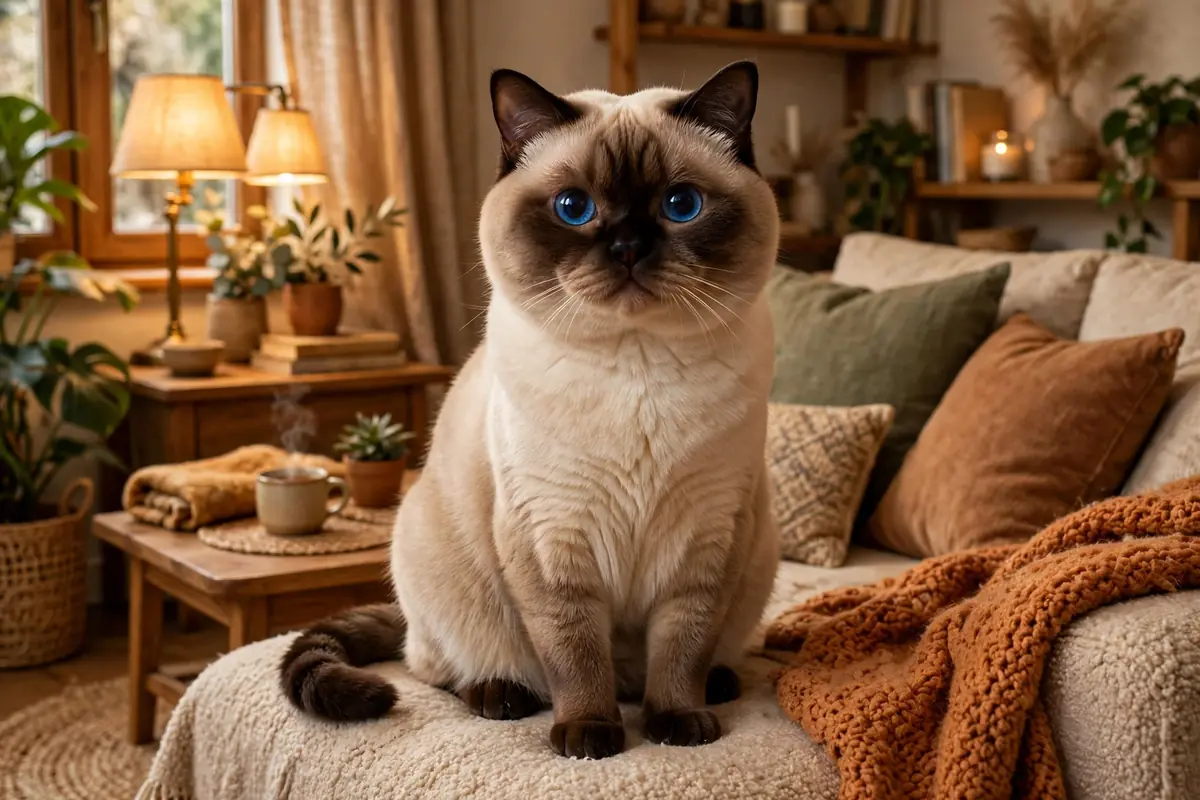
The Thai is the Siamese as it used to be: a sturdy, round-headed, apple-faced cat with deep blue eyes and a warm, chatty personality. While modern Siamese breeders selected for an ever longer, slimmer, more angular cat, Thai breeders kept the original look, the cat that appears in Thai manuscripts centuries old and that arrived in the West in the 1800s. If you love the Siamese personality but prefer a rounder, more traditional cat, the Thai is the breed for you.
Thais are affectionate, vocal, and deeply people-focused, with a playful streak that lasts well into adulthood. This guide covers the breed's origins, appearance, temperament, grooming, health, and how to decide whether a Thai fits your home.
Thai at a Glance
The Thai is a medium-sized cat, usually weighing between 3.5 and 5.5 kilograms, with a sturdy, well-muscled body, a round head, and a short coat in the classic pointed pattern: a pale body with darker points on the ears, mask, tail, and legs. The eyes are a deep, vivid blue, and the overall impression is of a solid, balanced cat rather than a delicate one.
Thais are affectionate, vocal, and highly social. They love to be with their people, enjoy play and conversation, and often follow their owners around the house. They typically live 12 to 15 years, and they stay playful and engaged well into old age.
Origin and History: The Original Siamese
The Thai descends from the cats of Siam, now Thailand, where pointed cats appear in manuscripts dating back centuries. The first Siamese cats arrived in Britain in the 1880s and quickly became popular, but over the decades breeders selected for an increasingly long, slim, angular type, and the original rounder cat gradually disappeared from the show ring.
In the 1990s, breeders who loved the traditional look began a program to preserve it, and the old-style Siamese was recognized as a separate breed under the name Thai. The Thai is now recognized by cat associations in Europe and elsewhere, and it is valued as a living link to the Siamese of a century ago.
Appearance: Round Head, Blue Eyes, Classic Points
The Thai's most distinctive feature is its head: round and apple-shaped, with a short muzzle and a gentle expression, in contrast to the long wedge of the modern Siamese. The eyes are round and a deep, vivid blue, set wide apart, and the ears are medium-sized and set upright.
The body is sturdy and well-muscled, with a medium-length tail and a short, glossy coat in the pointed pattern, seal, blue, chocolate, and lilac being the most common. Some Thais have a slight cross-eye, or strabismus, a trait that was common in the original Siamese and is considered part of the breed's heritage, though it does not affect the cat's vision.
Personality and Temperament: Chatty and Devoted
Thais are famously chatty and devoted. They meow, chirp, and trill to greet you, ask for food, and comment on their day, and they form strong bonds with their families, often choosing one person as their favorite. They are intelligent and playful, enjoying fetch, puzzle feeders, and interactive toys, and they stay kitten-like well into adulthood.
They are also sensitive cats that do not like being left alone for long. A Thai left alone all day can become lonely and vocal, so they do best in homes where someone is around most of the time, or where a second cat provides company. They are gentle with children and usually get along well with other pets.
Grooming a Short Glossy Coat
Grooming a Thai is very easy. The short, fine coat needs only a weekly brush with a soft brush or grooming glove to remove loose hair and keep the shine. They shed lightly, and most owners find that one quick session a week is enough, with a little extra during seasonal changes.
As with the Siamese family, dental care matters for the Thai, so regular tooth brushing and veterinary dental checks help. Keep the ears checked, the claws trimmed, and the teeth brushed when you can, and the rest of the routine is the same as for any cat.
Thai Health and Lifespan
Thais typically live 12 to 15 years and are generally a healthy breed, benefiting from a broader gene pool than the modern Siamese. They can be prone to the same issues as their Siamese relatives, including dental disease and respiratory problems, and some lines carry a risk of progressive retinal atrophy, an eye condition that gradually affects vision.
The slight cross-eye seen in some Thais is a cosmetic trait linked to the pointed gene and does not usually affect vision or quality of life. Choose a breeder who health-screens their cats, keep up with vaccinations and annual vet visits, and your Thai has a good chance of a long, healthy life.
Is the Thai Right for You?
The Thai is right for you if you love the Siamese personality but prefer a rounder, sturdier, more traditional cat. You will get a chatty, affectionate, playful companion that follows you around, greets you at the door, and curls up beside you in the evening. It suits families with children, first-time owners, and anyone who wants a people-focused cat.
It is not right for you if you want a quiet, independent cat, or if you are away all day. Thais need company and conversation, and a lonely Thai is an unhappy one. Give this cat the attention it craves, and it will repay you with years of devotion and entertainment.
Frequently Asked Questions
What is the difference between a Thai and a Siamese?
The Thai is the old-style Siamese, with a round head, sturdy body, and gentle expression, while the modern Siamese has been bred for a long, slim, angular look with a wedge-shaped head. Both share the pointed coat, blue eyes, and chatty personality, but the Thai is the more traditional type.
Why do some Thai cats have crossed eyes?
Some Thai cats have a slight cross-eye, or strabismus, which is linked to the same gene that produces the pointed coat pattern. It was common in the original Siamese and is considered part of the breed's heritage. It does not usually affect the cat's vision or quality of life.
Are Thai cats as loud as Siamese cats?
Thai cats are vocal and chatty, like their Siamese cousins, but many owners find them a little softer-voiced and less demanding. They will still greet you, ask for food, and comment on their day, just with a slightly gentler tone than a modern Siamese.
How much does a Thai kitten cost?
From a reputable breeder, a Thai kitten usually costs between $800 and $1,800, depending on pedigree, color, and location. The breed is uncommon, so you may need to join a waiting list. Always verify the breeder's health screening before paying a deposit.
Are Thai cats good with children?
Yes, Thai cats are affectionate and patient with children, which makes them a good family cat. Their playful nature suits households with respectful older children, and they usually get along well with other pets too. As with any pet, children should be taught to handle cats gently.