Thanksgiving Cat Safety: 10 Holiday Dangers Every Cat Owner Must Avoid
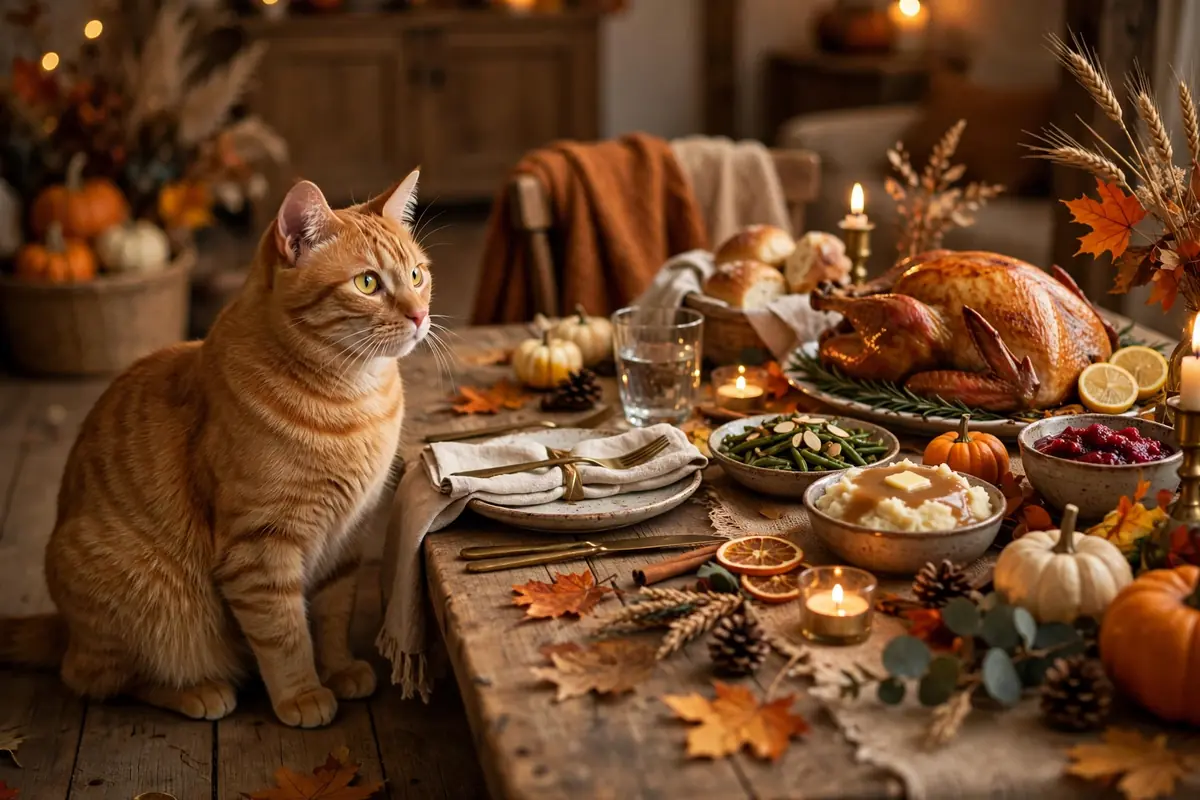
Thanksgiving is a day of full tables, open doors, and a house full of people — and for cats, it can be one of the riskiest days of the year. Thanksgiving 2026 falls on November 26, and the ten dangers in this guide — from turkey bones and onion-laced stuffing to candles, toxic flowers, and escape-prone guests — are all easy to prevent once you know what to watch for. Read on for the full list, plus a simple calm-room plan that keeps your cat safe while you enjoy the holiday.
The good news is that prevention is simple: keep risky food out of reach, keep flames and small decorations away from curious paws, and give your cat a quiet place to retreat. See our cat care guides and the Purrfect Paws homepage for more.
1. Turkey Bones, Skin, and Fatty Scraps
A small piece of plain, cooked turkey breast is a fine occasional treat for most cats — the danger is everything that comes with it. Cooked bones can splinter and injure the mouth, throat, or digestive tract, so never give them to a cat, no matter how much your cat begs. Turkey skin and fatty scraps are also risky: rich and greasy, they can upset a cat's stomach badly enough to need a vet visit. If your cat swallows a bone, watch for gagging, drooling, vomiting, or refusal to eat, and call your veterinarian promptly.
2. Onion and Garlic in Stuffing and Gravy
Onion, garlic, leeks, and chives are toxic to cats, and Thanksgiving cooking is full of them. Stuffing, gravy, and casseroles often contain onion or garlic in some form, whether fresh, powdered, or cooked into a sauce. Even small amounts can damage a cat's red blood cells, and symptoms such as weakness, pale gums, vomiting, or dark urine may not appear for a day or two. If your cat eats stuffing, gravy, or anything you suspect contains onion or garlic, call your veterinarian or a pet poison helpline right away and describe what and roughly how much was eaten.
3. Guests and Open Doors
Thanksgiving means people coming and going, coats being hung up, and doors opening far more than usual. For an indoor cat, a single open front door is all it takes to slip outside into an unfamiliar, busy environment, and guests may prop doors open while carrying dishes or let a cat out without realizing it is indoor-only. Brief your guests when they arrive — the cat stays inside, and doors should be closed promptly — and a small sign on the front door helps. Keeping your cat in its calm room during arrival time removes the risk entirely.
4. Candles and Open Flames
Candles are a Thanksgiving classic and a classic fire hazard around cats. A cat jumping onto a table can knock a candle over in a second, and a curious cat can singe its whiskers or fur on an open flame. The simplest fix is battery-operated flameless candles for the table and anywhere your cat can reach. If you do use real candles, keep them in sturdy, enclosed holders, well away from table edges and cat routes, and never leave them burning in a room your cat is in unsupervised.
5. Toxic Plants and Flowers Guests May Bring
Well-meaning guests often arrive with bouquets, and some of the most popular holiday flowers are dangerous for cats. Lilies are the most serious concern: every part of a lily is highly toxic to cats, and even pollen or vase water can cause severe kidney damage. When a guest arrives with flowers, thank them warmly and place the bouquet in a closed room your cat cannot enter, such as a guest bedroom or bathroom with the door shut. If your cat chews any plant and you are unsure what it was, call your veterinarian or a poison helpline with a photo or the plant's name if you can find it.
6. Alcohol
Wine, beer, cocktails, and even a small amount of cooking wine left in an unattended glass are dangerous for cats. Cats are much smaller than people, so even a few laps can cause wobbliness, vomiting, breathing problems, or worse. Keep drinks in guests' hands or on high, stable surfaces, and clear empty glasses promptly rather than leaving them on coffee tables and kitchen counters. If you suspect your cat has drunk alcohol, call your veterinarian or a poison helpline immediately — this is not a "wait and see" situation.
7. String, Ribbons, and Decorations
Thanksgiving decorations, gift bags, and table settings often include string, ribbon, twine, and tinsel-like garlands. To a cat, a dangling ribbon is a toy — and swallowed string is one of the most dangerous things a cat can eat, because it can tangle inside the intestines and require emergency surgery. Never let your cat play unsupervised with ribbon, string, or yarn, and put gift bags, ribbons, and wrapping materials away as soon as you are done with them. If you see string hanging from your cat's mouth, do not pull it — it may be anchored inside — and call your veterinarian right away.
8. Stress From Visitors
Even a friendly, social cat can find a house full of visitors overwhelming. New voices, unfamiliar smells, loud laughter, children wanting to cuddle, and a disrupted routine all add up. Stressed cats may hide for hours, stop eating, over-groom, or have accidents outside the litter tray. Protect your cat's routine as much as possible: feed at the usual time, keep the litter tray clean and accessible, and let your cat choose whether to socialize. Tell guests, especially children, to let the cat come to them and never to chase or pick it up against its will.
9. Unattended Food on Counters and Tables
Thanksgiving cooking produces hours of unattended food: cooling pies on the counter, a resting turkey, side dishes waiting to be served, and plates left on coffee tables during the meal. Cats are excellent counter-surfers, and a quiet kitchen is an invitation. Cover cooling food with a lid, a plate, or foil, and keep it pushed back from counter edges. Use the oven or microwave as a temporary holding spot for dishes while guests are still arriving, clear plates promptly during the meal, and keep leftovers in sealed containers in the fridge rather than sitting out.
10. Set Up a Calm Room Before Guests Arrive
The single best Thanksgiving safety step is also the simplest: prepare a calm room for your cat before the first guest arrives. Choose a quiet bedroom or spare room, and set it up with your cat's bed or a covered hiding spot, fresh water, food, a clean litter tray, a scratching post, and a couple of familiar toys. Put your cat in the room before guests arrive, with the door closed, and check in quietly once or twice during the day. Many cats will nap happily through the whole celebration in their safe room.
Thanksgiving Cat Safety Checklist
- Plain turkey breast only — no bones, skin, or fatty scraps.
- Stuffing, gravy, and seasoned dishes kept covered and out of reach.
- Guests briefed: doors closed, no table scraps for the cat.
- Flameless candles on the table; real flames never left unattended.
- Guest flowers kept in a closed room away from your cat.
- Drinks and empty glasses cleared promptly.
- Ribbons, string, and gift bags put away after use.
- Calm room ready with food, water, litter tray, and a hiding spot.
With these ten dangers handled, Thanksgiving can be a happy day for everyone in the house — including the cat.
Frequently Asked Questions
Can cats eat Thanksgiving turkey?
A small piece of plain, cooked turkey breast with no skin, bones, seasoning, or gravy is generally fine as an occasional treat. Never give your cat cooked bones, skin, or fatty scraps, and keep stuffing, gravy, and seasoned dishes away from them.
What should I do if my cat eats stuffing or gravy?
Stuffing and gravy often contain onion and garlic, which are toxic to cats. Call your veterinarian or a pet poison helpline right away, and tell them what and roughly how much your cat ate. Do not try to treat it at home or make your cat vomit unless a professional tells you to.
Should I keep my cat in a separate room during Thanksgiving dinner?
For most cats, yes. A quiet room with food, water, a litter tray, and a hiding spot protects your cat from open doors, dropped food, candles, and the stress of visitors. Shy or anxious cats are usually much happier there than in the middle of the party.
Are Thanksgiving flowers dangerous for cats?
Some are. Lilies are extremely dangerous to cats, and other common flowers and plants can cause stomach upset or worse. Ask guests to leave bouquets in a closed room your cat cannot enter, and keep all plants well out of reach.
How do I stop guests from feeding my cat?
Tell guests when they arrive that your cat has its own food and should not be given table scraps, and give children a clear rule too. Putting your cat in its calm room during the meal removes the temptation entirely, and a small note on the kitchen counter can remind well-meaning visitors.