Turkish Angora: Complete Breed Guide
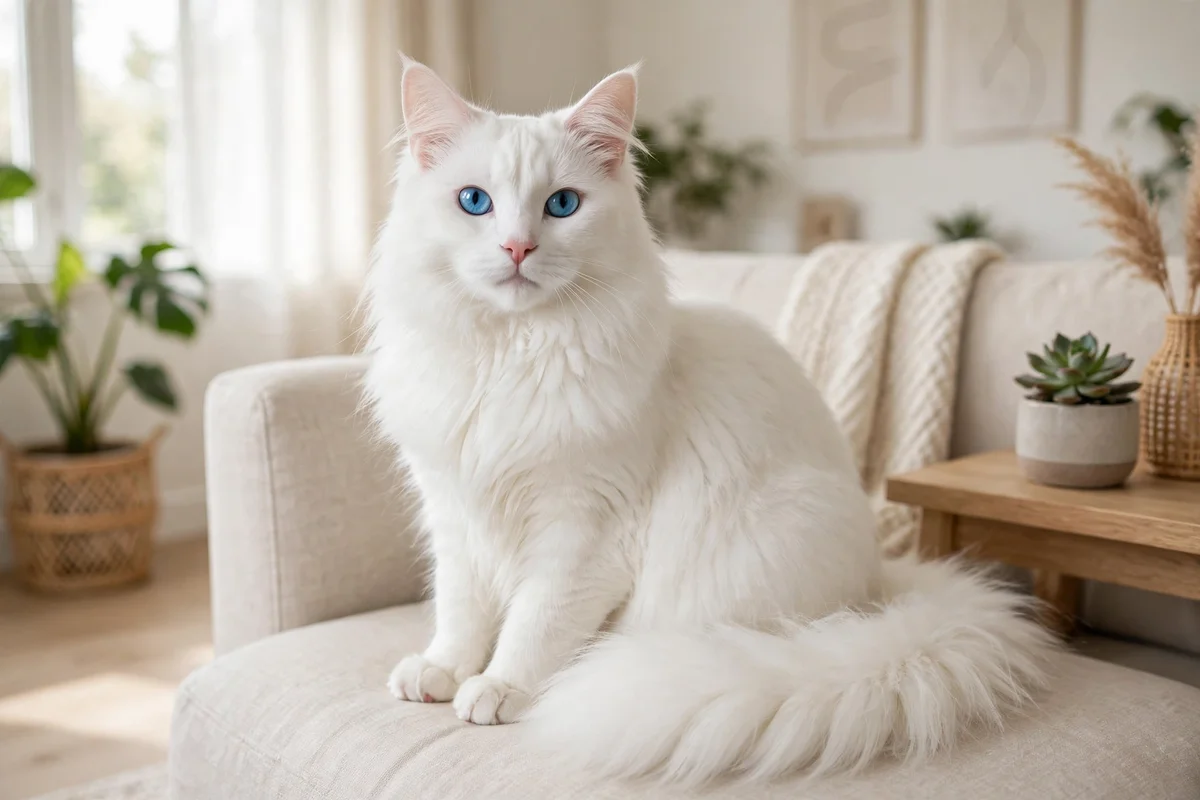
With a flowing silk coat, a plumed tail, and an elegance that has charmed people for centuries, the Turkish Angora is one of the oldest and most graceful cat breeds in the world. But behind that aristocratic look is a lively, intelligent, and deeply affectionate cat that loves to play, follows its favorite person from room to room, and usually picks one special human to adore above all others. If you are considering a Turkish Angora, this guide covers what the breed is really like to live with: temperament, grooming, health, and whether this beautiful cat is the right match for your home.
What Is a Turkish Angora?
The Turkish Angora is a natural breed that developed in the region around Ankara, Turkey, historically known as Angora. It is one of the oldest longhaired breeds, and it played a role in the development of other longhaired cats, including the Persian. Unlike many modern breeds, the Turkish Angora was not created by crossing other breeds; it evolved naturally, which gives it a balanced, athletic build rather than an extreme one.
In appearance, the Turkish Angora is a medium-sized, slender cat with a long, fine-boned body, a wedge-shaped head, large pointed ears, and a long tail carried like a plume. The coat is medium-long, fine, and silky, with a soft ruff around the neck. White is the most famous color, and many people picture a pure white cat with blue or odd-colored eyes when they think of the breed. However, Turkish Angoras come in many colors and patterns, including black, blue, red, cream, tabby, and tortoiseshell. The eyes are large and almond-shaped, and they may be blue, green, gold, or one of each.
Turkish Angoras are graceful, agile movers that enjoy high perches where they can survey their kingdom.
Turkish Angora Temperament and Personality
If you want a quiet ornament of a cat, the Turkish Angora is probably not your breed. These cats are active, curious, and full of opinions. They like to be involved in whatever you are doing, whether that means supervising your cooking, inspecting a new delivery box, or sitting on your keyboard while you work. Many owners describe them as dog-like in their loyalty: they greet you at the door, follow you around the house, and want to be part of the action.
Turkish Angoras are also famously intelligent. They learn routines quickly, figure out how to open doors and cabinets, and enjoy puzzle feeders and interactive toys. This intelligence is a joy, but it also means they get bored if left with nothing to do. A bored Angora may invent its own entertainment, and that entertainment might involve climbing your curtains or knocking things off shelves.
Most Turkish Angoras bond most strongly with one person, although they are usually friendly with the rest of the household too. They tend to be affectionate on their own terms: happy to sit beside you or on your lap, but not always keen on being held for long periods. They are often described as good with older children who know how to handle cats gently, and many live happily with other cats or cat-friendly dogs when introduced gradually. Very young children who grab or chase may overwhelm a sensitive Angora, so supervision and gentle handling matter.
One more note: Turkish Angoras can be quite vocal, chirping and trilling to ask for food, play, or attention. If you prefer a near-silent cat, this is worth knowing before you commit.
Grooming a Turkish Angora
Here is the good news: for a longhaired cat, the Turkish Angora is relatively easy to groom. The coat is single-layered, meaning it has no dense undercoat, so it is far less prone to matting than the coat of a Persian. Most owners find that brushing once or twice a week with a soft slicker brush or a steel comb keeps the coat smooth and tangle-free. During seasonal shedding in spring, you may want to brush a little more often.
Regular grooming is still important. Brushing removes loose hair, reduces hairballs, and gives you a chance to check the skin for any irritation. Pay a little extra attention behind the ears and under the legs, where fine fur can tangle. Bathing is rarely needed unless the cat gets dirty; when you do bathe, use a gentle cat shampoo and dry the coat thoroughly.
Beyond the coat, trim the nails every couple of weeks, clean the ears if you notice wax buildup, and brush the teeth with a cat-safe toothpaste. Most Angoras accept grooming well if sessions start young, stay short, and end with a treat.
Feeding and Daily Care
Turkish Angoras are active cats with a healthy appetite, so a good-quality, complete cat food suited to their age and activity level is the foundation of their care. Follow the feeding guide on the food packaging as a starting point, then adjust based on your cat's weight and body condition, and check in with your veterinarian at annual visits. Fresh water should always be available, and many cats drink more happily from a wide bowl or a cat water fountain.
Daily play is just as important as food. Aim for two or three short play sessions a day with wand toys, feather teasers, or puzzle feeders that make them work for treats. A tall scratching post and a sturdy cat tree give them an outlet for climbing and scratching, and a window perch satisfies their love of watching the world outside. Because they are so people-oriented, Turkish Angoras do best in homes where someone is around for much of the day. They can cope with a working owner, but long stretches alone every day are not ideal for this social breed.
Litter box habits are usually straightforward: one box per cat plus one extra, scooped daily, in a quiet spot. Turkish Angoras are generally clean and fastidious, so a dirty box is one of the few things that may genuinely upset them.
Turkish Angora Health Notes
Turkish Angoras are generally considered a healthy, hardy breed with a long life, often living well into their teens. Like all breeds, though, they have a few health points worth knowing about, and none of them should be read as a certainty for any individual cat.
The best-known issue relates to white cats with blue eyes. In white cats, the gene that produces a white coat can also be linked to deafness, and white Turkish Angoras with blue eyes are more likely to have some degree of hearing loss. Reputable breeders test kittens' hearing, and deaf cats can live perfectly happy lives indoors with a few adjustments, such as approaching them from the front and using visual signals instead of calling their name.
Turkish Angoras may also be prone to a heart condition called hypertrophic cardiomyopathy, a thickening of the heart muscle that affects many cat breeds. Responsible breeders screen their breeding cats, and your veterinarian can listen for a heart murmur at routine checkups. Keeping up with regular veterinary visits, vaccinations, and parasite prevention is the best way to catch any issue early. As with every breed, a balanced diet and a healthy weight support long-term wellbeing far more than any supplement or fad food.
Is a Turkish Angora Right for You?
A Turkish Angora could be a wonderful match if you want an active, affectionate, intelligent companion and you enjoy interacting with your cat throughout the day. They suit owners who will play with them, brush them regularly, and give them climbing spaces and attention. They tend to thrive in calm to moderately busy homes where someone is around and the cat is treated as part of the family.
On the other hand, this breed may not be the best fit if you want a very independent, low-energy cat, if you are away from home for very long hours, or if your household is extremely noisy and chaotic. Their sensitivity and need for company mean they can become stressed or attention-seeking when ignored. Also, if anyone in the home has significant cat allergies, spend time around the breed first; no cat is truly hypoallergenic, and a long coat can carry allergens on its fur.
If you decide to get a Turkish Angora, look for a reputable breeder who health-tests their cats, raises kittens in the home, and lets you meet the kitten's mother. You may also find Turkish Angora mixes in shelters and rescues, and an adult rescue cat can be a wonderful choice if you prefer to know the cat's personality before committing. Either way, ask about hearing in white kittens, vaccination and veterinary history, and the kitten's socialization.
The Turkish Angora is a breed that rewards attention with devotion. Give this elegant cat play, company, and a little grooming, and you will likely get a loyal, entertaining companion who treats you as the center of their world.
Frequently Asked Questions
Are Turkish Angora cats good for families?
Many Turkish Angoras do well in families, especially homes with older children who treat them gently. They are playful and affectionate, but they can be sensitive to rough handling and loud chaos, so calm, respectful introductions work best.
Do Turkish Angora cats shed a lot?
They shed moderately. Their coat is long but fine and single-layered, so it mats less than a heavy double coat. Regular brushing once or twice a week usually keeps shedding and tangles under control.
Are all Turkish Angora cats white?
No. White is the classic and most famous color, but Turkish Angoras come in many colors and patterns, including black, tabby, and tortoiseshell. White cats with blue eyes can be deaf, so hearing should be checked in white kittens.
Are Turkish Angora cats hypoallergenic?
No cat breed is truly hypoallergenic. Turkish Angoras produce the same allergen proteins as other cats, though some allergy sufferers find their fine, single coat easier to manage. Spending time with the breed before committing is the best test.
How much exercise does a Turkish Angora need?
They are active, athletic cats that enjoy daily play. Two or three short play sessions a day with wand toys, plus climbing spots and a tall scratching post, usually keep them happy and out of mischief.