Turkish Van: Complete Breed Guide
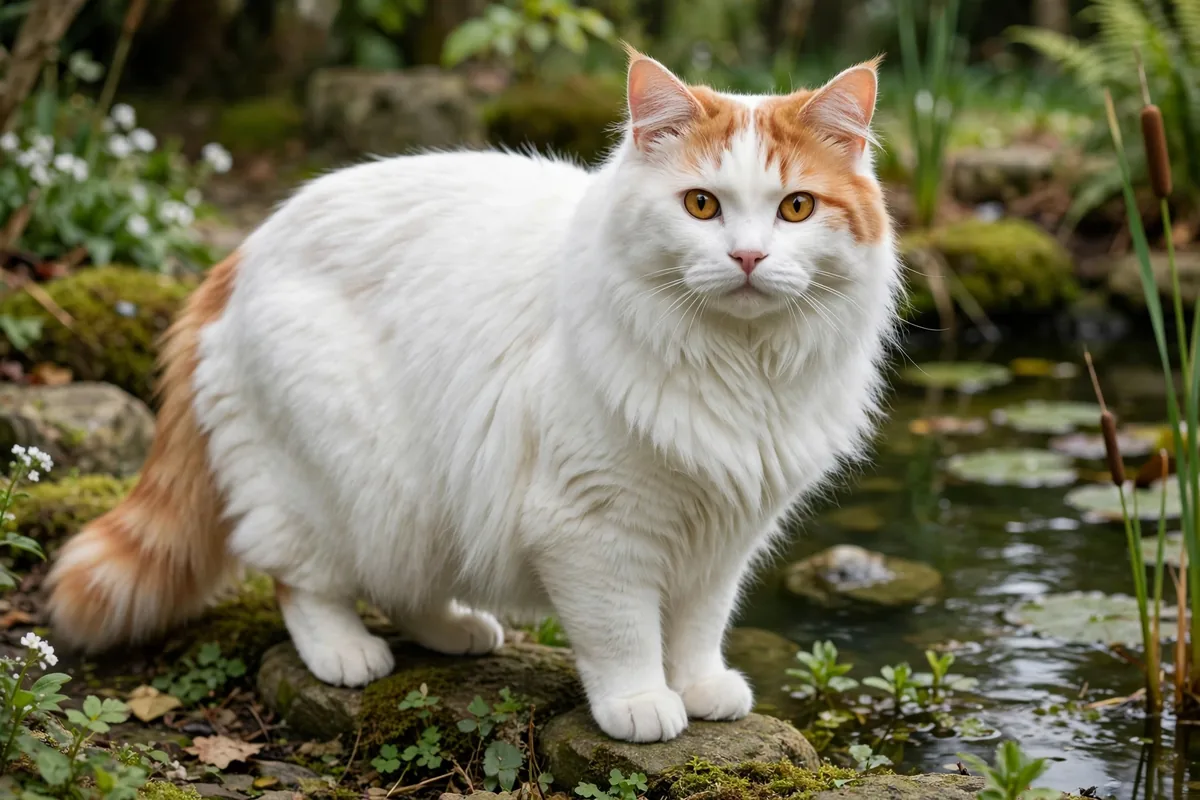
The Turkish Van is famous for one thing above all: it loves water. While most cats avoid getting wet, the Van has been known to swim in lakes, paddle in streams, and join its owners in the bath, earning it the nickname the swimming cat. It is a large, athletic, semi-longhaired breed from the Lake Van region of Turkey, with a striking white coat, colored markings on the head and tail, and a personality as bold as its reputation.
Turkish Vans are intelligent, energetic, and devoted to their people, though they are also famously independent and strong-willed. If you want a large, beautiful, adventurous cat and you can give it space, play, and a little water to paddle in, the Turkish Van is a remarkable companion. This guide covers its origins, appearance, temperament, grooming, and health.
Turkish Van at a Glance
The Turkish Van is a large, muscular cat, usually weighing between 4.5 and 8 kilograms, with males noticeably bigger than females. Its coat is semi-long, soft, and water-resistant, mostly white with colored markings confined to the head and tail, a pattern known as the van pattern. The eyes are large and round, usually amber, blue, or odd-colored, one blue and one amber.
Turkish Vans are intelligent, active, and playful, with a strong love of heights and water. They are slower to mature than many breeds, taking three to five years to reach full size, and they typically live 12 to 17 years, which is long for such a large cat.
Origin and History: From Lake Van
The Turkish Van comes from the Lake Van region of eastern Turkey, where cats with the distinctive white coat and colored head and tail had lived for centuries, swimming in the lake and catching fish. The breed was brought to Britain in the 1950s, when two travelers, Laura Lushington and Sonia Halliday, were given a pair of kittens and noticed their unusual love of water.
The breed was recognized by cat associations in the 1960s and 1970s, and breeders worked to preserve the distinctive van pattern and the water-loving temperament. Today the Turkish Van is still uncommon, but it is valued for its beauty, its intelligence, and its remarkable relationship with water.
Appearance: The Van Pattern
The Turkish Van's signature is the van pattern: a mostly white coat with color confined to the head and the tail. The colored markings are usually a warm ginger, cream, or black, and the tail is ringed. A small spot of color on the shoulder is allowed, but the body should be predominantly white. The coat is semi-long, soft, and cashmere-like, with no dense undercoat, which is one reason it dries quickly after a swim.
The body is large and muscular, with a wedge-shaped head, large ears, and a long, plumed tail. The coat changes with the seasons: it is longer and thicker in winter, and shorter and lighter in summer, a practical adaptation to the climate of Lake Van. The eyes are large and round, and odd eyes, one blue and one amber, are common and highly prized.
Personality and Temperament: Bold, Clever, and Water-Loving
Turkish Vans are bold, intelligent, and highly active. They love to climb to the highest point in the room, play fetch, learn tricks, and investigate anything new. And yes, many of them love water: they will paddle in a shallow bath, play with a dripping tap, and some will even join their owners in the shower. Not every Van swims, but the breed's fascination with water is real and well documented.
They are affectionate with their families but famously independent and strong-willed, and they often choose one person as their favorite. They are not always lap cats; they prefer to be near you rather than on you, and they can be wary of strangers. They need an owner who respects their independence while providing plenty of play and stimulation.
Grooming a Water-Resistant Coat
Grooming a Turkish Van is easier than its semi-long coat suggests. Because the coat has little undercoat, it rarely mats, and a weekly brush is usually enough to keep it healthy and remove loose hair. During the spring shed, when the winter coat comes out, a little extra brushing helps.
The water-resistant coat means baths are rarely needed, though a Van that has been swimming may need a rinse. Keep the ears checked, the claws trimmed, and the teeth brushed when you can. A routine of gentle handling from kittenhood makes all of it simple.
Turkish Van Health and Lifespan
Turkish Vans typically live 12 to 17 years, which is long for a large breed. They are generally healthy, benefiting from their origins as a natural breed rather than one created by intensive selective breeding. There are no major breed-specific diseases, though some lines can be prone to hypertrophic cardiomyopathy, a heart condition seen in many breeds, so responsible breeders screen for it.
Because they are large and slow to mature, it is worth watching their weight and keeping them active with play and climbing. Choose a breeder who health-screens, keep up with vaccinations and annual vet visits, and your Turkish Van has a good chance of a long, healthy life.
Is the Turkish Van Right for You?
The Turkish Van is right for you if you want a large, beautiful, intelligent cat with a bold personality and a love of adventure. You will get a loyal, playful companion that climbs to the top of the room, plays fetch, and may even join you in the bath. It suits active owners, families with older children, and anyone who enjoys a cat with a real character.
It is not right for you if you want a quiet lap cat, or if you live in a small flat with no room for climbing. Turkish Vans need space, play, and an owner who respects their independence. Give them that, and you will have one of the most remarkable cats you can own.
Frequently Asked Questions
Do Turkish Vans really like to swim?
Many do. Turkish Vans are famous for their love of water, and some will swim in lakes or paddle in baths, while others simply enjoy playing with dripping taps or a shallow bowl of water. Not every Van swims, and you should never force a cat into water, but the breed's fascination with water is well documented.
Why is it called the Turkish Van?
The breed is named after the Lake Van region of eastern Turkey, where these cats lived for centuries. The term van pattern, a white coat with color only on the head and tail, also comes from the breed and is now used to describe the same pattern in other breeds.
Are Turkish Vans good with children?
Turkish Vans can do well with older children who understand how to play gently with an energetic cat, but they are not always patient with very young children. Their independent, strong-willed nature means they prefer to choose when to interact. Respectful older children usually get along very well with them.
How much does a Turkish Van kitten cost?
From a reputable breeder, a Turkish Van kitten usually costs between $1,000 and $2,500, depending on pedigree, markings, and location. The breed is uncommon, so waiting lists are normal. Always verify the breeder's health screening before paying a deposit.
Do Turkish Vans shed a lot?
Turkish Vans shed moderately, with a heavier shed in spring when the winter coat comes out. Their semi-long coat has little undercoat, so it rarely mats, and a weekly brush is usually enough to keep shedding under control. They are not hypoallergenic.