Why Does My Cat Bring Me Dead Animals?
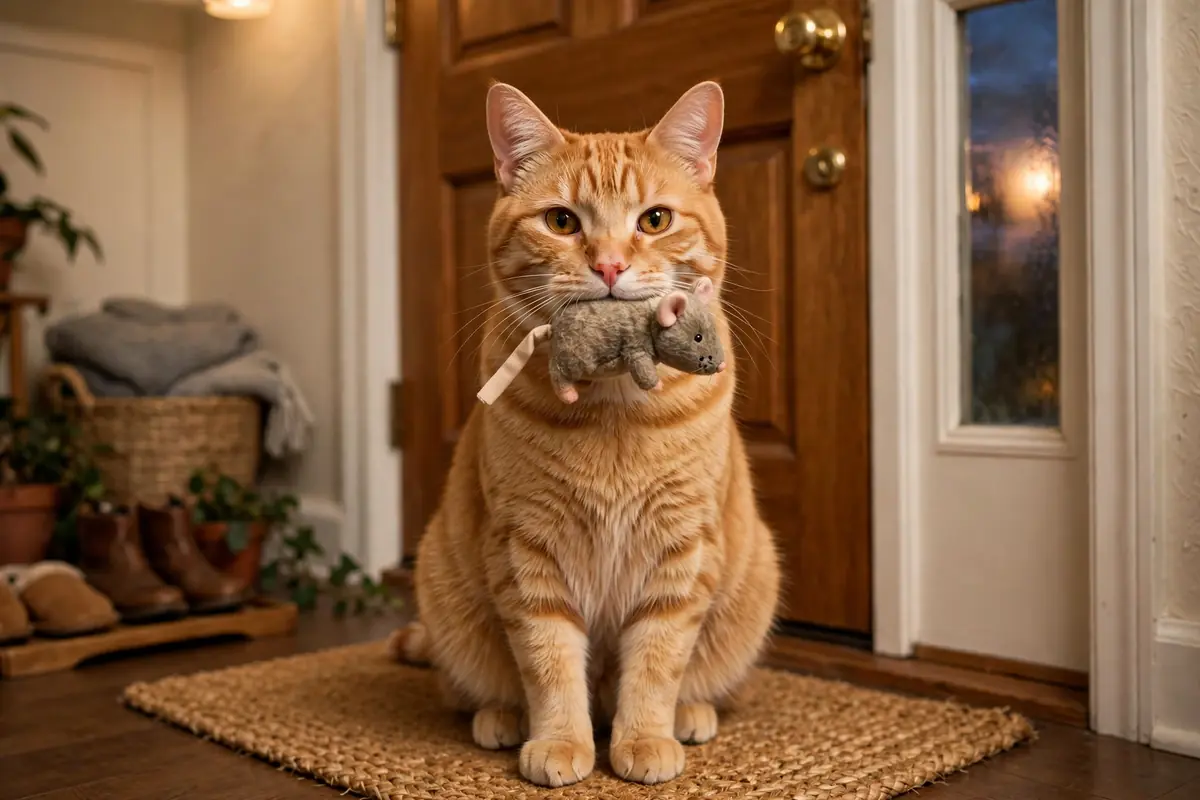
You wake up, pad to the kitchen, and there it is on the doormat: a mouse. Your cat sits beside it, tail high, eyes shining with pride — and you are torn between horror and the urge to hug them. Why do cats bring dead animals home? In short: hunting instinct runs deep in every cat, your cat may be trying to teach you to hunt, and bringing prey back to the family is an act of trust and inclusion. They are not being cruel. In their world, they just brought you breakfast.
This guide unpacks the four leading theories behind this classic (and slightly gruesome) cat behavior, what to do when you find a "gift," whether it is dangerous, and how to reduce the hunting without punishing your cat for following their instincts.
4 Theories: Why Cats Bring You "Gifts"
Behaviorists have debated this for years, and the truth is probably a mix of several instincts firing at once. Here are the four most widely accepted explanations:
1. They are trying to teach you to hunt
This is the most famous theory, and it is rooted in real cat behavior. In the wild, mother cats bring dead — and later, live — prey back to their kittens, first to eat and then to practice on. Your cat looks at you, a large hairless creature who has never once caught a mouse, and concludes you are a hopeless hunter who would starve without help. Dropping prey at your feet may be your cat's earnest attempt at a hunting lesson. It is condescending, yes — but it comes from a caring place.
2. It is a sign of trust and affection
Cats bring their kills back to places — and individuals — they consider safe. A cat that hauls prey all the way home instead of eating it on the spot is treating your home as the family den and you as family. Sharing food is one of the most intimate things animals do. Your cat would not bring their prize to someone they did not trust. As grim as the delivery looks to us, the message underneath is: "You belong with me, so I share my catch with you."
3. The surplus-kill and bring-it-home instinct
Cats do not only hunt when they are hungry — the urge to stalk, chase, and pounce is hardwired and triggered by movement, independent of appetite. Well-fed house cats often hunt simply because the instinct fires. After the catch, the instinctive next step is to carry the prey somewhere secure. Your living room (or doormat, or pillow — sorry) is the secure base, so that is where the prey goes. This also explains why some cats line up their "kills" in one spot: it is a cache, the feline version of a pantry.
4. They want your attention
Cats are observant little scientists. The first time they brought a mouse inside, you probably made a sound — a gasp, a laugh, a long dramatic sentence about the doormat. You noticed them, immediately and intensely. Cats that crave interaction quickly learn that prey delivery is the single most reliable way to get a big reaction from their favorite human. Even negative attention is attention, so staying calm matters (more on that below).
Is It Dangerous? (Parasites, Disease, Wildlife Impact)
A dead mouse on the mat is mostly a hygiene issue, not an emergency — but there are real concerns worth taking seriously:
- Parasites. Wild mice, birds, and rabbits can carry fleas, ticks, intestinal worms, and ear mites. Cats that hunt regularly pick up parasites more often, so keep flea prevention and deworming current — your vet can set the right schedule.
- Disease and bacteria. Wild prey can harbor bacteria such as salmonella. Do not let your cat eat the catch if you can help it, wash your hands after handling anything, and keep the area clean. If your cat develops vomiting, diarrhea, or lethargy after a hunting spree, call your vet.
- Toxoplasmosis. Cats can contract this parasite from infected prey. It is usually mild in healthy cats but is a genuine concern for pregnant owners — another good reason to let someone else handle litter and prey cleanup if you are expecting, and to discuss it with your doctor.
- Wildlife impact. This is the bigger-picture issue, and it deserves honesty: free-roaming cats are a significant cause of bird and small-mammal deaths. Wildlife biologists consider outdoor cats one of the leading human-related threats to bird populations, and even well-fed cats hunt. If you love both cats and wildlife, this is the strongest argument for the indoor-enrichment strategies below.
The takeaway: the "gift" itself rarely harms your cat, but regular hunting raises their parasite exposure — and it costs local wildlife. Managing the behavior helps everyone, and you will find practical steps in our Cat Behavior guides as well.
How to React When Your Cat Brings Prey
Your reaction in the moment matters more than you think. Here is the calm, cat-friendly playbook:
- Stay calm. No screaming, no scolding, no chasing the cat around the house. Your cat genuinely believes they did something wonderful. A dramatic reaction either frightens them or teaches them that prey equals a big exciting show — both outcomes you do not want.
- Do not punish — ever. Punishment does not reduce hunting; the instinct is far older and stronger than any lesson you can teach with a spray bottle. It only damages your cat's trust in you.
- Remove the prey safely. Wear disposable gloves or turn a plastic bag inside out over your hand, pick it up, seal it, and dispose of it in an outdoor bin. Wash your hands thoroughly afterward. Keep children and other pets away from the scene.
- Check your cat. Look for scratches or bite wounds from the prey's last stand — even a mouse can nip. Clean minor scratches and watch for swelling; call your vet if anything looks infected.
- Do not reward with treats. You do not need to celebrate the delivery, but a calm, neutral "thank you" and a head scratch keeps the bond intact without reinforcing the behavior. Save the treats for play sessions instead.
- If the animal is alive and suffering, do not try to nurse it yourself. Contact local animal control or a wildlife rehabilitator, who can handle it humanely and legally.
How to Reduce the Hunting (Without Punishment)
You cannot train the hunter out of a cat — but you can absolutely redirect it. The goal is to satisfy the stalk-chase-pounce sequence at home so the urge does not spill out into the garden:
- Use a breakaway collar with a bell. A bell warns some prey and can reduce successful hunts, though clever cats learn to stalk without ringing it. The non-negotiable part is breakaway: the collar must release if it snags on a branch or fence, or it becomes a strangulation hazard. Never use a non-breakaway collar on a roaming cat.
- Play like prey. Ten to fifteen minutes of wand-toy play once or twice a day — making the toy dart, hide, and "escape" like real prey — followed by a meal, burns off hunting energy beautifully. Feather teasers and crinkle toys work best. This single habit makes the biggest difference for most cats.
- Enrich the indoors. Puzzle feeders, window perches for bird-watching, rotating toy boxes, and cardboard boxes to ambush from all feed the hunting brain. A bored cat hunts; a busy cat naps.
- Consider a catio or leash walks. A screened patio, window box, or harness-and-leash outings give your cat fresh air, sunshine, and stimulation with zero wildlife casualties. Many former roamers take to supervised outdoor time happily.
- Keep cats in at dawn and dusk. These are peak hunting hours for both cats and their prey. If your cat goes outside, a curfew during these windows meaningfully cuts the catch rate.
Reducing hunting is a kindness to your cat too: fewer fights with other animals, less exposure to traffic, parasites, and poisons. For more ideas on a happy indoor life, start at the Purrfect Paws home page and browse the care guides.
Frequently Asked Questions
Should I punish my cat for bringing me dead animals?
No — never. Your cat is acting on pure instinct and, in their mind, doing something kind. Punishment only creates fear and confusion, and it will not reduce hunting. Stay calm, dispose of the prey, and redirect the instinct with interactive play instead.
Is it safe to touch the dead animal my cat brought home?
Handle it as little as possible. Wear disposable gloves or use a bag turned inside out, wash your hands thoroughly afterward, and keep children and other pets away. Wild prey can carry parasites, fleas, ticks, or bacteria, so also check that your cat's parasite prevention is up to date with your vet.
Does a bell collar really stop my cat from hunting?
It helps, but it is not foolproof. A bell warns some prey, and studies suggest it can reduce successful hunts — though clever cats learn to stalk without ringing it. Always use a breakaway collar that releases if it snags, and combine the bell with more indoor play for the best results.
Why does my cat bring me live animals instead of dead ones?
Sometimes the prey is not quite dead, or your cat deliberately brings it in alive. Behaviorists think this can be an invitation to "finish the lesson" together — in the wild, mother cats bring live prey to kittens learning to hunt. Keep your distance, stay calm, and if the animal is suffering, contact local animal control or a wildlife rehabilitator rather than handling it yourself.
My indoor cat brings me toys instead of dead animals — is it the same thing?
Yes, essentially. Indoor cats still carry the full hunting sequence in their instincts, and toys become the stand-in prey. A cat proudly dropping a toy mouse at your feet is expressing the same bring-it-home instinct — just in a much tidier, wildlife-friendly package. Praise them for it.